October 23, 2026
What watercolor subjects should you paint to keep improving?
To keep improving in watercolor without getting bored or discouraged, cycle between 3 types of subjects: painting technique subjects like skies, drawing and perspective subjects like urban scenes or figures, and exploration subjects where you don't know how you're going to paint them. Each type trains a different skill. If you only paint one of them, you either get bored or get so frustrated that you want to quit.
Why do you feel bored or frustrated with watercolor?
When you paint watercolor, there's a trap. At some point you feel frustrated and you don't know exactly why. Either you get bored, or you mess up every single painting you start.
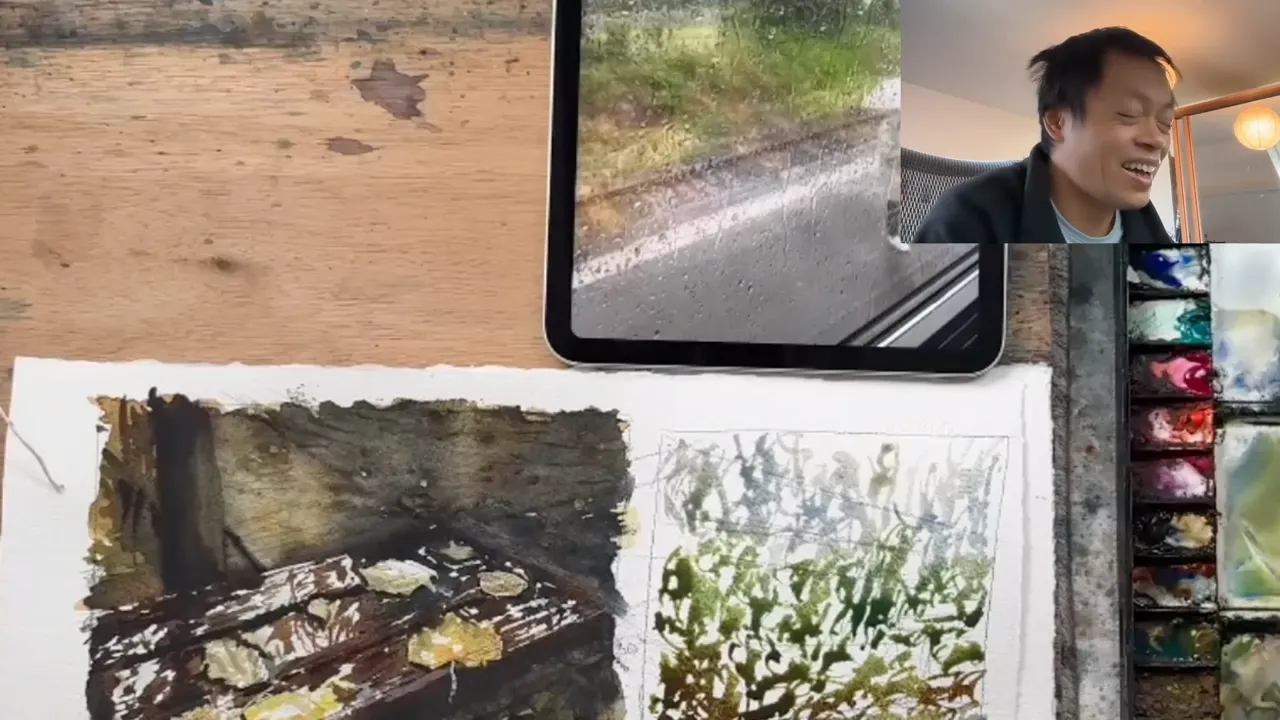
It happened to me during a live session. The first subject was very difficult to tackle, with lots of reflections on leaves. I struggled a lot with the perspective, then I painted the leaves, then the background, then the table. In the end, the painting was not very beautiful to me because I overworked a big part of it, like the background.
Then I had a second subject with lots of drops of water, something I had never really painted. I started randomly because I didn't know where to go, and on the second wash it started to appear. It kind of worked, but I was frustrated at the end of the session. I didn't have the feeling that I had improved a lot, and I felt that I had struggled all the way through.
When I asked the students, they told me they were discouraged because it was so difficult. That's exactly the problem. You get discouraged, you want to give up, and it's such a pity to quit watercolor just because the subjects you choose are so difficult.
Type 1: what are painting technique subjects?
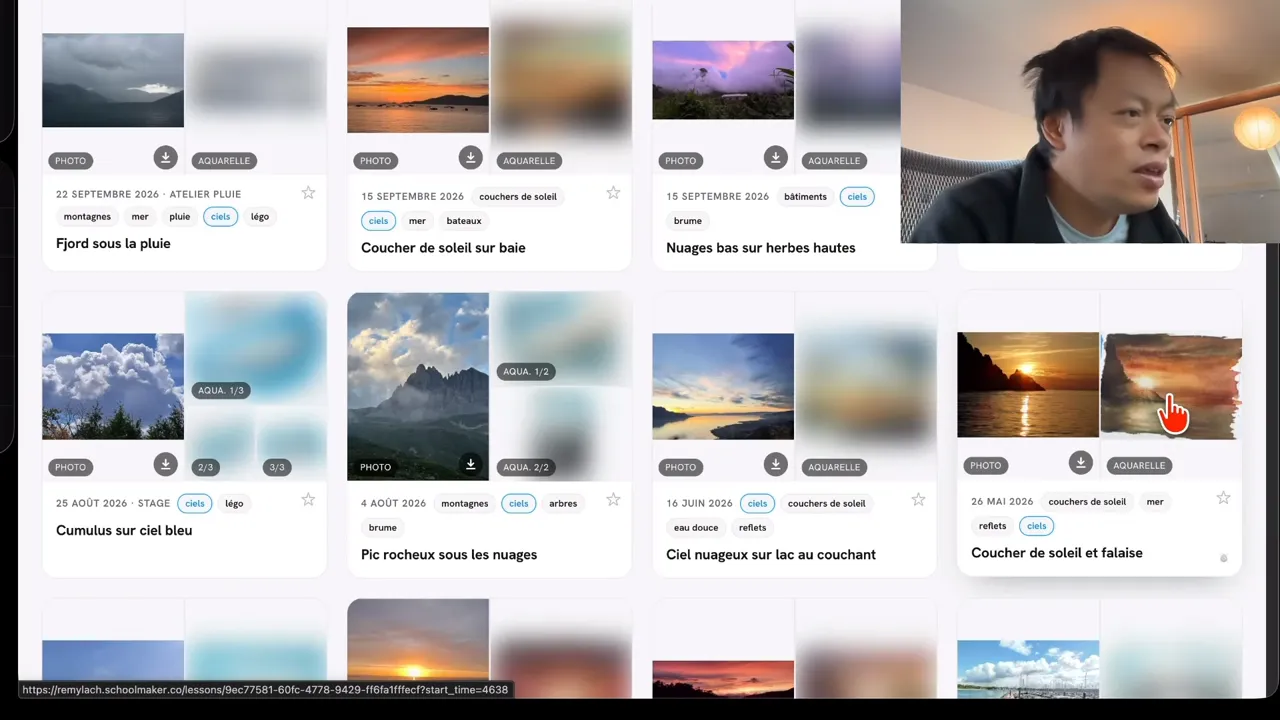
The first type is what I call the painting technique type. One of the best subjects to practice your painting techniques is the sky.
Every sky makes you practice the pillars of watercolor, which are how to create:
- a gradient surface
- a variegated surface
Each sky will also make you practice different painting techniques, for example:
- the wet on wet technique
- a graded wash
- a variegated wash
These subjects are perfect for beginners. Even though they're not easy, they make you practice the foundations of watercolor. But if you only paint this type of subject, you will get bored very quickly, because you will feel like you always do the same thing.
Type 2: what are drawing and perspective subjects?
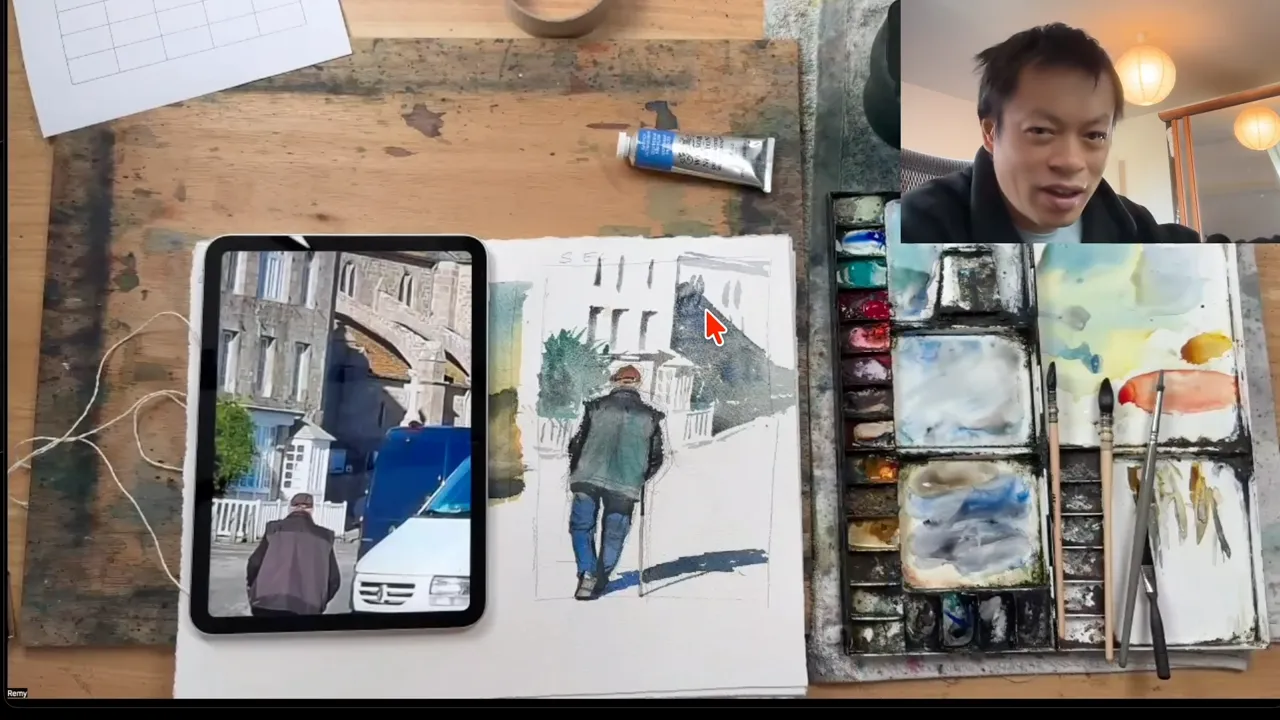
The second type is the subjects that make you practice your drawing and your perspective skills. An urban scene is this second type of subject. Figure painting is too. Stairs, exactly the same.
This is what I did with my students. These subjects make you practice the proportions, and how to make the pigments mingle even though you're in a very restricted area. I could have left the painting as it was, but a student asked me how to create the shadows in the background with the buildings. So I gave it a go: I painted around the buildings by only painting the shadows, and in the end the student told me, "Wow, it works out very well."
This type of subject is very different from skies, and again, it's not easy. But it's complementary to the first approach. With skies you practice the painting techniques, here you practice the drawing techniques.
The limit is that if you only practice this type, you end up feeling that you draw much more than you paint. At some point you get bored too, because if you started watercolor in the first place, it was not to draw, it was to paint. Still, if you only paint, you will never improve: drawing skills are mandatory to be able to paint a wide range of subjects.
Type 3: what are exploration subjects?
Let's assume you practice both the painting skills and the drawing skills, and you get good at them. At some point you will still get stuck. You will be in control of the drawing on one hand and the painting techniques on the other, but there's no room left for playing and exploring.
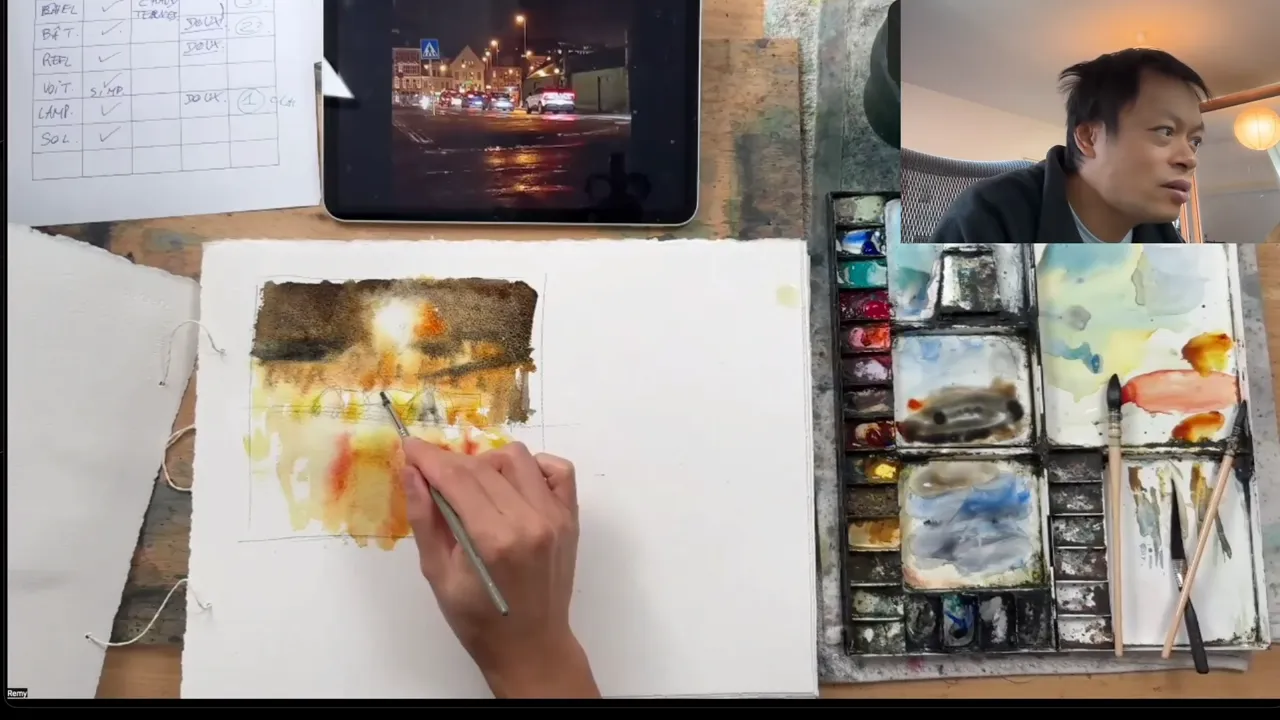
That's the last type of subject I like to paint, and it's very difficult: the exploration subjects. For example, a night scene. When I saw the picture, I wondered how I was going to paint it. There was a very dark sky, buildings in the background, cars, and the street with the reflection of the lights. So many things to manage at the same time, and I didn't know at all how to start.
The subjects where you wonder "how am I going to paint that?" are the ones where watercolor can surprise you the most. The point is to have fun at the end of the road. To paint them, I use the same system I use for every watercolor I create, the Loose Watercolor System. But despite having a structure to follow, I still didn't know how it would end up.
Here's what I did:
- I created the first wash.
- I left the white of the paper for the night lamps.
- For the street, I also left some white of the paper for the reflections.
- I let the first wash dry. At that stage, the students told me they really had the feeling it was after the rain.
- Then I just needed to add the lamp post, the cars and some reflections.
How should you approach exploration subjects?
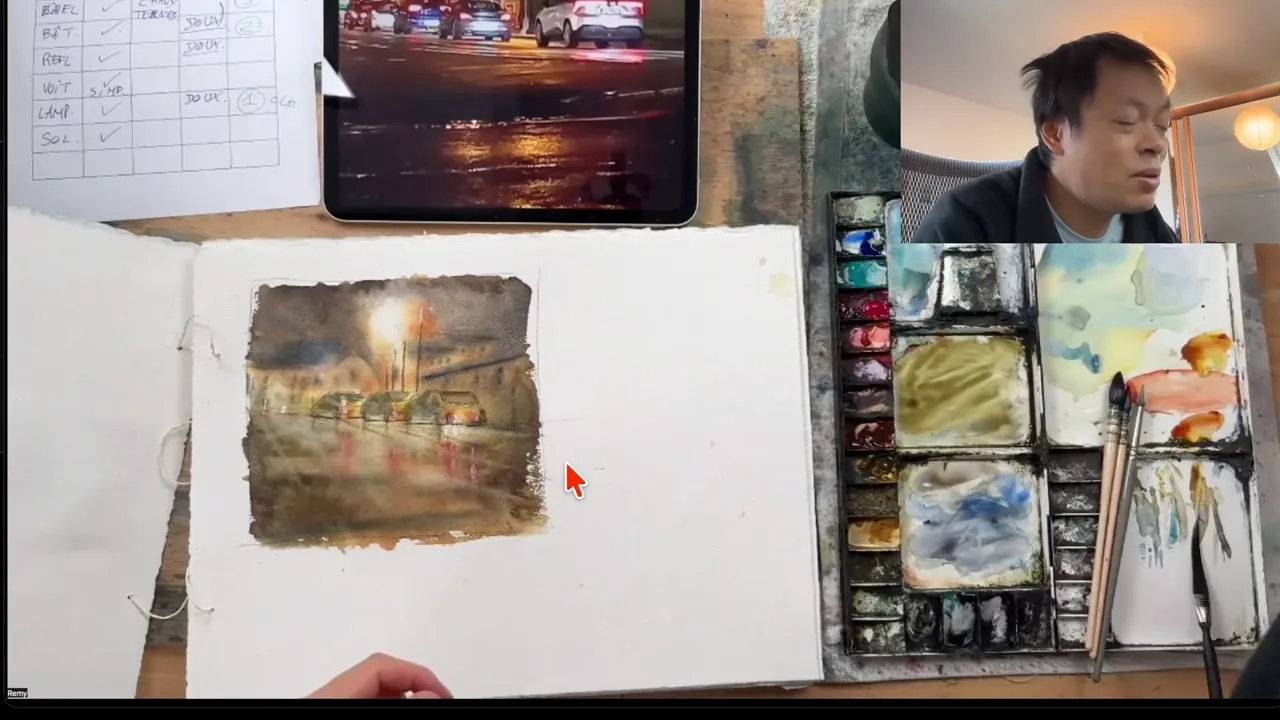
With exploration subjects, you need to manage your expectations. There could be a huge gap between the result you get and the result you expected, and you could be very disappointed if your painting doesn't end up very nice.
So set no expectations on the result and put all your expectations on the experience of watercolor: "I'm going to have fun, I'm going to explore, and if it doesn't end up well, no big deal." If you want to let go in watercolor, you also need to tackle subjects where you really don't know where you're going.
But I don't recommend painting only this kind of subject. If you get frustrated because you mess up every single painting you start, it will hurt your confidence in your ability to create beautiful paintings.
Why cycle between the 3 types of subjects?
The first type is about painting skills, the second about drawing skills, and the last about exploration skills: how to stretch your watercolor muscle so you get out of your comfort zone.
At some point, exploration subjects become the most important ones, because you discover new painting techniques and new drawing techniques. And if you end up enjoying night scenes, for example, you discover one part of your style.
Mixing the 3 types helps you build confidence in watercolor, in your painting skills and in your drawing skills.
FAQ
Why am I bored with watercolor?
Maybe it's because you only paint one type of subject. Switching to another type, like drawing subjects after skies, brings back variety.
Why do I get so frustrated in watercolor?
Maybe it's because you're exploring too much and going out of your comfort zone too many times. Mix in painting technique and drawing subjects to rebuild your confidence.
What is the best watercolor subject for beginners?
Skies. They're not easy, but they train the foundations of watercolor before you move on to drawing and exploration subjects.
If you want to finally create on your own, with a proven system instead of copying tutorials, this is exactly what you'll find here 👇
Discover The Loose Watercolor System