November 6, 2026
What should I know before starting watercolor as a beginner?
Before starting watercolor, I wish I had known 5 things. You don't need many colors. Cauliflowers and blooms are overrated. 100% cotton paper is far more forgiving than cellulose paper. Start with the subjects you love most, even difficult ones. Don't stick too long with tutorials: use what I call the conceptual copy to understand the why behind the how.
Do you need a lot of colors to start watercolor?
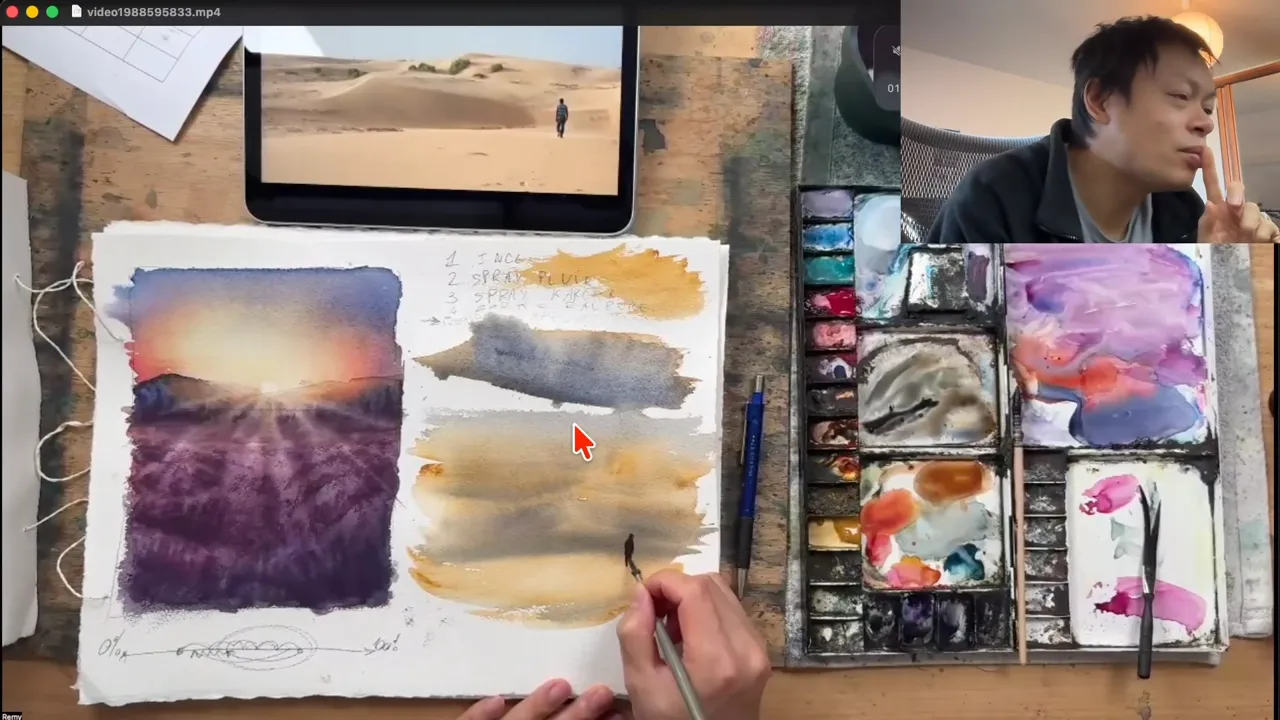
No. You don't need that many colors in watercolor. Take one of my desert paintings. I use yellow ochre, and that single color gives me all sorts of color variations in one wash. This is the color I use to paint the sand.
For the shadows in the sand, I use some ultramarine blue plus some burnt sienna. With just those 3 colors, I can create the light side and the dark side of the sand. I added some blue for the sky, so let's say I used 4 colors for this painting.
All the variations in this painting come from the pigments mingling on the paper, not from how many colors I used.
Should you worry about cauliflowers and blooms?
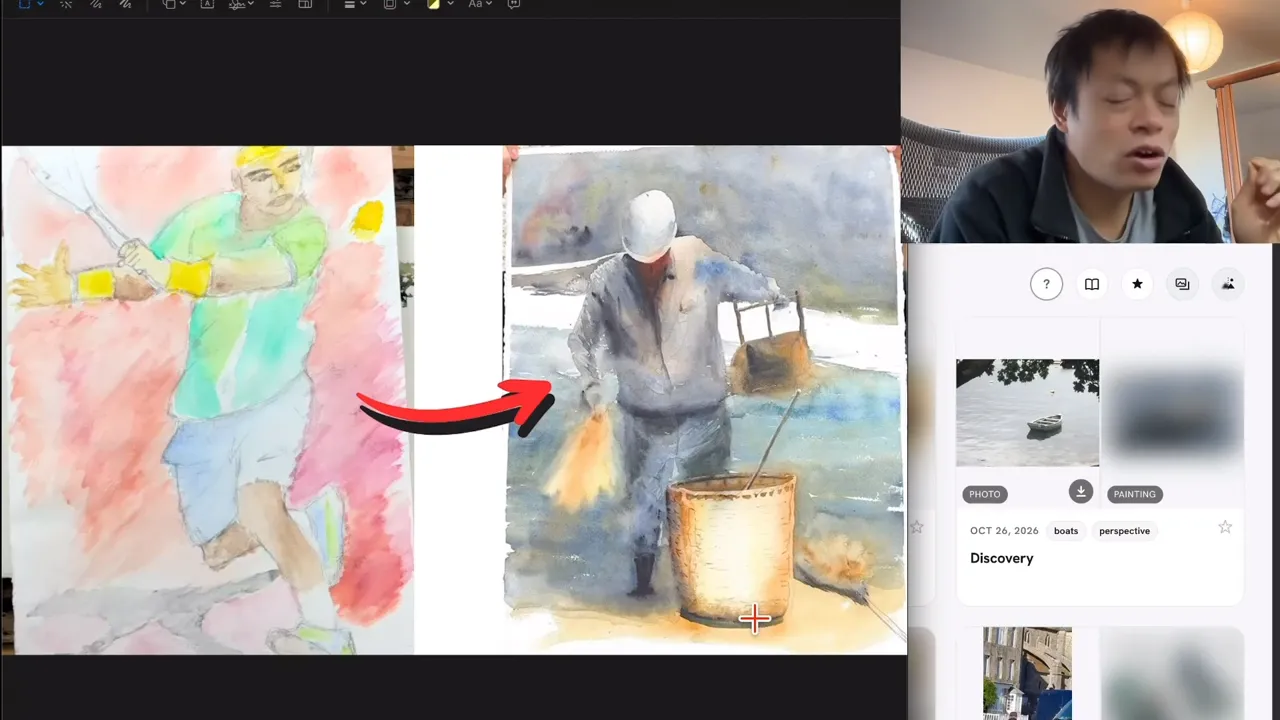
I used to get bogged down with cauliflowers, all the blooms that can appear on the paper. Compare one of my first figures, a portrait of Rafael Nadal that I painted more than 10 years ago, with a figure I painted recently.
The recent one has several cauliflowers and blooms, one of them very visible. The Rafael Nadal painting has none. However, the old painting is not as vibrant as the recent one.
The reason is that cauliflowers and blooms are overrated. I used to be so upset when I saw a cauliflower. I had the feeling that I didn't master anything in watercolor. Now I don't really care about a bloom that appears on the paper. What I care about most is the light:
- How can I convey the light?
- How can I paint the light?
That is where my focus goes now, instead of putting all of it on not creating any cauliflowers. On top of that, cauliflowers can be really beautiful, because they can convey a sort of spontaneity in your watercolor. Wanting your watercolor to be too perfect can be counterproductive in the end.
Which watercolor paper should a beginner use?
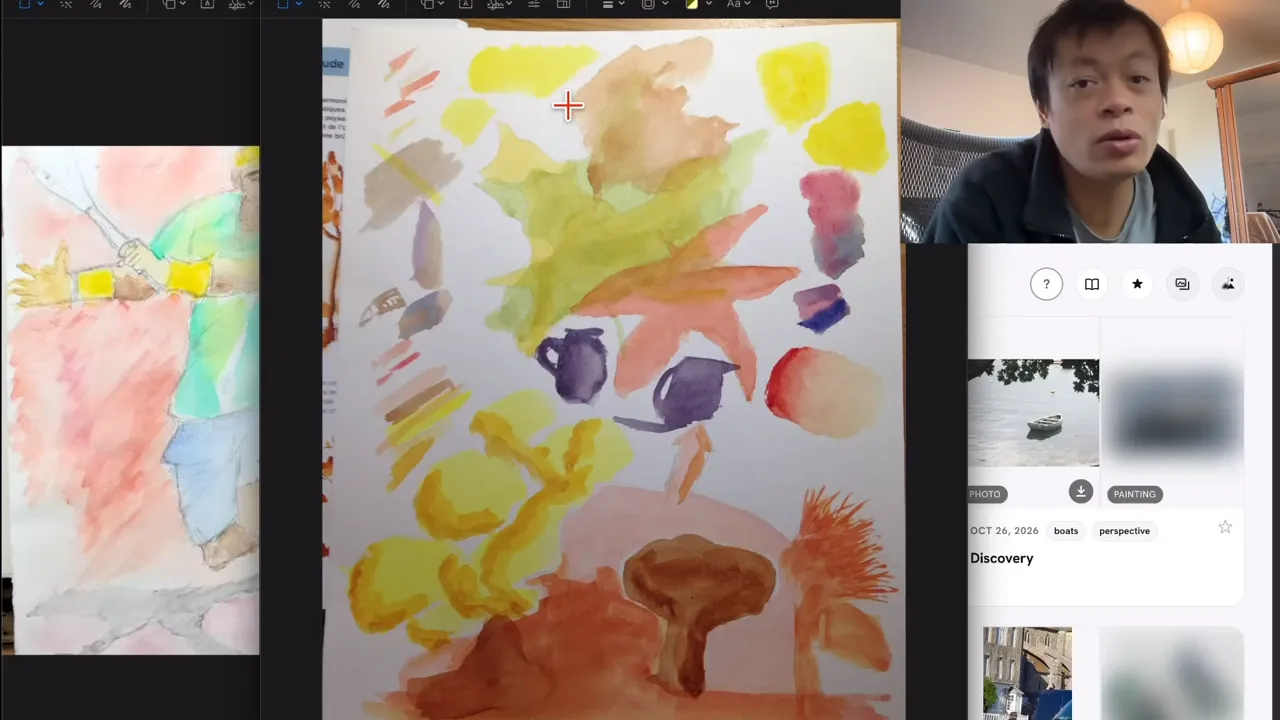
My first watercolor exercises were on cellulose paper. Cellulose paper is not very forgiving, because the pigments don't mingle as well as on cotton paper.
If I had to start watercolor again, I would say this: you can use cellulose paper if you want to discover the medium. But as soon as you feel that watercolor is for you and you want to go further with it, switch directly to 100% cotton paper. The pigments mingle so much better, and it's so much more forgiving.
Sometimes you have the right technique, the right ratio between water and pigments, and the right gesture on the paper, and still the pigments don't mingle. You end up with awkward transitions between one color and another. That is not because of your technique. It's because the paper is not forgiving enough. I found it much more difficult to make the pigments mingle on cellulose paper than on cotton paper.
So sometimes you doubt yourself because it doesn't work, without knowing that the problem doesn't come from you. It comes from your materials and supplies.
What subjects should you paint when you start watercolor?
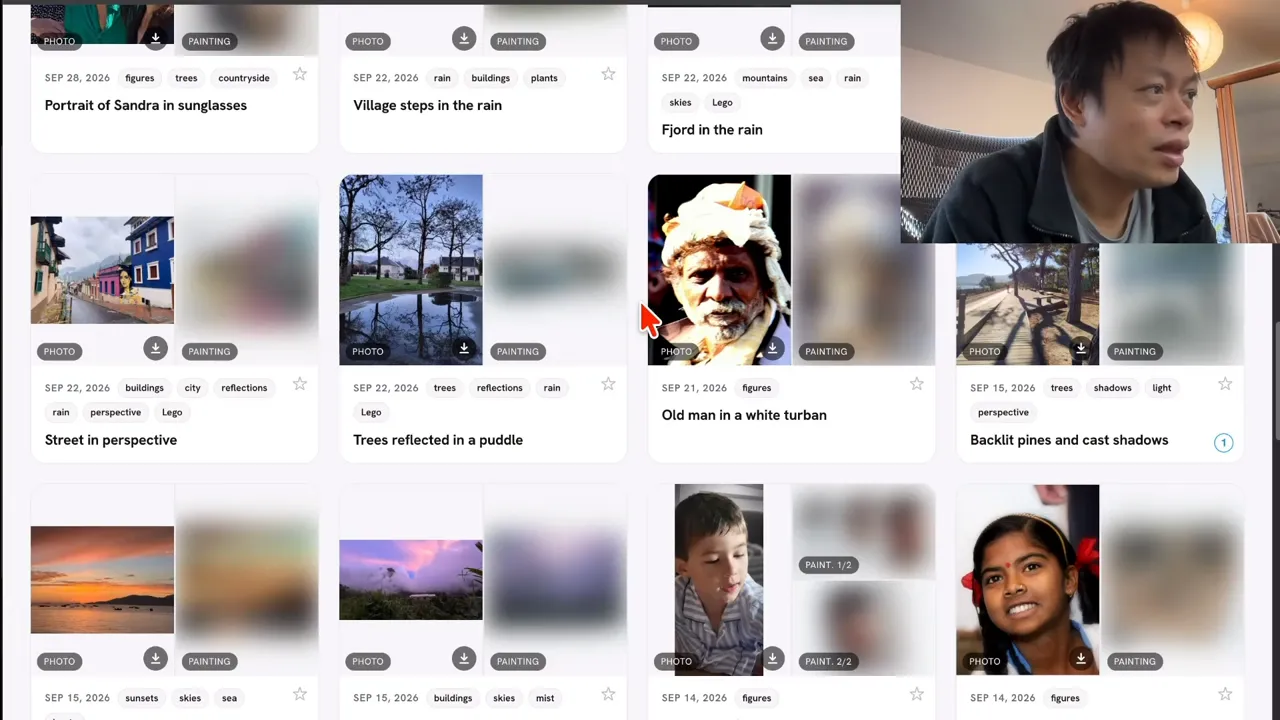
When I started, I saw so many subjects for beginners, for example flowers or little boats on the sea. What I would say now is: start with the subjects you love most, even if they are much more difficult than flowers, like a portrait.
If you find yourself hating what you paint because the subject doesn't speak to you, and the only reason you paint flowers is that it's a beginner subject, don't make that mistake. Stick to the subject you love most.
For me, it's quite obvious: it's landscape painting. Landscapes sometimes require perspective, and sometimes there are so many things to paint. But the fact that you love the subject will make you persevere in that direction. What I found is that I ended up creating my own watercolor techniques to get the composition right and to convey the light in a given painting, even when the subject seemed really complicated at first.
So start with a subject because it speaks to you. Then find your way through that type of subject to simplify it, so that the technical level required matches your current technical level. Think of the desert painting: you don't need to paint everything. You can simplify it to a point where, in minutes, you create something beautiful.
Should you learn watercolor by following tutorials?
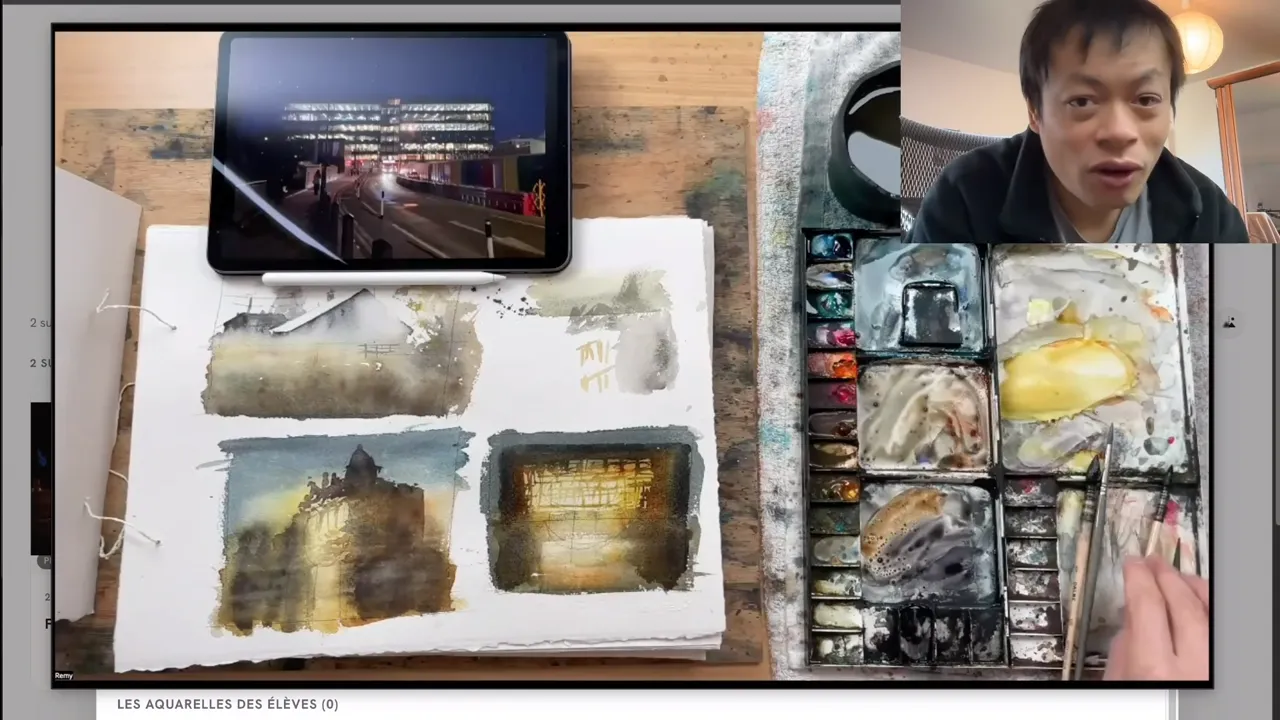
Don't stick too long with watercolor tutorials. I painted hundreds of tutorials when I started. I had a book with more than 100 tutorials and I did almost all of them. But I didn't understand anything about what I was doing. I just followed the instructions without knowing why I was making those gestures or using those ratios between water and pigments.
If you have no idea how to create a painting from your own photo, I suggest what I call the conceptual copy. It consists of taking a watercolor painting from an artist you love and replicating its concept, instead of just following instructions. Here is how I did it with a painting one of my students suggested, a building at night:
- Simplify the painting down to a core concept. Here: how can I paint a building at night?
- Test that concept. I put down a first wash with the light, then a second wash for the buildings. The result is not the same as the original painting.
- Apply the concept to a photo. I used a photo from a student and replicated the concept on it.
The result is not perfect. However, you can test, extract a concept from a watercolor painting or a tutorial, and apply it to your own photo. This is a better way. I wish I had known it before starting, so I didn't waste years copying every single tutorial I found. Instead, I put consciousness into it, I understood the why behind the how, and that is how I could develop my own watercolor style.
FAQ
Is cellulose paper good enough to start watercolor?
Yes, to discover the medium. Once you want to go further, cotton paper saves you from doubting yourself over transitions that fail because of the paper, not your technique.
Are cauliflowers a sign of bad watercolor technique?
No. My early Rafael Nadal portrait has no blooms but is less vibrant than my recent figures, which have several. The light matters much more than avoiding cauliflowers.
What is the conceptual copy in watercolor?
It's a way to learn from a painting you love without copying it step by step: you reduce it to one idea, such as painting a building at night, and reuse that idea on your own photo.
If you want to finally create on your own, with a proven system instead of copying tutorials, this is exactly what you'll find here 👇
Discover The Loose Watercolor System