July 22, 2026
What to do when you want to give up watercolor
If something feels off in your watercolor practice and it makes you want to give up, look for your map: the one that tells you "go through this point, then do this, then do that." Set your ego aside, accept that you don't have to do everything on your own, and find your watercolor crutch. That one detail changed absolutely everything in my painting.
Why do people end up giving up watercolor?
In watercolor, you can go anywhere and do anything. You can:
- tackle any subject you like;
- use any pigments you like, in tubes or in pans;
- pick any brush you like;
- use any techniques you like;
- follow any artist and any tutorials you like.
After a while, you don't really know where to go anymore. I gave up watercolor for 4 years, between 2016 and 2020, because I couldn't see any way forward.
For me, the trap was the idea of doing everything on my own. For 13 years, I had it stuck in my head that I had to do it all by myself. That's why I'm completely self-taught, that's why I struggled for 2 years at the start before painting a watercolor I thought was halfway decent, and that's why it took me more than 13 years to reach a point where I'm happy with the watercolors I paint.
What is the "Silksong map" of watercolor?
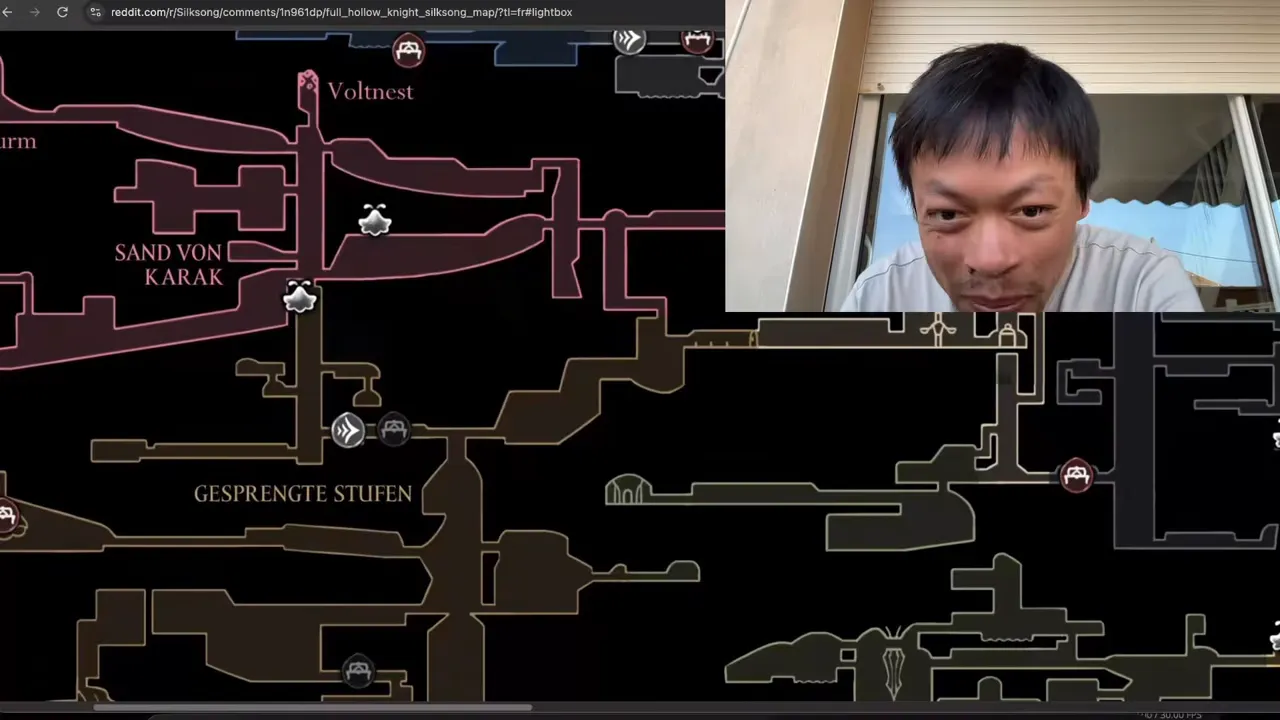
I play video games, and one game taught me this lesson: Silksong, the second Hollow Knight game. With the first one, I didn't even last an hour. The buttons were in awkward places, there was input lag, and above all I had absolutely no idea where I was supposed to go. In that game, you can go anywhere. Me, I need some guidance at some point.
With Silksong, I started running into the exact same problem. Except this time, instead of quitting, I asked myself: "What's the problem here? Why does everyone say it's amazing while I'm the only poor soul who hates it?" The answer was that I didn't know where to go. So I looked up the full map of the game: where I start, where the secrets are, where you can save, how the levels connect. That map unlocked absolutely everything. From that exact moment, I played the game all the way to the end, about 100 hours.
Here's what I took from it: with some games, I know within 5 minutes that they're not for me. But with Silksong, I could feel there were interesting mechanics underneath. If you feel the same thing with watercolor, it's your watercolor Silksong. Don't give up on it: look for the full map.
Is getting help cheating?
Part of me was saying: "You're cheating, and you wanted to play the whole game on your own." Maybe part of you will think the same thing about watercolor: "I wanted to do it all by myself, to discover my own map."
But the reality is that there are 2 scenarios:
- You give up watercolor and get on with your life. Maybe you'll come back to it, and the cycle will start again: you'll quit, you'll come back, you'll quit, you'll come back. Because if watercolor is your Silksong, it will come back.
- You take a map, and a whole world of possibilities you never imagined will open up.
Maybe you gave up on the first game. In the second one, have the humility to look for your full map, the one that will mark out the path for you.
You can do 80% on your own. But for the remaining 20%, maybe you need a map.
What was my own map?
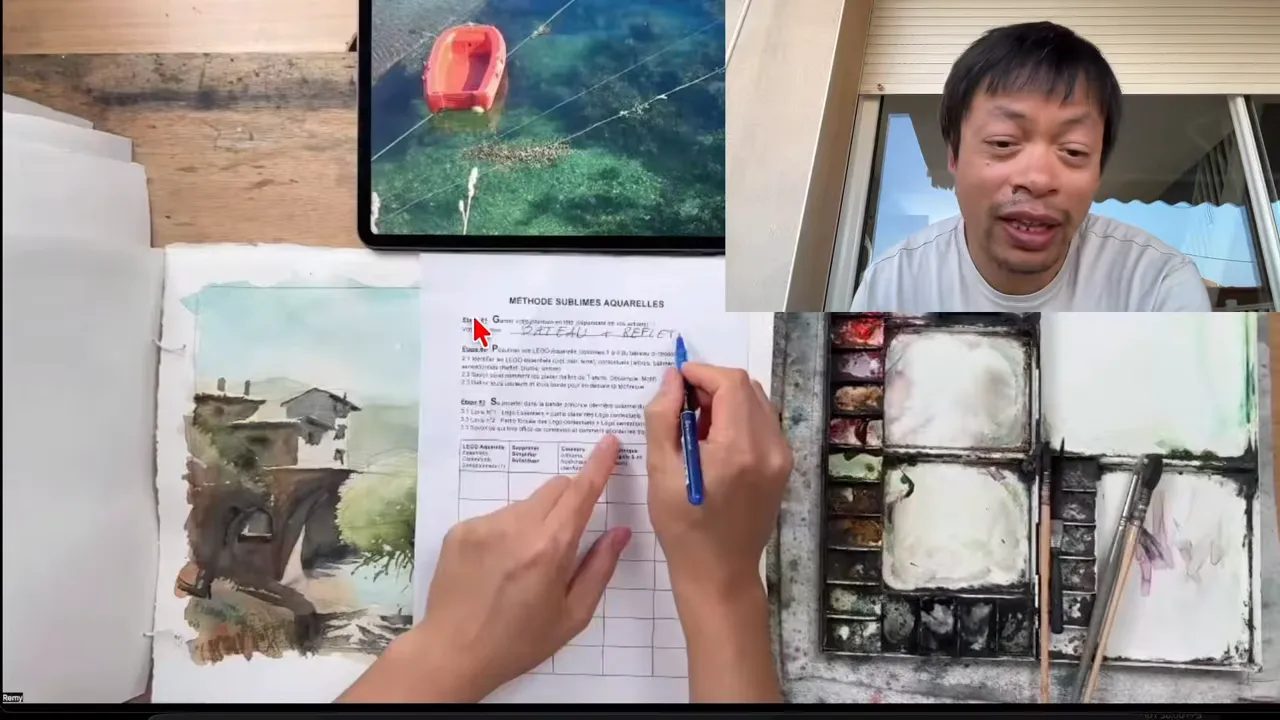
The map changes over the years. I wanted to paint from my own photos, discover my own techniques, do everything on my own. Until the day I realized I didn't really want to paint my own subjects all that much, or to paint alone in my corner. My only option was to stop.
I started teaching during lockdown, in 2020. In 2022, I started doing livestreams with my students, but I only gave feedback on their watercolors: I didn't paint live, I didn't dare. In 2023, I started painting live in front of them. I accepted that I might fall flat on my face in the middle of a stream. And that changed absolutely everything.
My Silksong map, in 2023, was asking my students for help, so they would give me feedback on the watercolors I was painting. Recently, we started from a photo, I analyzed it with the method I've used for years to paint all my watercolors, then I painted the first wash and the second wash, explaining what to do in each one. I would never in my life have tackled that watercolor alone, because I don't enjoy painting alone anymore: I have nothing to show, nothing to discover, nothing to explore, and nobody gives me any feedback while I paint.
Why accept a crutch in watercolor?
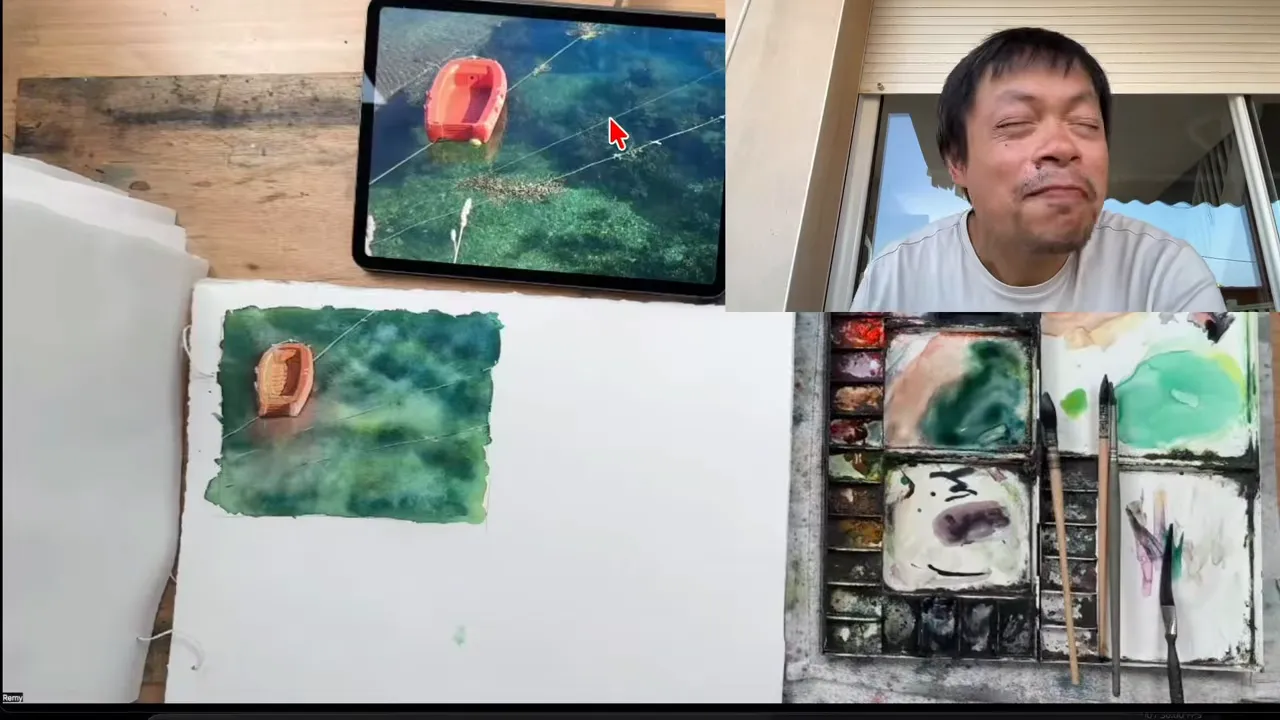
At first, I told myself it was an admission of weakness: "You can't even pick up a brush on your own." But if on one side there's a world where I don't paint anything anymore, and on the other a world where I paint with my students' help, the choice is easy. Still, having to put my ego aside was a real wake-up call.
People often refuse a crutch out of pride: "No, I'm fine, I can do it," while they're clearly struggling. Watercolor is the same: accept it and find your crutch.
The word crutch can sound negative. But when I tell my students during a stream, "Honestly, I need you to be able to paint watercolor," I can feel a kind of "Don't worry, we've got you." They help me, and they're almost happy to help. A crutch or a map isn't aware of being happy to help you. But if you ask someone for help, remember that this person wants to help you too. You make them feel valued. That's why human connection matters so much.
I used to think doing everything on my own was the Holy Grail, the promised land. Not at all. I'm even happier painting today, and even happier helping my students, because they get something human, relational and social out of it too, beyond the technical side of watercolor.
FAQ
How do you know if watercolor is worth sticking with?
Ask yourself whether, despite the frustration, you feel something drawing you in. If you do, watercolor is your Silksong: even if you stop, it will come back.
Do you have to learn watercolor all on your own?
No. Wanting to do everything without help cost me years. You can cover a big part of the path on your own, but not all of it.
Is needing help to paint a sign of weakness?
No: don't be ashamed of your crutch, be proud of it. The people you ask for help are often happy to give it.
If you want to finally create on your own, with a proven system instead of copying tutorials, this is exactly what you'll find here 👇
Discover The Loose Watercolor System