October 2, 2025
Should you paint watercolor on wet or dry paper?
Neither one alone. Painting only wet-in-wet uses up a phenomenal amount of pigment and puts your light at risk. Painting only on dry paper dries fast and leaves little room for mistakes. These days, I paint every single one of my watercolors with what I call the puzzle technique: I lay each piece on dry paper, refine it wet-in-wet only if I'm not happy with it, then move on to the next piece.
What are the problems with the wet-in-wet technique?
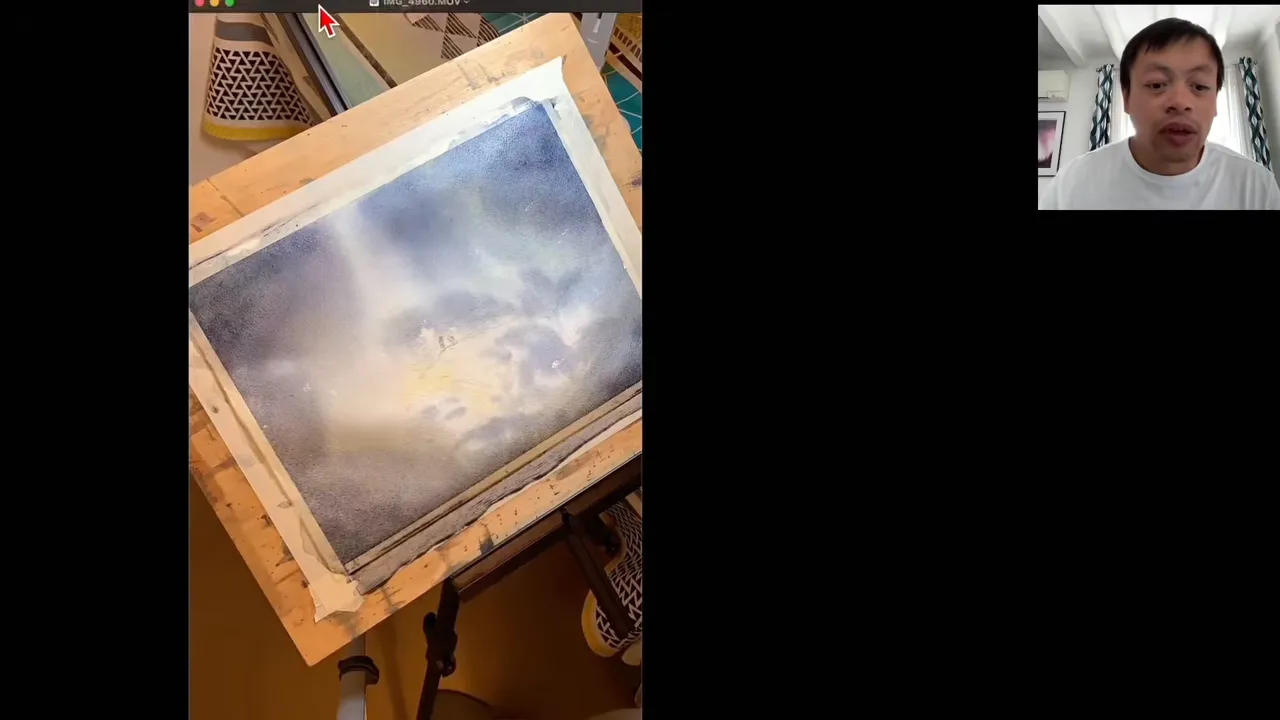
The idea behind wet-in-wet is simple: you wet the whole sheet, then you drop in your pigments so they blend on the paper. When I started out, I painted 80% of my work wet-in-wet. The turning point was a misty watercolor, a snowy landscape I painted in my kitchen during lockdown. I kept adding more and more pigment for dozens of minutes, I turned the sheet around, I added more in the corners, and it was never dark enough. As it dried, the wash faded even more.
I see 2 problems:
- Using far too much pigment. Every time I drop pigment into wet paper, it feels like it fades and goes completely dull. Either you put in too much and feel like you're wasting it, or you don't dare put in enough and your watercolors end up even duller. And all that for a contrast I don't find that striking.
- The darkness problem. One of my students, who paints on cellulose paper and soaks her sheet completely, painted a forest. In her reference photo, there was a patch of light deep in the forest. She added pigment here and there. It spread too much and started eating up all the white of the paper, and with it all the light. If you have good control over how much pigment you load, you can get around this, but it's a real risk when you paint wet-in-wet.
What are the advantages of painting wet-in-wet?
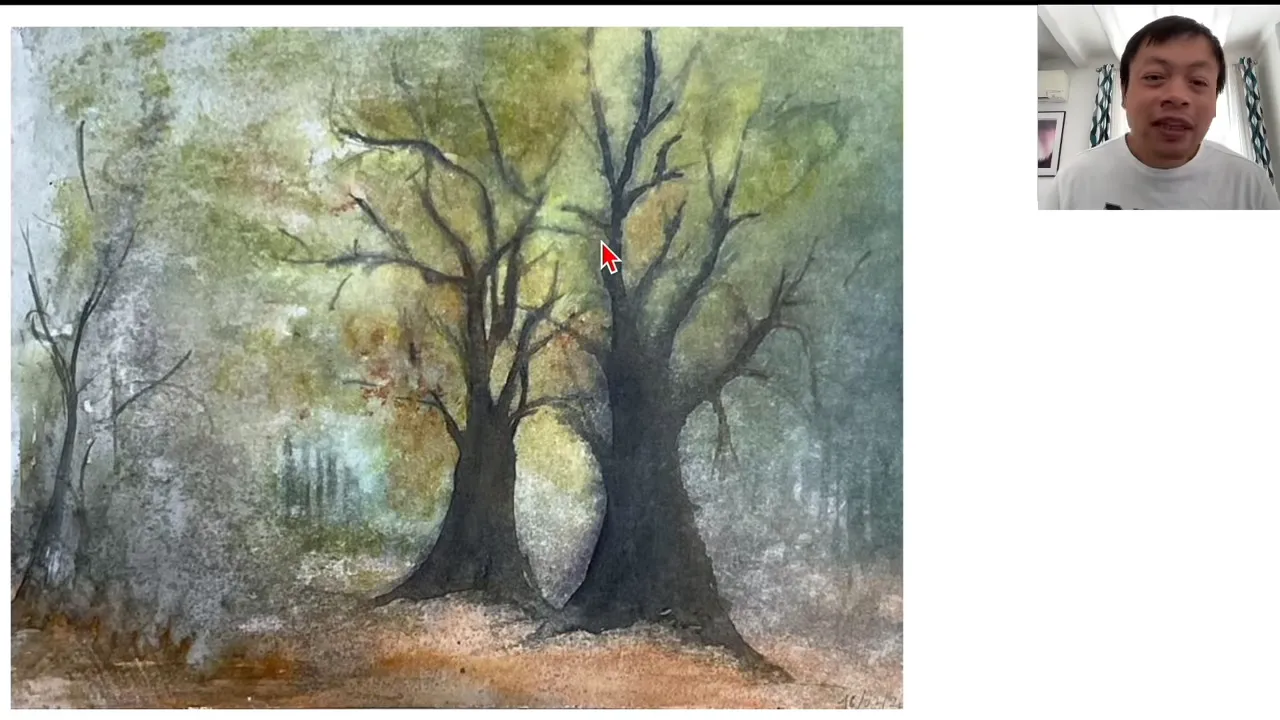
I don't want to bash wet-in-wet: it's a fabulous technique. It has 2 real advantages:
- Pigments blend more easily. Since they're already floating in water, they move around the paper more freely. As long as you don't overwork it, the blending is much smoother.
- More time. That's the main reason my student paints this way: it doesn't dry too fast and her colors keep blending.
But for me, painting watercolor only wet-in-wet is a mistake. Today, only 20% of my painting is wet-in-wet.
Why paint on dry paper?
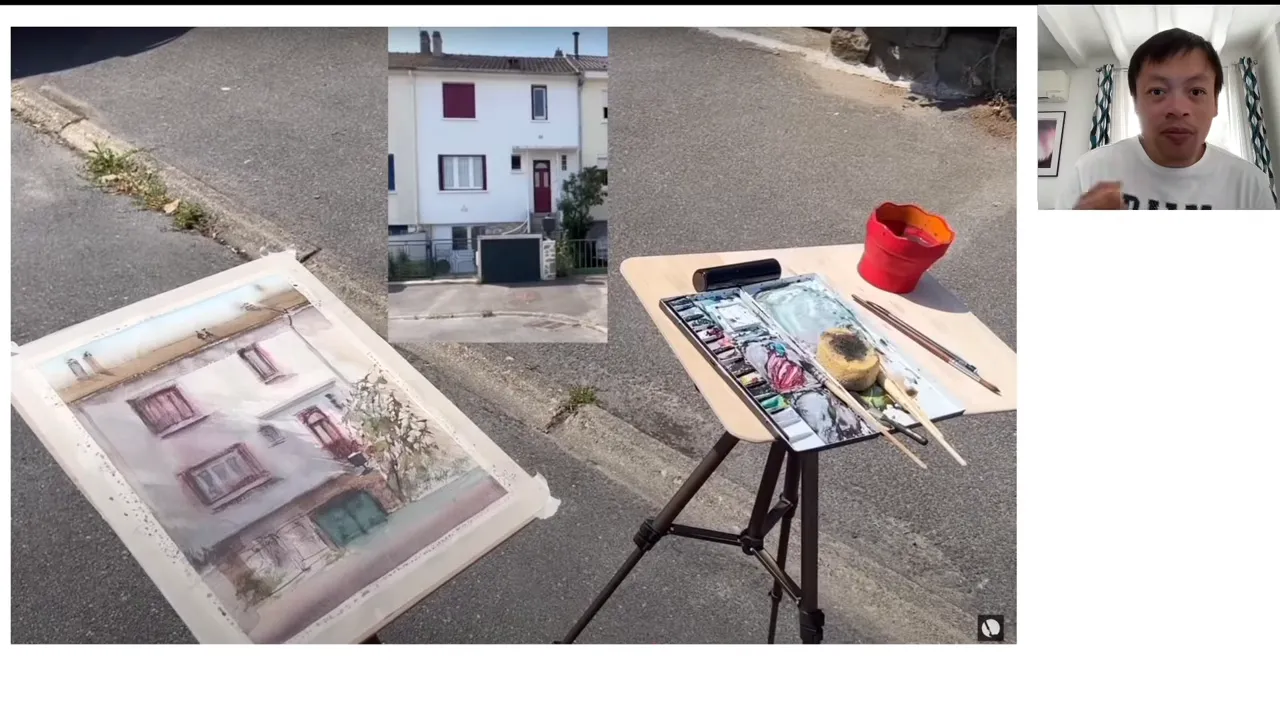
In the end, there are only 2 techniques in watercolor: painting on an area that's already wet, or on completely dry paper. Dry paper is now my main technique, for 3 reasons.
- It's extremely versatile. I can paint outdoors and start right away, without wondering whether I've wet every area or whether there's enough moisture. With a sketchbook or a travel journal, or in front of a sunset that's fading fast, you have less time. For me, dry paper is the technique of spontaneity.
- It's economical. I like the analogy of Velcro and a ski slope. Wet-in-wet, you're on a ski slope: the pigments slide. On dry paper, they grip like Velcro. The paper catches all the pigment instantly, and I feel like I get more intensity and vibrancy. I'd 10 times rather paint on dry paper when I need strong light and strong contrast.
- It preserves the light. For my student's forest, I showed her: I start the background on dry paper, with a hard edge, then go straight into the darker ground. In 2 seconds, the light is preserved.
What are the limits of dry paper?
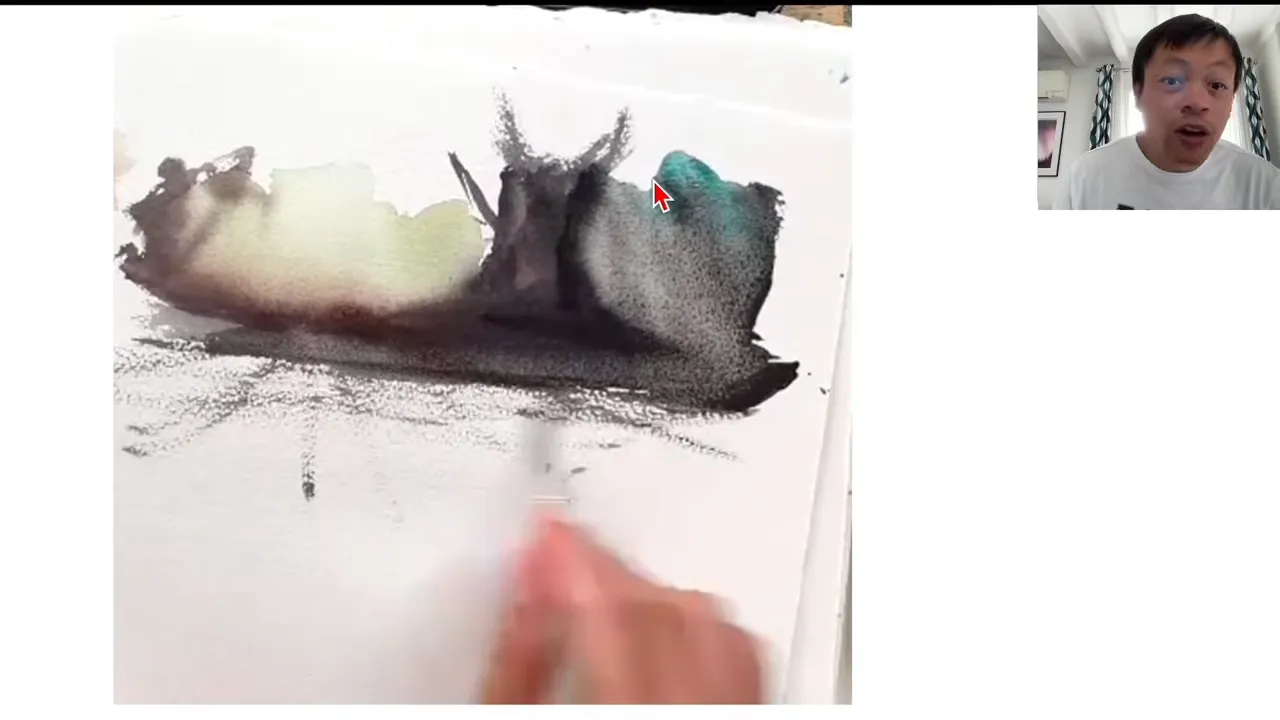
My student told me it was really hard: when I paint on dry paper, very crisp lines appear wherever I stop, and she doesn't necessarily want those hard edges. Here are the limits:
- It dries fast. Paper is made of cotton, and it works like a sponge: a dry sponge soaks up water instantly and dries much faster than a sponge that's already soaked.
- There's little room for mistakes. As a rule, you only get one pass.
- The risk of coloring in. If you don't use enough water, you tend to overwork it and end up coloring in with watercolor, with no blending at all.
How does the puzzle technique work in 3 steps?
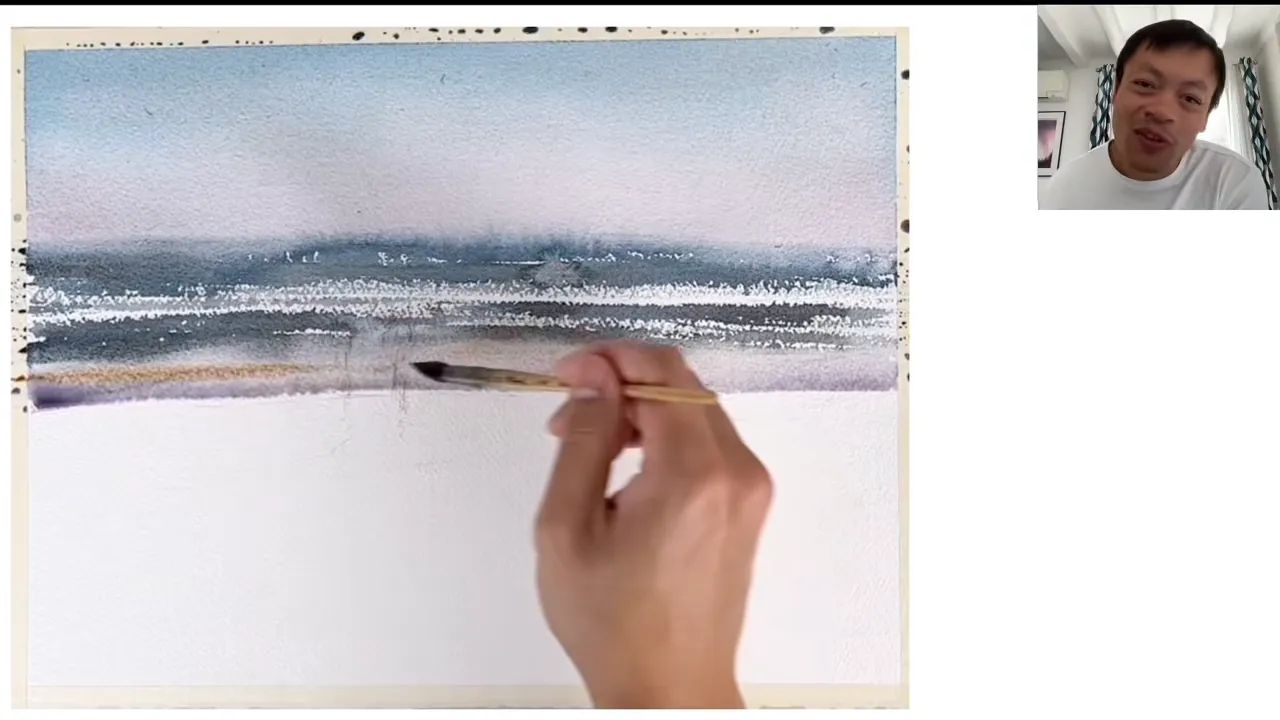
The puzzle technique combines the best of both worlds. On a beach scene I painted, my students thought I had worked wet-in-wet because there was so much blending. Not at all.
- Lay a puzzle piece on dry paper. On this beach, my first piece was the reflection of the wet sand at the water's edge. That way, I get all the advantages of dry paper: versatility, saving pigment and preserving the light.
- Refine the piece wet-in-wet (optional step). I only go wet-in-wet if, and only if, I'm not happy with the piece. Here, I had forgotten a little wet sand effect. I picked up a sand color from my palette and laid a stroke while the piece was still wet. A single small brushstroke is enough to suggest sand through the water.
- Move on to the next piece. You fit the pieces together one after another. I placed the piece below the one I had just laid and refined, in a single pass, with no need for the second step. Then the sky: I refine it if needed, but once a piece is done, I don't touch it again.
This way of working changed my whole practice. I painted this beach a few years ago, before I had even put into words what I was doing.
What are the downsides of the puzzle technique?
There are 2:
- It requires a plan. One student told me he felt like everything was drying at the same time and he was fighting on 10,000 fronts. That's true, and it's exactly why you need to know which piece to lay first. When I used to do 1000-piece jigsaw puzzles, I started with the corners, then the edges, before tackling the middle. Without a method, you're working blind and it takes you 10 times longer.
- It requires letting go. The edges between pieces set as the watercolor dries. Within a piece, you can keep refining as long as it isn't finished, but you reach a point of no return where you have to leave it as it is. Otherwise, you'll run out of time and end up with harsh lines between the pieces. You have to tell yourself: "it's not perfect, but I need to move on."
For me, these aren't real problems. Someone once wrote to me that they were looking for "20% math and 80% poetry" in watercolor. I replied that watercolor is 50% math and 50% poetry: 50% structure and 50% letting go.
FAQ
Do you have to get your watercolor right the first time?
That's what I used to tell my students, and it still holds. But thanks to the second step of the puzzle technique, you can refine your piece, so there's no need to put that pressure on yourself.
Can you paint wet-in-wet outdoors?
Yes, you can wet the paper as soon as you start painting. But it stays soaked and takes much longer to dry, which makes it harder to follow up with a second layer.
If you want to finally create on your own, with a proven system instead of copying tutorials, this is exactly what you'll find here 👇
Discover The Loose Watercolor System