July 29, 2026
Should you paint everything you see in a watercolor reference photo?
No. When you try to paint everything you see in your reference photo, the final watercolor doesn't convey the right emotion, because people can't grasp the essential part. Reduce what you are going to tell, focus on the essential thing, and look at your process to find the exact task where everything falls apart.
How did I realize that giving too much backfires?
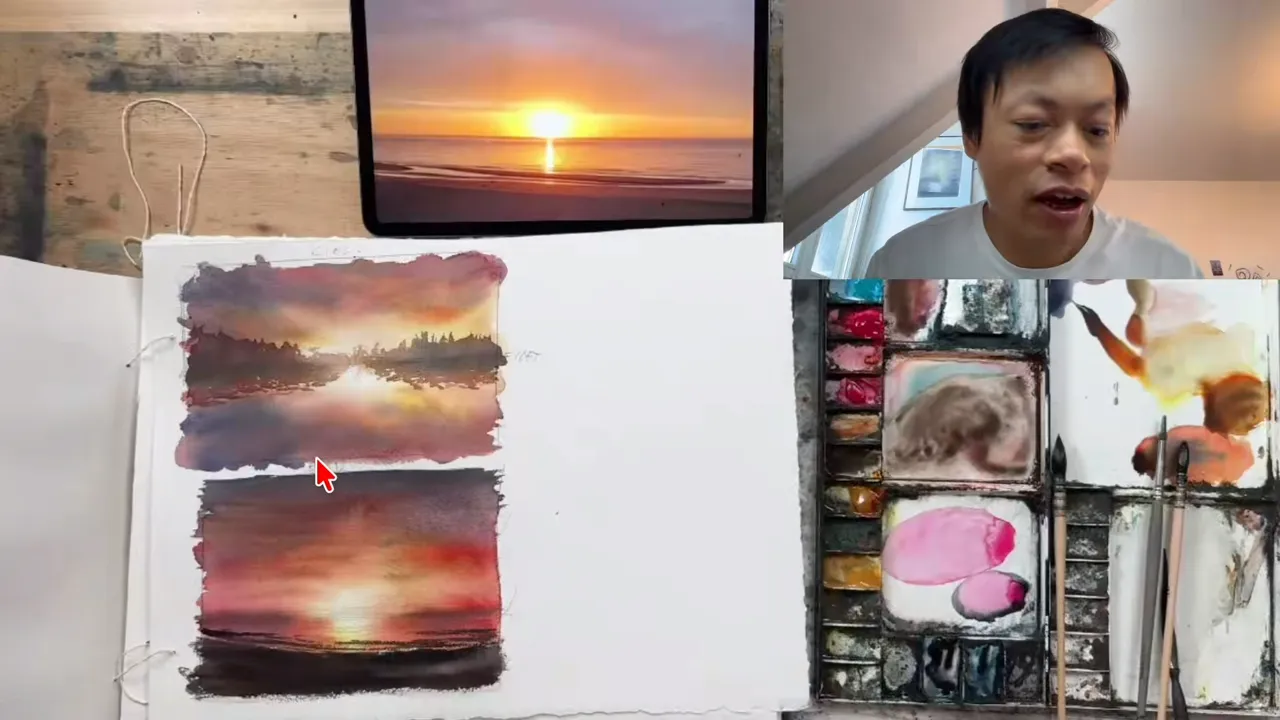
It started with a workshop on gorgeous seascapes that I did with my students. I wanted to provide so much value that I shared all the techniques I knew about painting the sea. The workshop lasted 3 hours straight without any pause, only painting, and I shared 11 techniques, including:
- a beautiful sky with a mirror on the water
- a sunset on the sea
- the beach with waves, the sand and the wet sand
- the waves themselves, with 3 different techniques
All the reference photos came from the students themselves. To create this workshop, I studied hundreds and hundreds of my previous paintings so I could give them only the essential information.
At the end, one of the students told me it was great and she now had lots of techniques to work on, but it was a little bit difficult to digest. The feedback from the other students was the same: they would have to rewatch the 3-hour replay to understand deeply what I meant and how to reproduce it on their own subjects.
At first I didn't understand. Then I saw it: I had put so much pressure on myself to give so much value that it was counterproductive. In the end, they would maybe use 1 or 2 techniques among the 11.
Why is it the same mistake in your own watercolors?
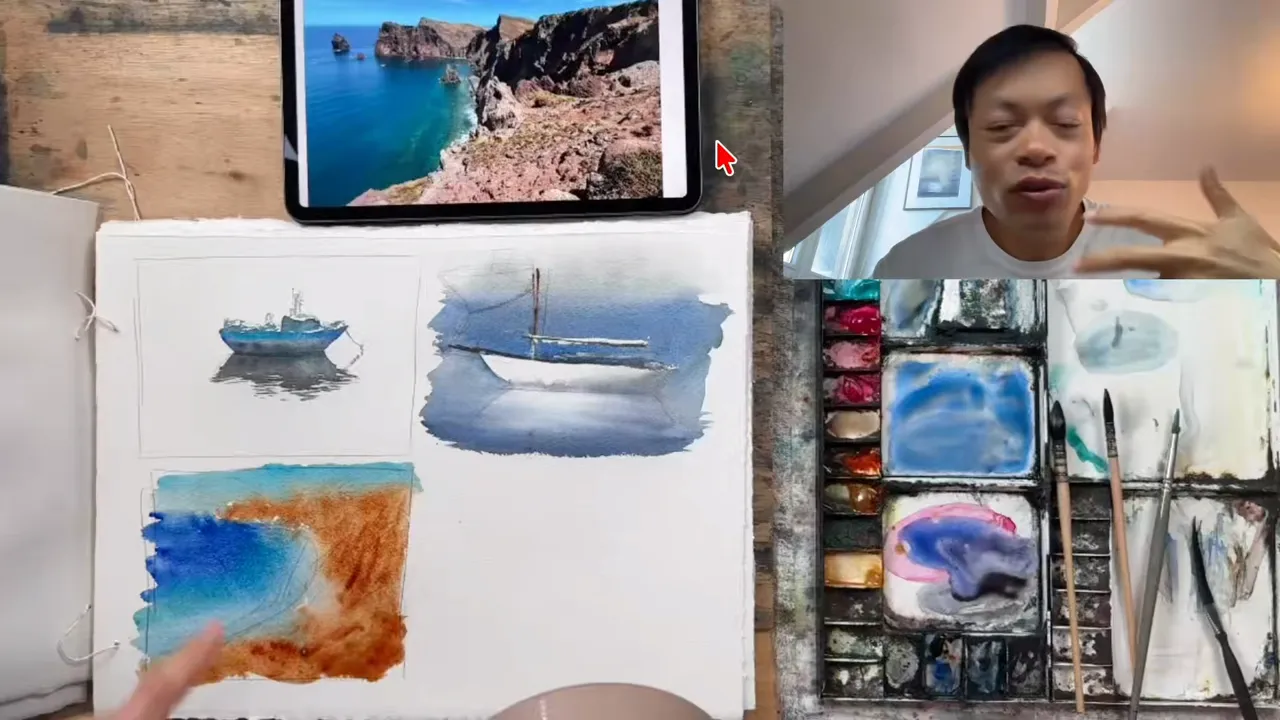
When you want to provide too much, it can backfire, and it's exactly the same in watercolor. If you struggle when you try to interpret your own photos, it may be because you want to communicate everything and paint everything. The painting then loses the right emotion, because the viewer can't find the essential part.
This is exactly what I see in my students: they want to tell everything. By reducing what you are going to tell, you can focus on the essential thing, and you can also avoid the essential mistakes.
What changed when I reduced the subject?
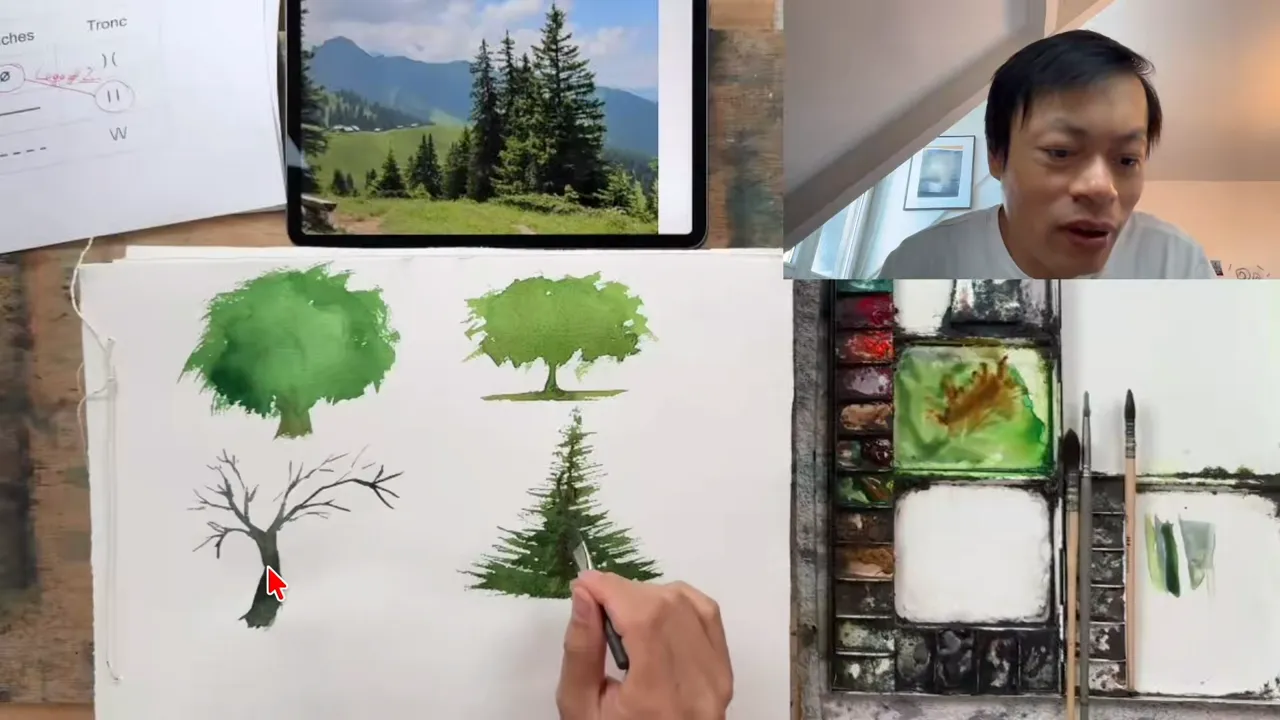
For the next workshop, I first wanted to cover nature, Mother Nature. But when you look at it, it's the same thing as the seascape. The sea has skies, beaches, waves, boats, so many subtopics. Nature has mountains, forests, lakes, countryside. I was about to make exactly the same mistake.
So I decided to focus only on the forest and the trees. Because I reduced the mental load, the workload and the topic, I could explain exactly:
- how to paint a tree
- how to paint a pine tree
- how to paint a dead tree
- how not to make the essential mistakes
For example, with branches: oftentimes you need to split a branch into 2, but a branch rarely splits into 3 or 4. This is the kind of mistake I could spend time on, only because the topic was smaller.
Does a simpler subject still give a wow effect?
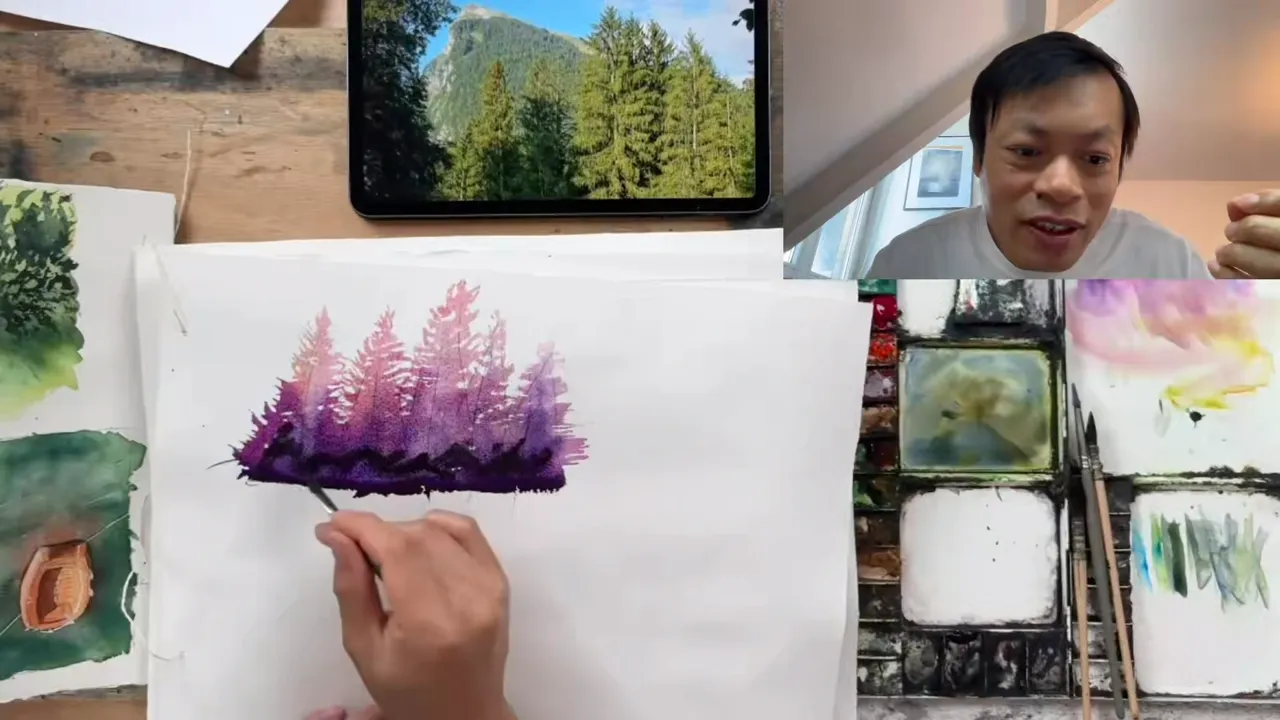
Maybe trees don't have exactly the same wow effect as the seascape. But this workshop lasted 2 hours instead of 3, and I shared 3 techniques instead of 11. It was so easy to create, because I just needed to take those 3 techniques and confront them with different photos from my students. For a first forest photo, I showed how to interpret it with one technique. With the pine trees, I showed a second technique where you can use different colors. And for another forest, I shared the last technique.
This is what created the wow effect. My students told me they didn't know it was possible to create something beautiful, where the pigments fuse, and that at the same time allowed them to detach from the reference photo. What they painted during the live worked really well. They loved it so much that I'm now going to build all my workshops on a subtopic and not on the broad topic.
How do you find what is wrong in your own practice?
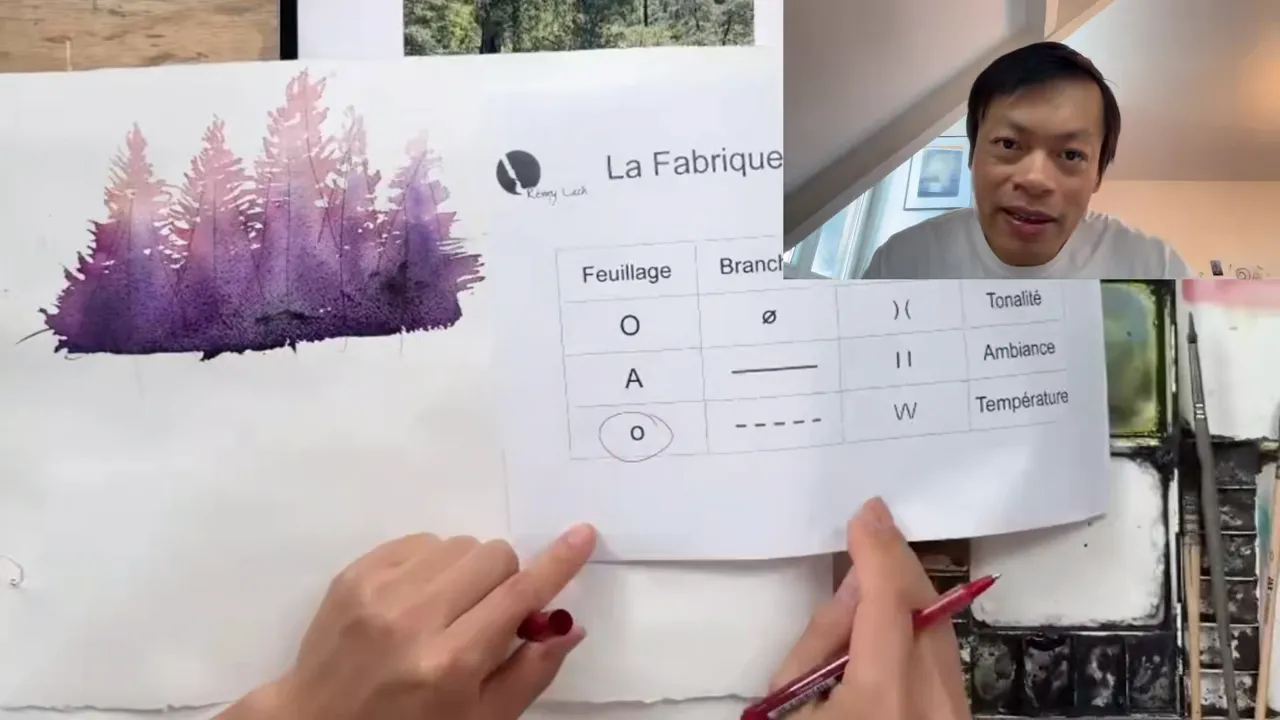
If you struggle today to make your own watercolor paintings, something is off, something is missing or something is not right, and you can feel it. To know exactly what it is, you have to deconstruct:
- List all the little tasks you do when you try to create your own watercolor paintings.
- Spot exactly the task where everything falls apart.
- Once you spot it, ask yourself how you can make it fun, how you can make it easier, how you can make it simpler.
It's not about the final result, and it's not about analyzing your watercolor. It's about analyzing the process of your practice: what is off, what is wrong, what feels not right to you. For me, with the seascape workshop, the problem was too many techniques: the mental load was too high. Just by adjusting this single parameter, I created the forest workshop.
This breakthrough was exactly what I needed to have fun again and feel less pressure. It's how I was able to create more than 1,000 paintings without any tutorials, without art school and without any talent. I have an engineering background, I'm not an artist at all, I'm 100% self-taught and I learned watercolor the hard way.
FAQ
Is a smaller watercolor subject less impressive?
Not necessarily. A forest may not have the same immediate wow effect as a seascape, but with fewer techniques my students painted pieces where the pigments fuse and that freed them from the photo.
How many techniques should you work on at once?
In my experience, 11 in one session was too much, and my students would maybe have used 1 or 2. Three techniques on one subtopic, the trees, were enough to get results they loved.
Should you analyze your finished paintings to improve?
Look at your process rather than the finished painting. Find the task where things go wrong, then make that step more fun, easier and simpler.
If you want to finally create on your own, with a proven system instead of copying tutorials, this is exactly what you'll find here 👇
Discover The Loose Watercolor System