July 31, 2025
What mindset mistakes keep you from improving at watercolor?
If you're not improving at watercolor, the problem isn't always technique. Often, 3 mindset mistakes are holding you back: binary thinking ("I can't draw"), having no second-order reasons to keep going when your motivation drops, and feeding your mind the wrong things, like "tutorial obesity." For me, technique is 50% of the work, and mindset is the other 50%.
What is binary thinking in watercolor?
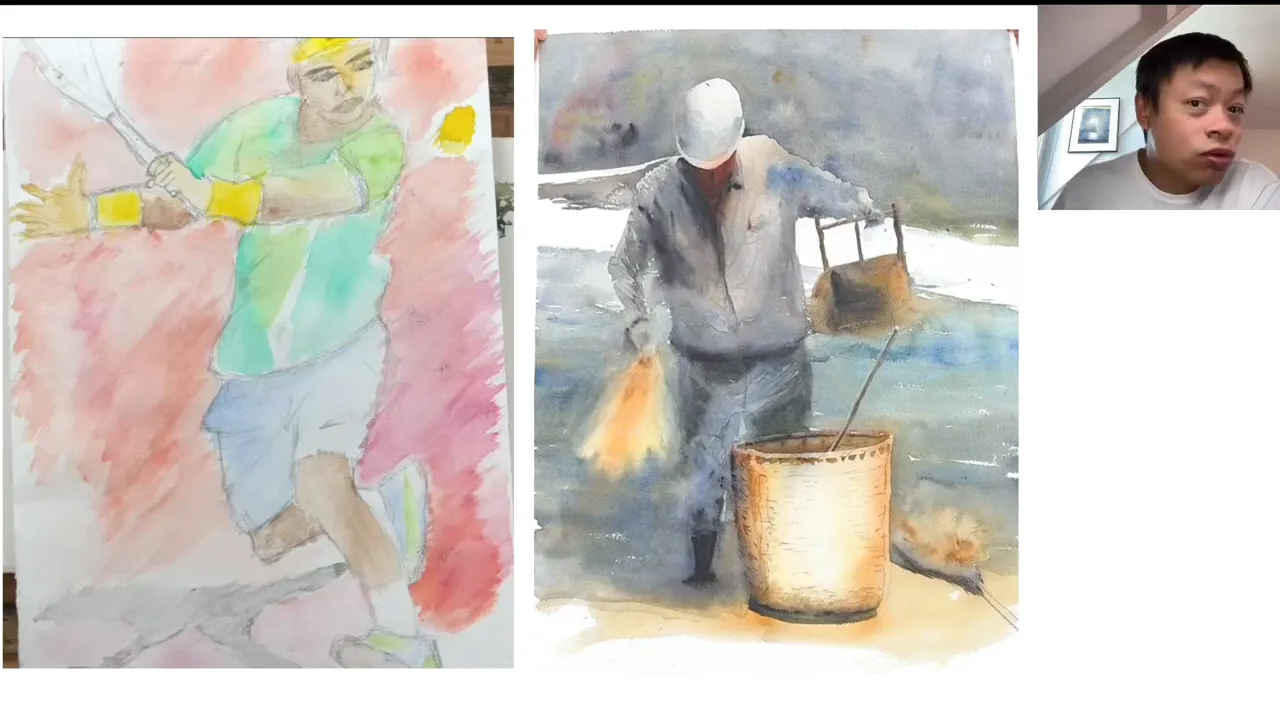
About 12 years ago, I painted Rafael Nadal in watercolor. The first thing I told myself when I finished it was: "It's ugly anyway. And it looks nothing like Rafael. So I can't draw, and I haven't mastered watercolor. You have to be a professional artist to paint this kind of subject. Forget it."
The result: for 12 years, I wouldn't let myself paint people or everyday scenes.
That's binary thinking. You tell yourself "I can't do X" or "I am Y": I can't draw, I'm bad at watercolor. It's 0 or 1. Either I can or I can't. Either I'm the best in the world or I'm the worst. And you shut yourself off from a whole area of exploration.
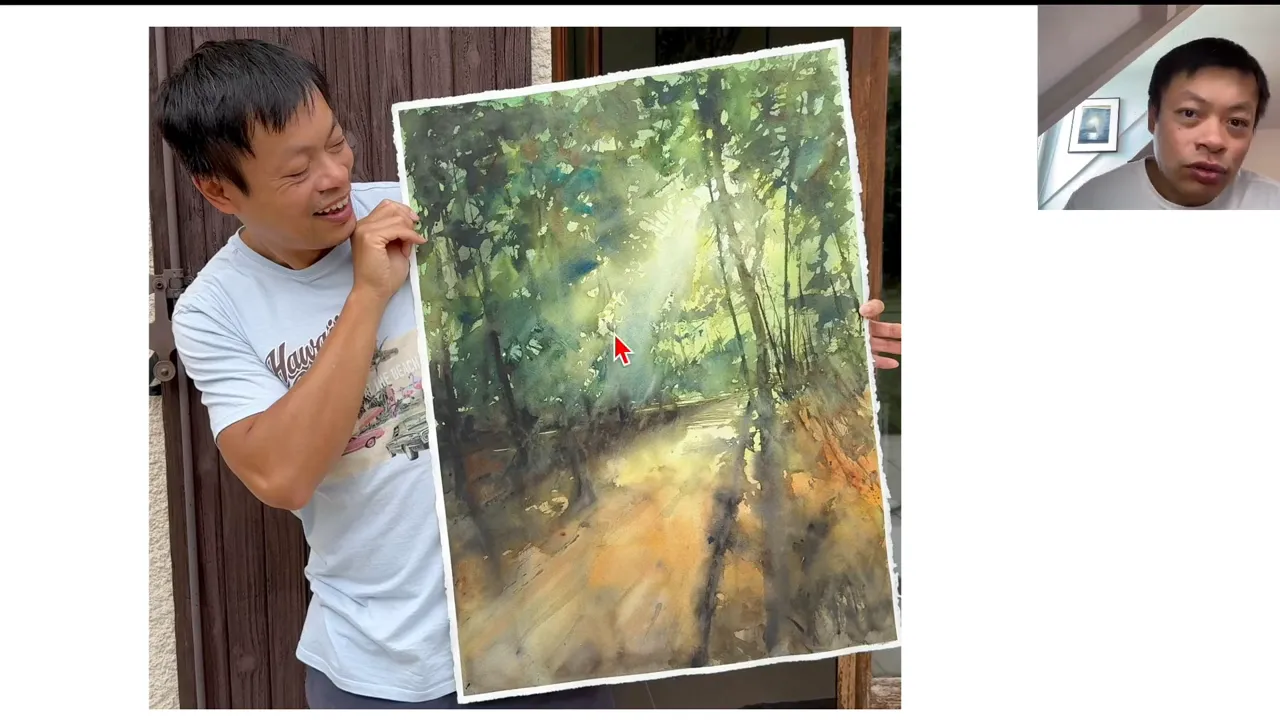
The same thing happened to me with forests crossed by a ray of light. I told myself: "You're better at diffused light. Concentrated light isn't your thing." The day I gave myself permission to try, I painted a forest with a ray of light that I really love.
How do you move from binary thinking to nuanced thinking?
In reality, life is a spectrum, just like watercolor. A background is never simply blue. It's made of many shades: bright blues, duller blues, lighter blues, darker blues. A little more blue here, a little more red there, a bit paler here, a bit darker there.
When you think in terms of a continuum rather than an on or off switch, you can ask yourself better questions:
- How well can I draw people?
- What am I missing to get there?
- Is it a problem of proportions? Of shape? Of perspective, which I still need to work on?
It's the same approach you take in front of your painting: is my blue a bit too flat? A bit too dark? At that point, you have ways to improve instead of a verdict.
I also used to dismiss my years as an employee, saying they had been useless. But how useful were they, really? I was a project manager, so today I can plan a watercolor. I used to run training sessions, and today I teach watercolor.
The question to ask yourself: which binary thoughts tend to drag your art down and stop you from exploring?
Why do you need second-order reasons to keep painting watercolor?
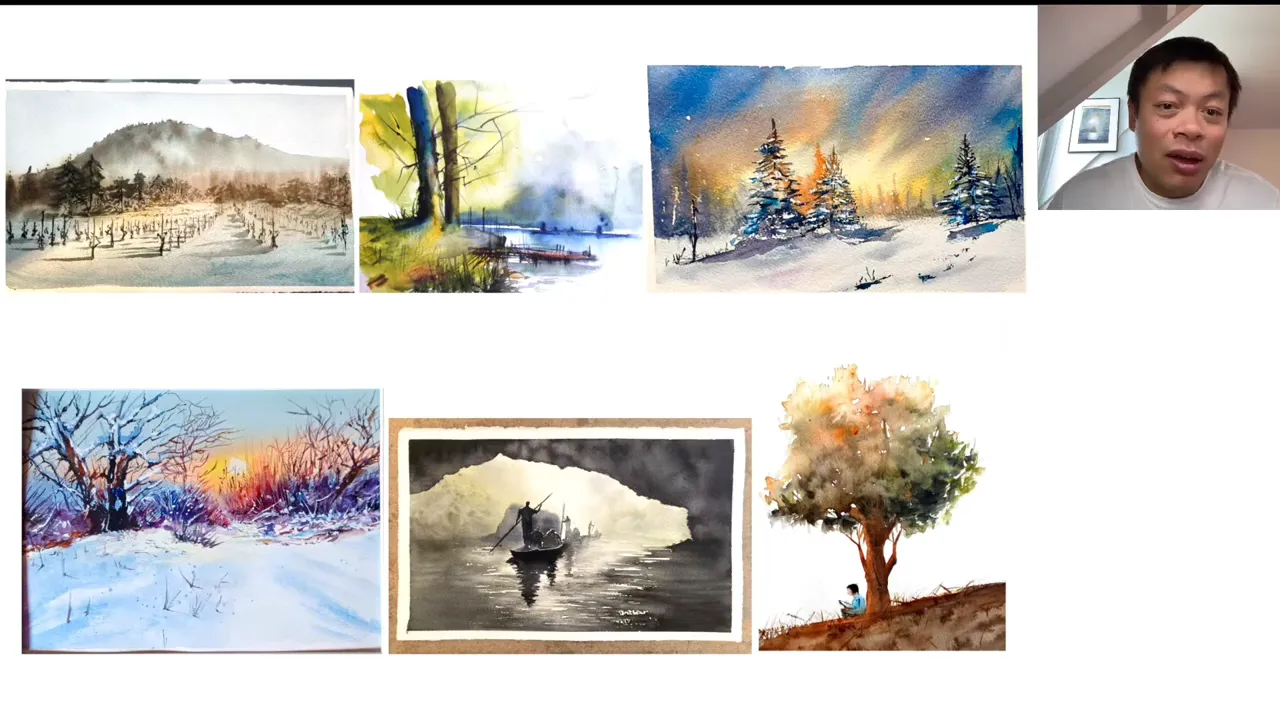
Many people who join my coaching programs tell me: "I'd love to be able to paint the same watercolors as your students." It's possible, but it's not enough.
There will be ups and downs in your practice: a slump, a move, a child who needs your help, a demanding work project. Those moments will drag you down, and you won't see as much point in keeping going. That's when second-order reasons take over: reasons that go beyond simply wanting to paint beautiful watercolors, beyond yourself.
Ask yourself why you want to paint really beautiful watercolors. Some reasons are about us: feeling unique, developing our creativity. That's good, it keeps us going. But go further.
I found one of mine while writing a reply to an email: my daughters will be able to hang my watercolors in their homes and think of me when I'm gone. I pictured them in their own apartments, telling their guests: "That's a painting by my dad." I could have simply written "leave something behind," but it wouldn't have had the same impact.
Another reason: when a student starts out overworking her paintings, with pale, dull, somewhat flat watercolors, and a few months later she paints something that feels like her, looser and lighter, I get tears in my eyes. That's why I keep teaching.
Be extremely specific. What day, what time, and for what reason were you so happy to have painted a watercolor? Those are the reasons that will help you see the light in the storm.
How can watercolor affect the rest of your life?
Also look at the second-order consequences in the other areas of your life. For me:
- I get angry less often and I'm less anxious; I no longer wake up with that awful knot in my stomach;
- when I paint alone, it feels like meditating, with no stray thoughts, even though I never managed to get into meditation;
- after a watercolor, I have an overflow of emotion that I release by walking in the forest for 1 hour, sometimes more, and I get my 10,000 steps in without any trouble;
- I've cut back my spending drastically, because I no longer need to make up for feeling bad by buying gadgets, clothes and shoes.
Some people even tell me they argue much less with their husband since they started painting. Yes, it's still a creative hobby, but that's no reason to downplay how much it matters.
What is tutorial obesity?
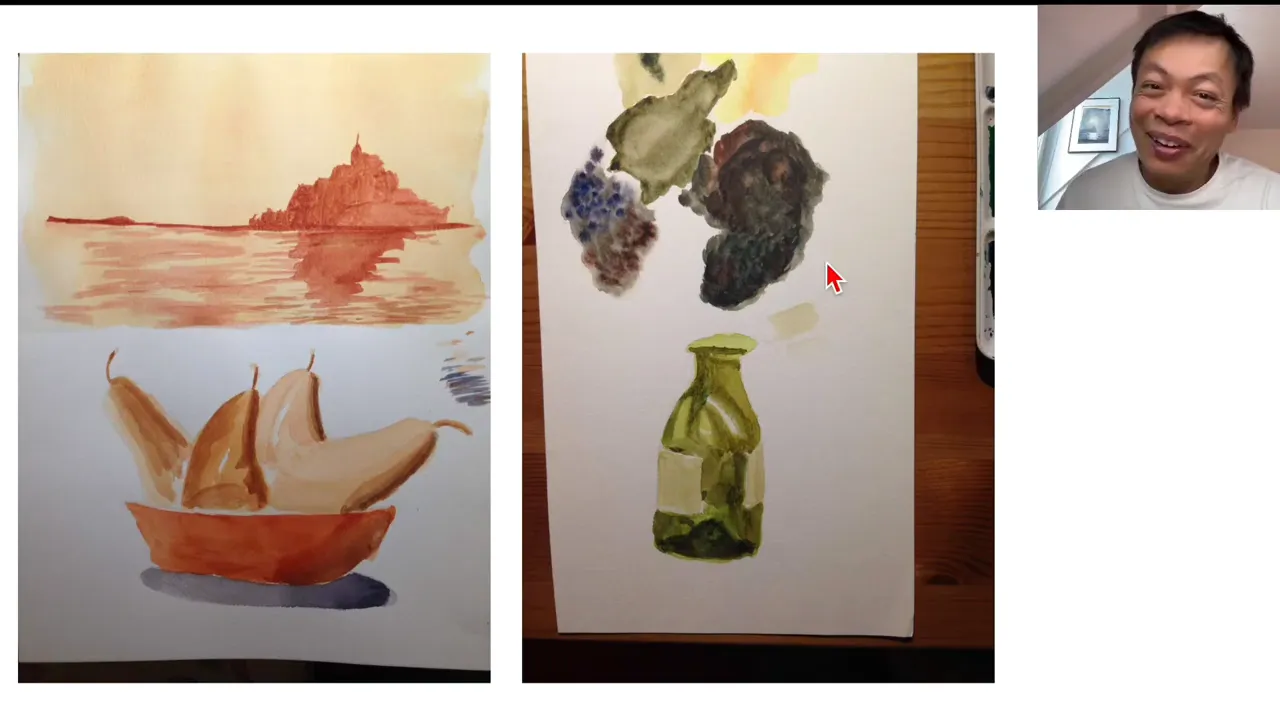
The third mistake is about what you feed your mind. When I started out, I followed tutorials from a book, with wet-in-wet and wet-on-dry exercises. When people tell me I have a gift, I show them those exercises: no, I just followed tutorials, and that's where I started.
That food was good for me up to a certain point, and past that point it can become harmful. That's what I call tutorial obesity: when you follow too many tutorials, you end up only copying others, and you only exist through copying.
I went through the same thing as an employee: for 15 years, I copied what worked. The day I went out on my own, I had to create things myself, and I was completely lost.
If your intention is to paint watercolors that truly come from you, tutorials may not be the right food for your mind. Maybe you need them right now, I have no idea. But it's your responsibility to ask yourself whether a given thought or a given kind of food is really helping you.
What's the right balance between structure and letting go?
If you want to be totally spontaneous, it won't work. If you're all about planning and fine detail, sticking to the photo and copying tutorials, that won't work either. In my experience, the magic happens at 50% structure and 50% letting go.
That's also why mindset matters as much as technique. You can have the best technique in the world: if you think you're bad at watercolor, you may paint beautiful watercolors, but you'll still be just as unhappy.
FAQ
Do you need a gift to improve at watercolor?
No. I have no gift at all: my first wet-in-wet exercises were a long way from what I paint today. I simply started by following tutorials.
Should you stop following watercolor tutorials?
Not necessarily. They may be exactly the food you need right now. But if you want to paint watercolors that truly come from you, following too many of them locks you into copying.
What should you do when you tell yourself "I can't draw"?
Replace that verdict with a nuanced question: how well can I draw, and what am I missing? You go from a dead end to concrete things to work on.
If you want to finally create on your own, with a proven system instead of copying tutorials, this is exactly what you'll find here 👇
Discover The Loose Watercolor System