May 8, 2026
How to loosen up in watercolor without forcing it: the TOP method
To loosen up in watercolor without forcing yourself, I use a 3-step method I call the TOP method: T for technique, O for observation, P for pivot. You start from a technical intention on your subject. When your watercolor no longer looks anything like the photo, you look at it with fresh, non-judgmental eyes and ask yourself what it reminds you of. Then you pivot to that new subject, using the technique you already have.
Why the usual approach keeps you from loosening up
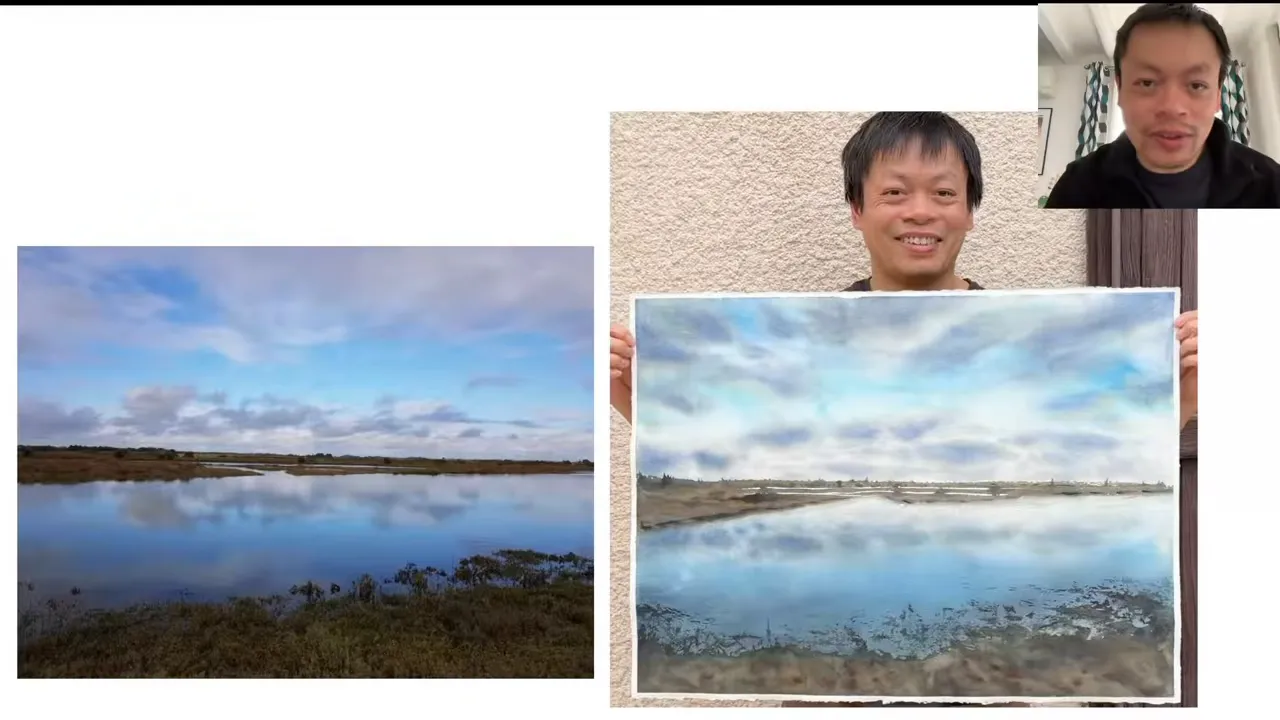
Until now, I planned my watercolors. I would play a mental movie of the painting and try to anticipate the problems. I rarely paint blind: I've used one and the same method for years, on landscapes as well as animals, and it lets me paint fairly quickly without overthinking. The results are convincing, but this approach always put a bit of pressure on me: if the watercolor doesn't evoke the reference photo, something has gone wrong.
This usual approach has 3 major problems:
- You stick to the photo. If the watercolor drifts away from the reference, you feel you've failed at something.
- You project an expectation. If the actual result differs from what you had in mind, you get disappointed. You think "this isn't what I wanted" and you want to throw the whole thing in the bin.
- You force yourself to let go. You condition yourself with mantras like "come on, loosen up now, stop following the photo." These are orders you give yourself, part of you resists them, and the old habits come rushing back.
Step 1: T for technique
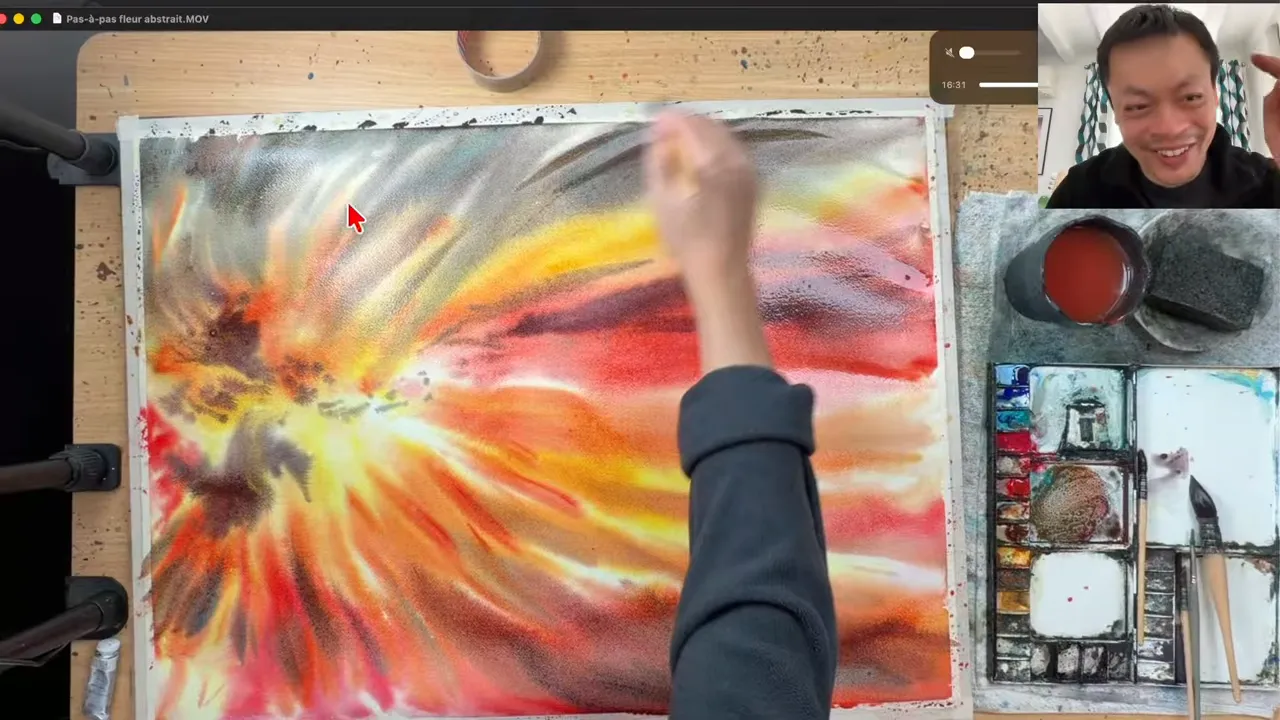
Everything starts from a technical intention. You still try to get close to the reference, but the technique takes priority over the subject. This is an absolute requirement for the method to work.
It all started with a photo taken by one of my students: a close-up of a flower, with blurry effects. My technical intention was to capture the little pointed tips of the flower; that was the challenge I had set myself. I laid down yellow, then orange, then red, before moving on to cooler colors. I tried with all my heart to paint those tips. And unfortunately, or fortunately, the watercolor started going its own way: in the heart of the flower, the reference has a redder area, while I had accidentally put in some darker spots. At that point, I said to myself: "This doesn't look anything like the reference. You can't recognize the flower at all."
That thought is what triggers the next step.
Step 2: O for observation
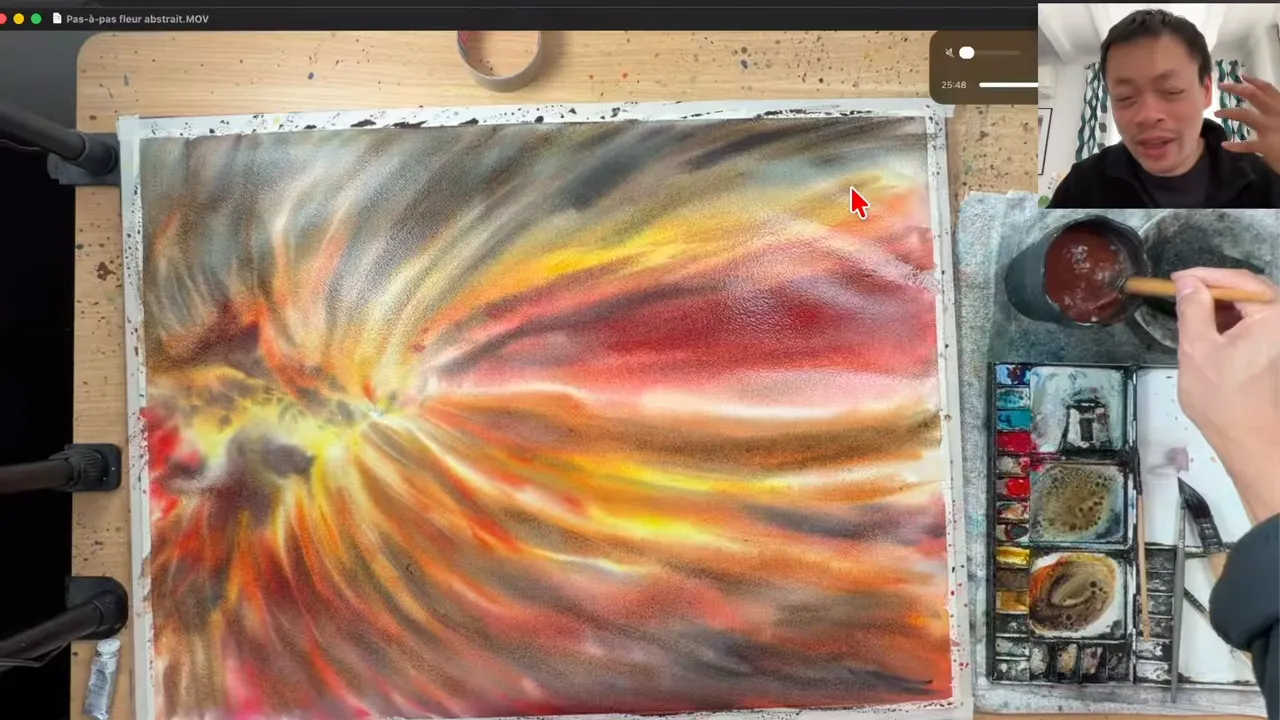
At this moment, the reflex is to throw it all away, stop halfway and give up. This is where the secret of the TOP method lies. Instead of judging yourself harshly ("I'm hopeless anyway, I never get it right"), you stop and take a kind of mental snapshot.
Then you put on a new pair of glasses. Not those of the watercolorist who sweated to stay true to the photo, but those of someone who knows nothing about watercolor, has never seen the reference, and is looking at what's on the paper for the very first time. Usually, we judge ourselves so harshly that we sabotage ourselves. Here, you set that judgment aside and ask yourself just one question: "What does this remind me of?"
To me, the tips of my flower had failed. But I felt as if I were arriving in a galaxy. When I showed it to Violine, she saw a mountain or an erupting volcano over a sea with reflections. My daughters saw a comet in space.
Step 3: P for pivot
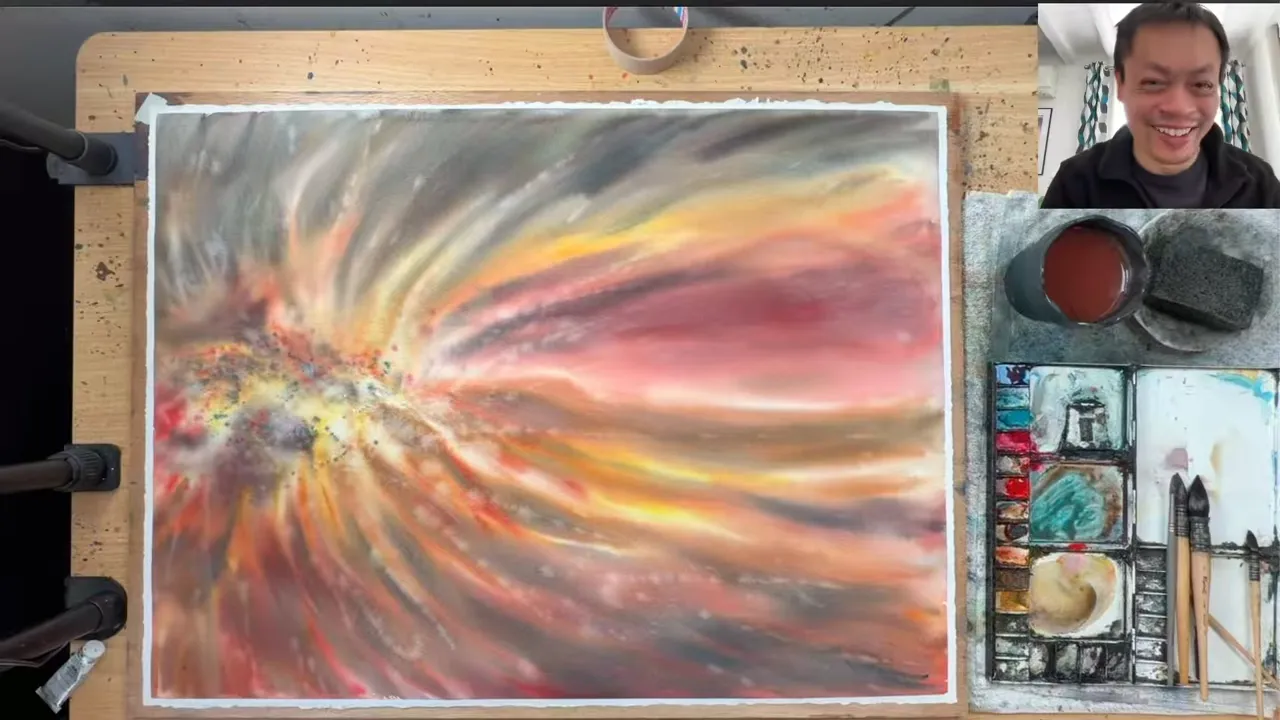
Pivoting means changing direction. Your first idea was to stay more or less faithful to the photo. As soon as you have your answer, you switch to this new vision, and there's no reference anymore.
The idea isn't to do just anything or to paint blind: you rely on your technique to change course and bring this new vision to life. I asked myself what I picture when I think of a galaxy: asteroids, meteorite belts, drifting planets, and that Star Wars hyperspace feel, with stars shooting off in every direction. I added brighter touches, darker touches and stretched-out stars for that hyperspace effect. In the end, I had a watercolor I could never have imagined beforehand, and that I could never have painted even with exactly that image in mind. We started from a flower and ended up light-years away.
How to apply the TOP method to other watercolors
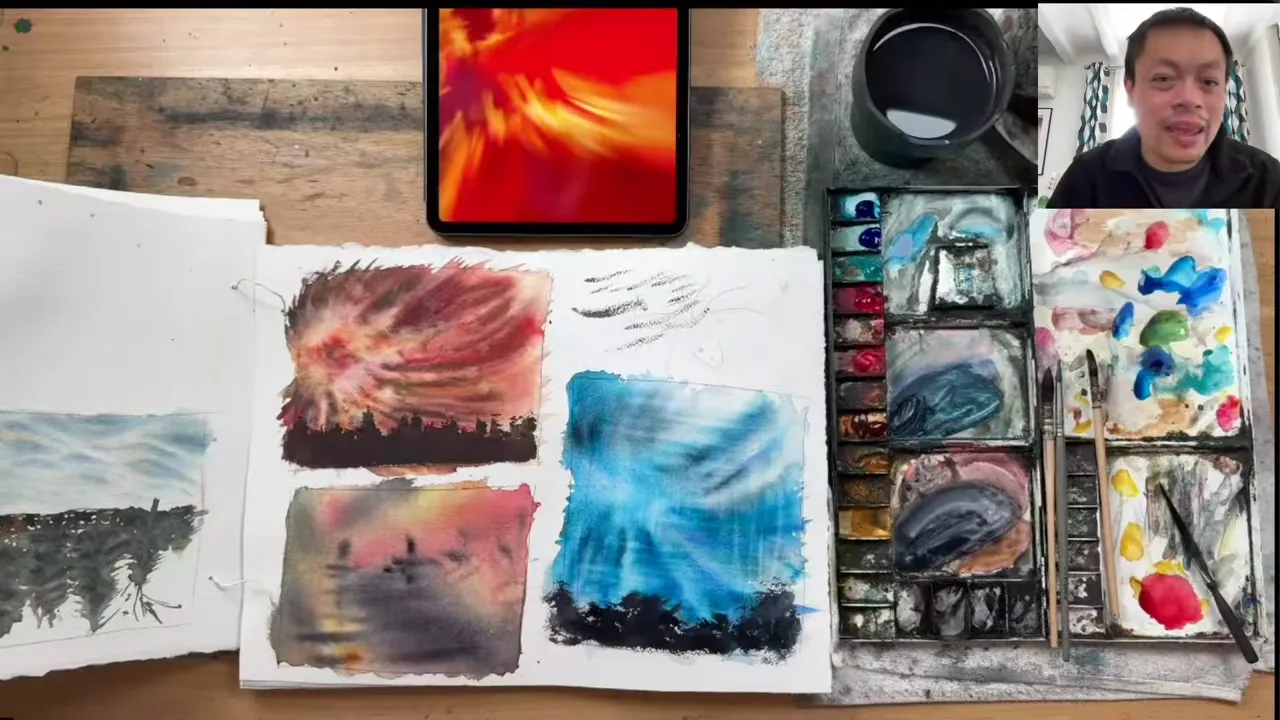
During a live session, I showed my students 3 different ways to apply it:
- Reproducing a watercolor you've already painted. My technical intention was to show them every step of my galaxy, in a small format. Blooms appeared and it no longer looked like my galaxy. As I observed it, with my movie references in mind, I saw an alien invasion. I pivoted by adding buildings in the foreground.
- Focusing on blending colors. I took up the subject again, letting my colors blend wet-in-wet. The result had nothing to do with the alien invasion anymore and reminded me of reflections. I added boats with reflections on the water.
- Changing colors. Instead of warm colors, I used cool ones, mostly blues. Some students saw an underwater scene. I saw a vortex sucking up the earth. I added trees in the foreground, an element that brings this new vision to life.
What's great is that I move away from the photo naturally, without forcing it. On my swan or my sky over the lake, I kept telling myself: "Wait, you're drifting, go back to the photo." Here, the third step makes you pivot naturally.
Why this method gives such personal watercolors
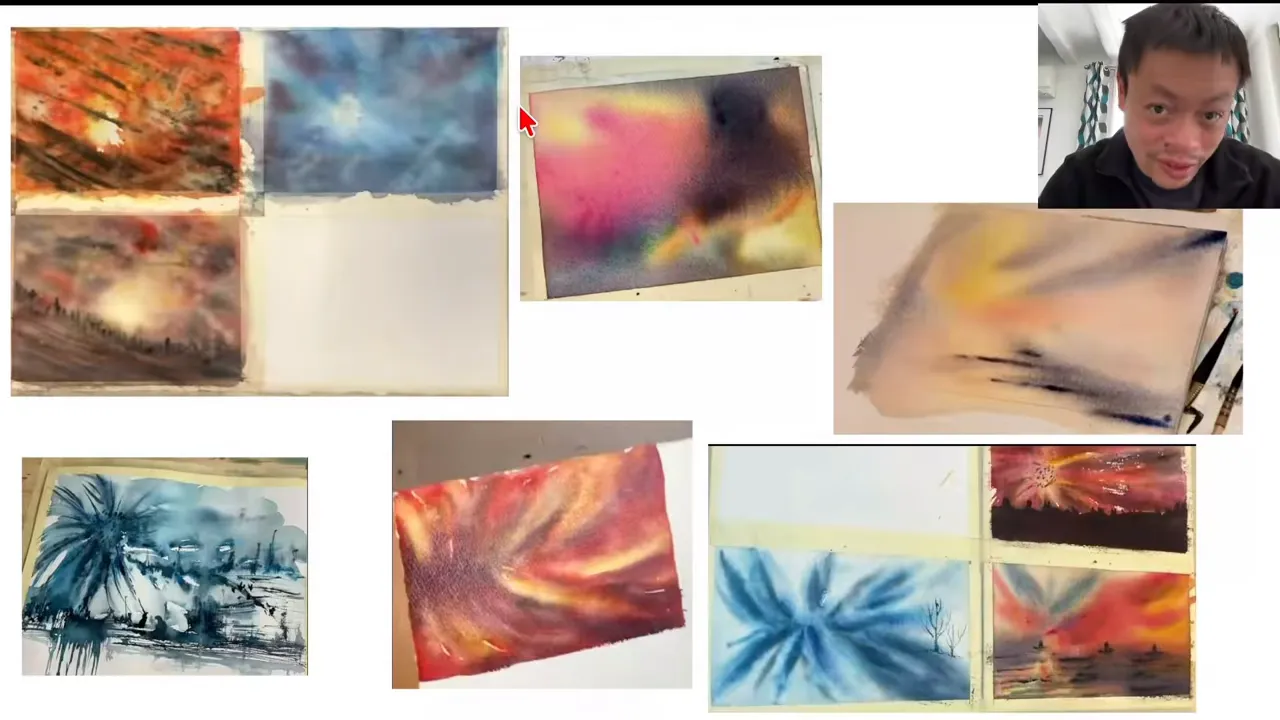
There's no more personal method, because everyone's answer to "what does this remind me of?" is different. Before even seeing my galaxy, the students worked on their own, with no advice or tutorial from me, and no 2 watercolors look alike: pure blending, completely different colors, positive and negative painting effects, a kind of nebula, wildly original patterns. During the live session, within a few minutes, I saw a meteor shower, the moon with its rays piercing through the clouds, a misty battlefield with an explosion in the distance, a sunset over a sea with rocks suggested in 3 brushstrokes, and fishermen with a town in the distance. On the vortex, one student simply added 2 trees.
FAQ
Does the TOP method mean painting just anything?
No. The method is structured in 3 steps and relies on the fundamental principles of watercolor: light, blending and vibrant color. Even when you move completely away from the subject, you stay technical.
Do you need technical skills to use it?
Yes, you need to know how to build your watercolor so you keep the light and make your colors vibrate and blend. That foundation is what allows you to paint something that has nothing to do with the original subject anymore.
Is it suitable for beginners?
Yes. A beginner will actually have more fun with this way of approaching watercolor than with a more academic, rigid approach, which keeps you from exploring paths you'd never even have thought of.
If you want to finally create on your own, with a proven system instead of copying tutorials, this is exactly what you'll find here 👇
Discover The Loose Watercolor System