December 3, 2024
How to paint a foggy snowy landscape in watercolor
To paint a foggy snowy landscape in watercolor, choose cold colors: snow equals cold colors, so put more blue. Build the fog in 2 washes: a light first wash on wet paper, then a second wash on top with much more pigment, and finish with the mountain in the foreground. If you've never painted snow before, commit first and figure out the how afterwards.
Why is a foggy snowy landscape hard to paint?
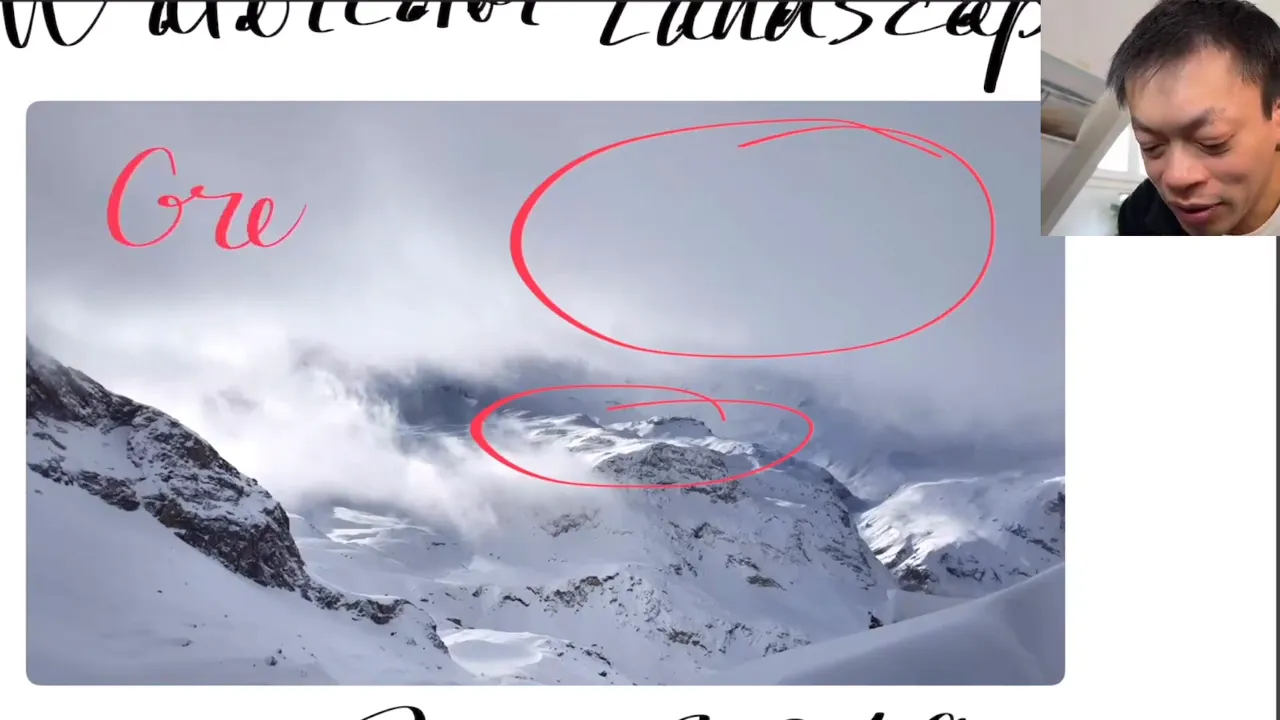
My first snowy landscape came from a photo one of my friends took during a ski trip in Val d'Isère, just before the pandemic. When I first looked at it, I told myself: wow, this landscape is so beautiful. But I had never done a snowy watercolor landscape.
So I wondered how I was going to paint the fog and how I was going to render the light. In terms of color, everything seemed so gray. I had no idea how to turn this picture into a watercolor landscape. Anyway, I decided to give it a try.
What are the steps to paint a foggy snowy landscape in watercolor?
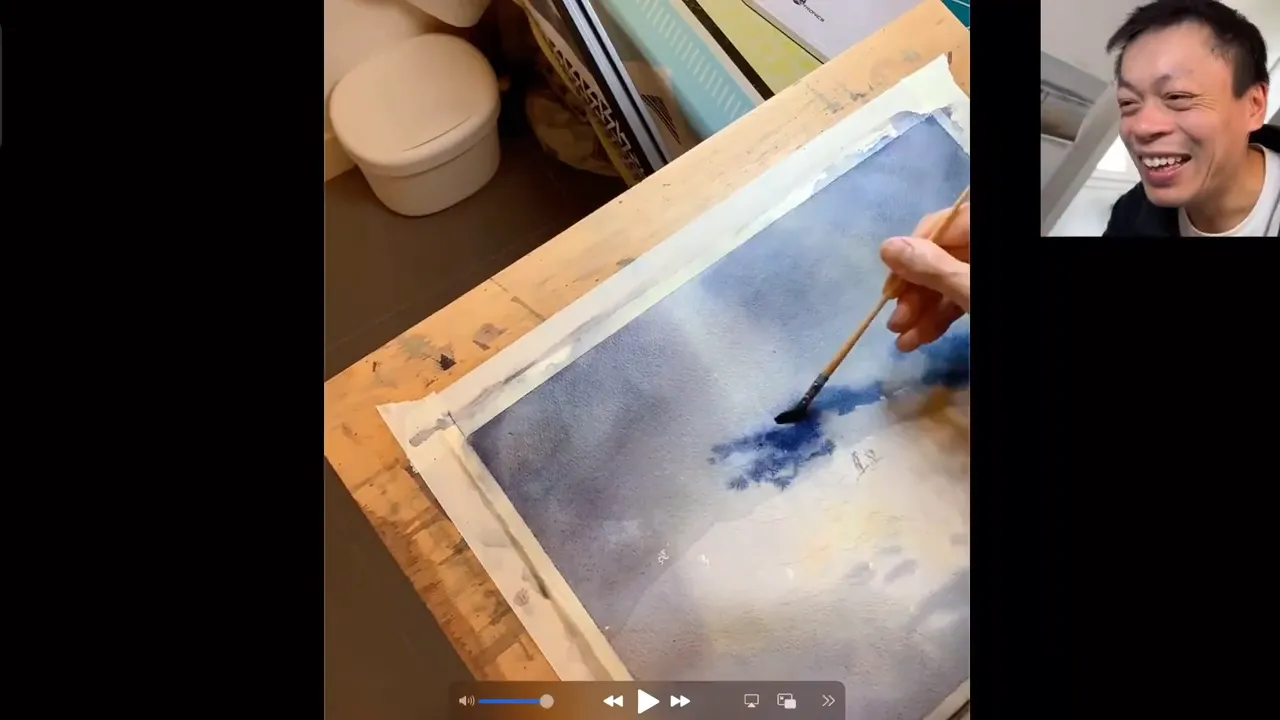
Here is how I worked through the process:
- Start with a light wash. I turned the painting around so the dark values would be at the top of the painting.
- Check the values against the photo. I realized the painting was much too light compared to the photo. I hadn't put enough pigment, and the paper was completely wet.
- Add more pigment. I added gray pigment, because the photo is gray. Then I added more pigment, and more pigment.
- Keep the light in the center. The pigments were moving on the paper, so it was a nightmare to keep the light in the center. But I managed to finish this first wash.
- Add a second wash on top of the first one. When I looked at the first wash, it was still quite bright. I didn't think I would be able to render the foggy mood, the foggy atmosphere. So I added another wash, and this time I added so much pigment. I was quite happy with this second wash.
- Paint the mountain in the foreground. This was the last part.
In the end, the painting turned out quite fine. I was so happy with it that I showed it during one of my exhibitions, and it was sold there. I was so proud of it.
Which colors should you use for snow in watercolor?
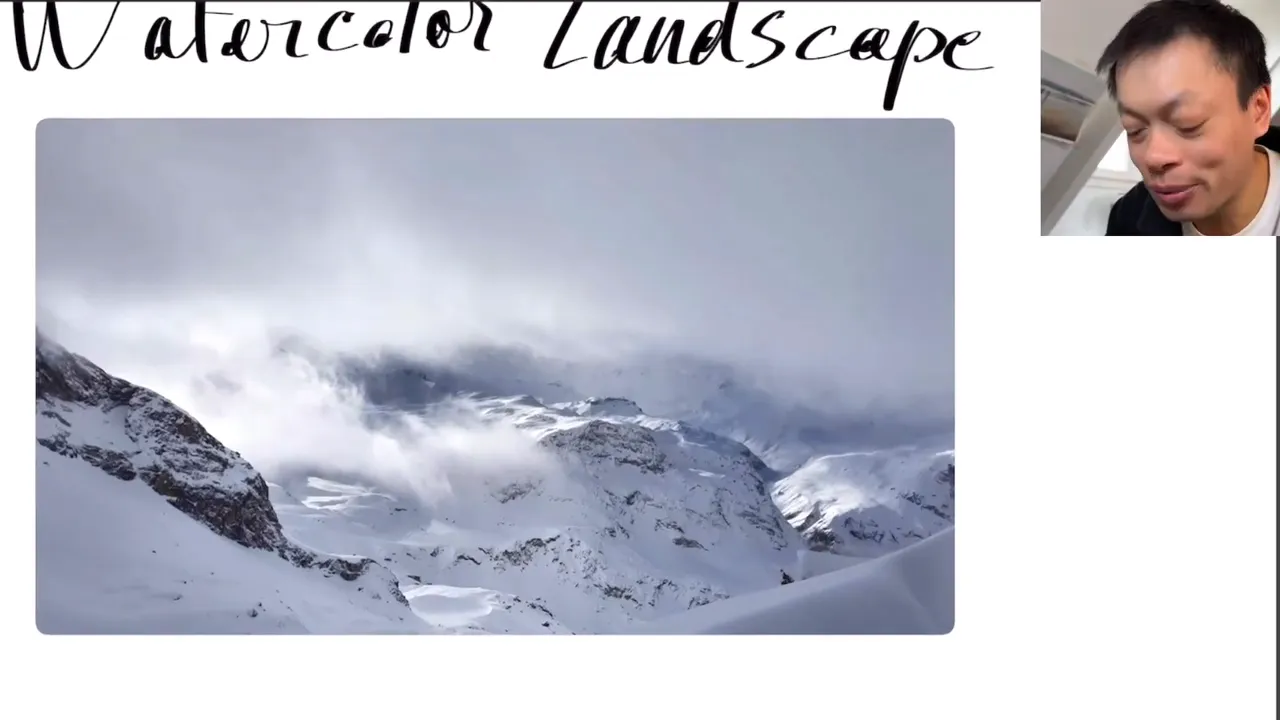
The first thing I learned from this painting is that snow equals cold colors. I had to put more blue. If you look closely at the reference photo, many parts are actually quite blue. Some parts are a little bit warmer, but they're still cold. So if I have a snowy landscape, I'd better choose cold colors.
What if you're afraid to paint something you've never done?
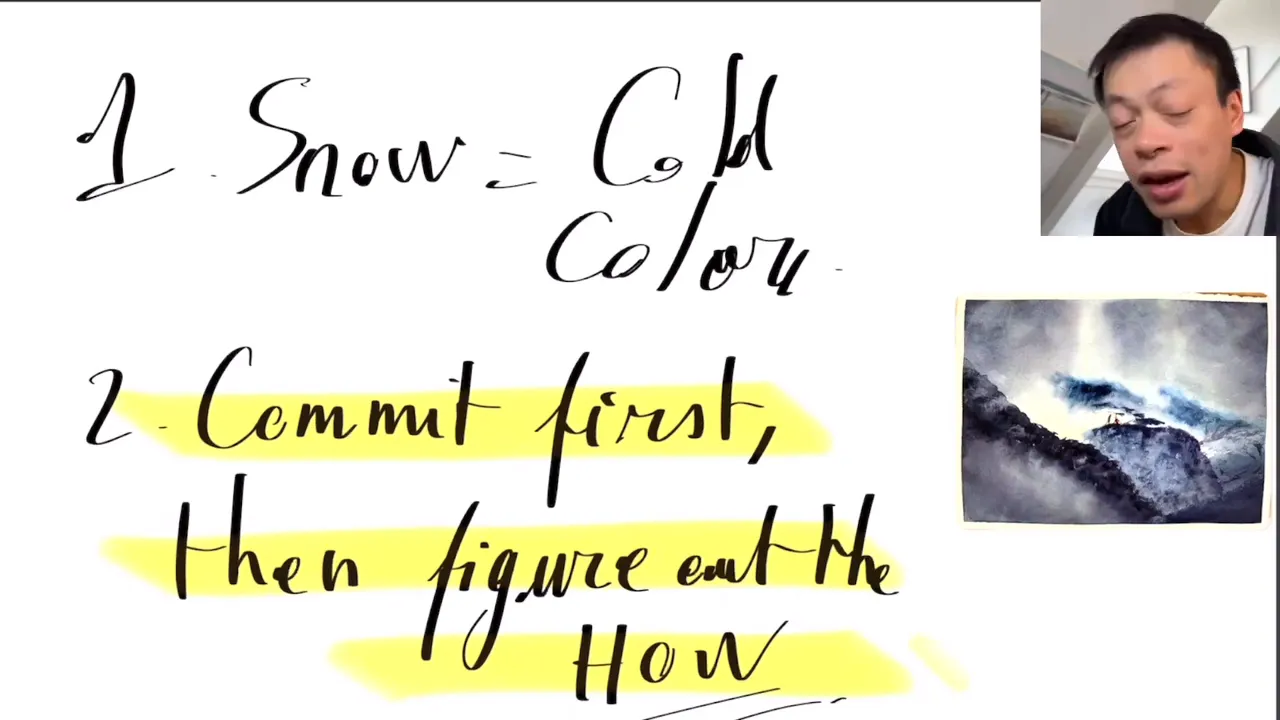
I was so afraid of doing this painting, because I had never done that and I didn't know how it would come out. What I learned is that you should commit first, even if you don't know exactly how you're going to do it. Commit first, then figure out the how.
This is so important, because we often prevent ourselves from even starting. We are so afraid because we don't know exactly how we're going to do the first wash, the second wash, or which color we're going to choose. Just commit first. Tell yourself: I'm going to do that. Start taping the paper on your board. When I started doing that, I had no choice but to begin.
This lesson isn't only related to watercolor, it's related to life. There are so many things we don't even allow ourselves to start. But if we just commit and trust ourselves to figure out the how, we will figure it out. And even if it's not perfect, it's fine.
Do you need a perfect studio to paint watercolor?
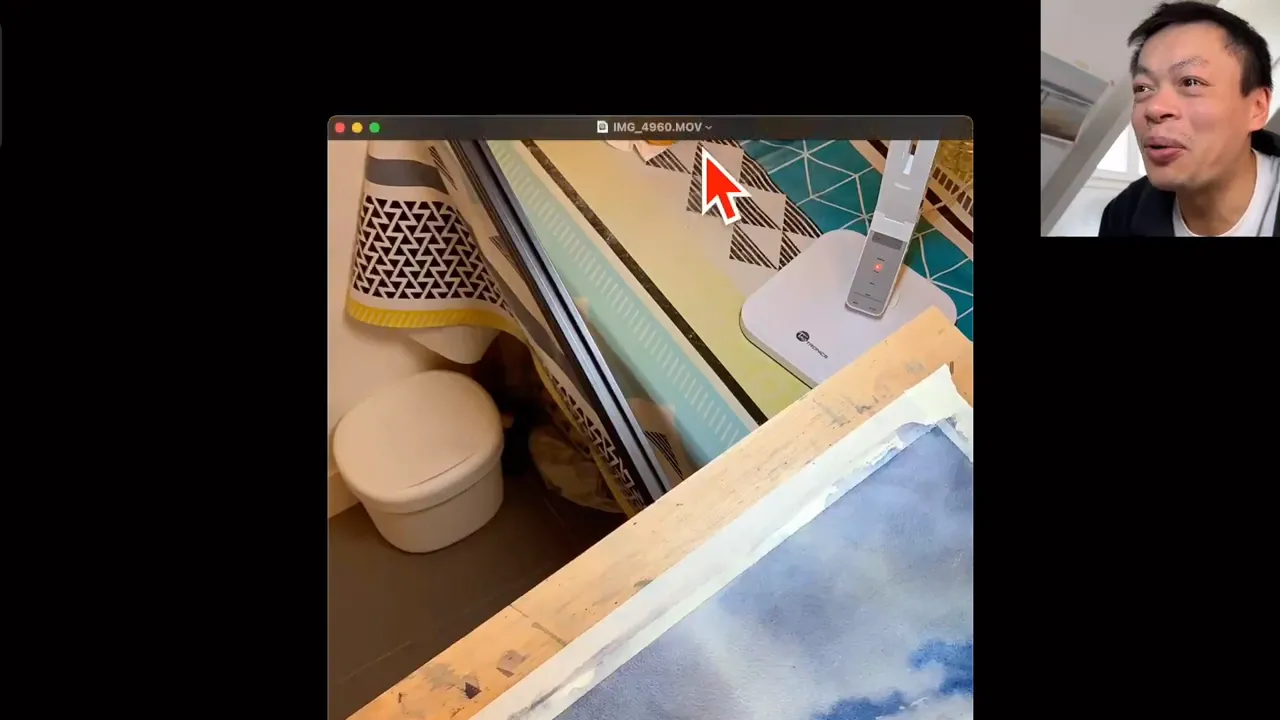
That's my third point. I painted this landscape in my kitchen. It wasn't a permanent studio, just a temporary one. I knew I would only be in this kitchen for 1 or 2 hours, and that was fine. You could see the garbage and some oranges, and the light was a crappy light that didn't render the true colors on the paper. I was okay with that.
So try your best with what you have. You don't need to wait for the perfect time, the perfect environment, the perfect material or the perfect conditions. You already have so much in you that you can start and make wonders out of it.
Even if this was my first snowy landscape, I'm very proud of it. This kind of experience is invaluable for self-esteem and confidence. It conditions you to think: when I try something, I can make something out of it, even if the perfect conditions aren't met.
FAQ
What do you need to know before painting your first snowy landscape in watercolor?
You only need the basics, like color mixing or how to mix color and water. With that, you're good to go: give it a try, you have nothing to lose.
How long does a snowy watercolor landscape take?
My first snowy landscape took me something like 1 hour and a half to complete.
If you want to finally create on your own, with a proven system instead of copying tutorials, this is exactly what you'll find here 👇
Discover The Loose Watercolor System