May 24, 2025
How to paint fog in watercolor
To paint fog in watercolor, I start by identifying the type of mist: light, dense or opaque. Then I choose from 4 simple techniques: adding pigment, avoiding pigment, lifting pigment or pushing out pigment. Light fog is mostly painted by adding pigment, opaque fog mostly by avoiding it, and dense fog asks you to juggle all 4.
Why is fog so hard to paint in watercolor?
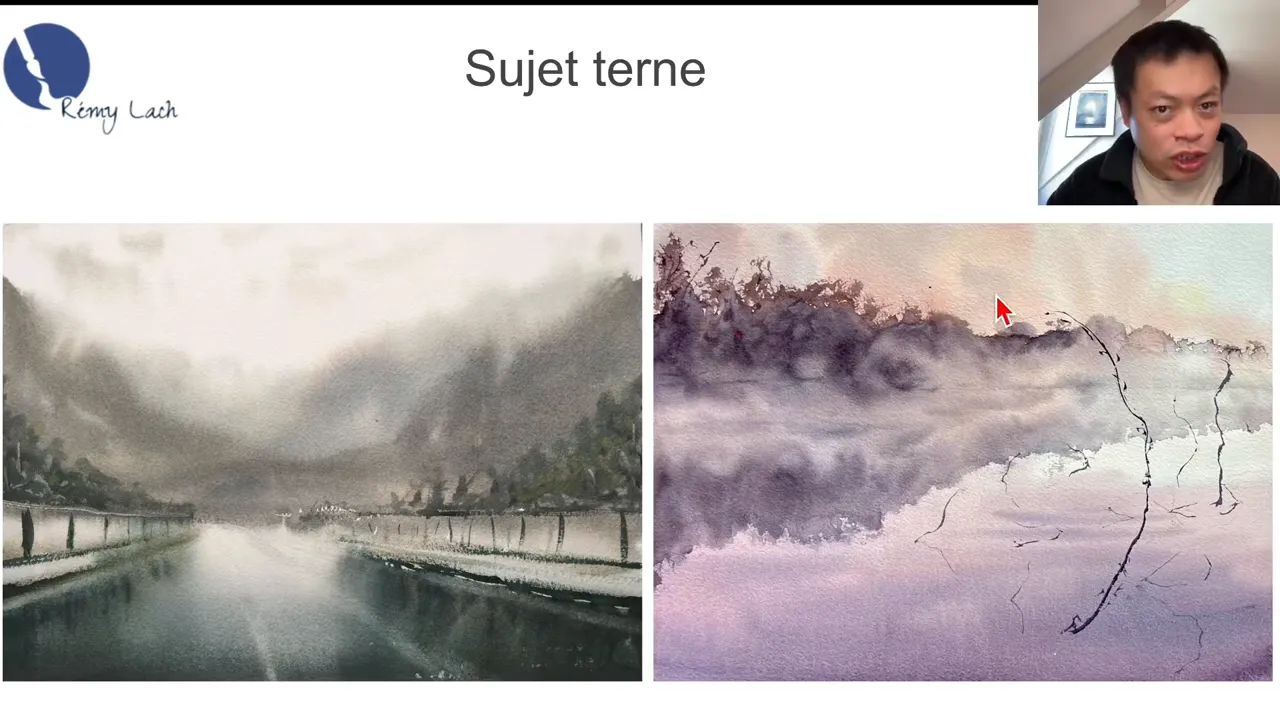
After more than 10 years of painting, I've had a few highs with fog, but mostly a lot of lows. I see 3 problems.
- No 2 fogs look alike. A house always has a front, a roof, a few windows and a door. Fog is different in every photo. Each time I asked myself, "How would I do that in watercolor?", and I never had an answer.
- It's technically intimidating. When you're starting out, you have your go-to techniques. I like this quote from Abraham Maslow, the American psychologist: "If the only tool you have is a hammer, you tend to see every problem as a nail." I was trying to handle every misty landscape wet-in-wet, which makes you lose pigment strength. But some misty landscapes aren't nails, they're screws, and then you need a screwdriver.
- It's a dull subject. Photos of mist have fairly dull colors. But while painting a riverbank near my home with brighter colors, I realized my watercolors don't have to be dull. You can perfectly well paint misty landscapes with saturated, shimmering colors.
What are the 3 types of fog?
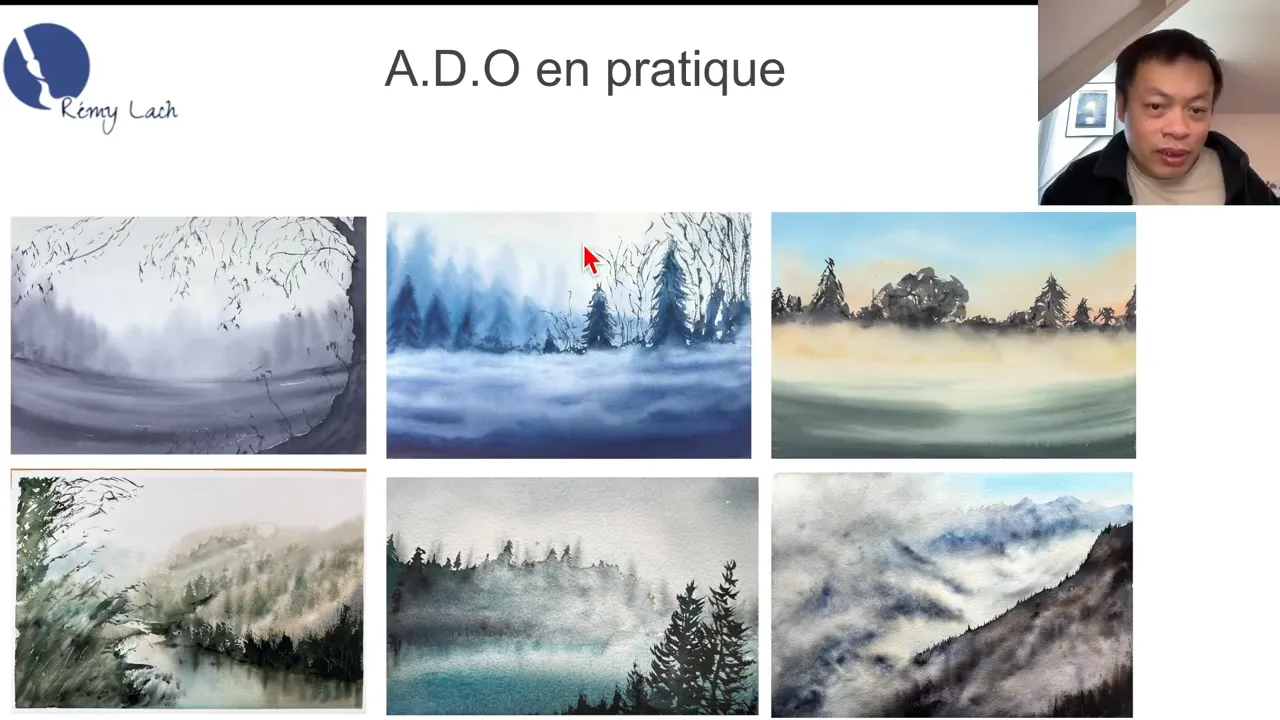
I sort them into 3 categories:
- Light fog: a thin mist that softens the subjects, but you can still recognize what's inside it. It's like clear glass.
- Dense fog: a strong softening of the subject. It's hard to make things out, but you can feel there's something behind it. It's like frosted glass. Dense fog is where you find an endless range of nuances.
- Opaque fog: you can't see through it at all, you have no idea what's hiding behind it.
A single watercolor can mix several types. Once you've categorized them, you'll recognize them in your subjects and in other artists' watercolors.
What are the 4 techniques for painting mist?
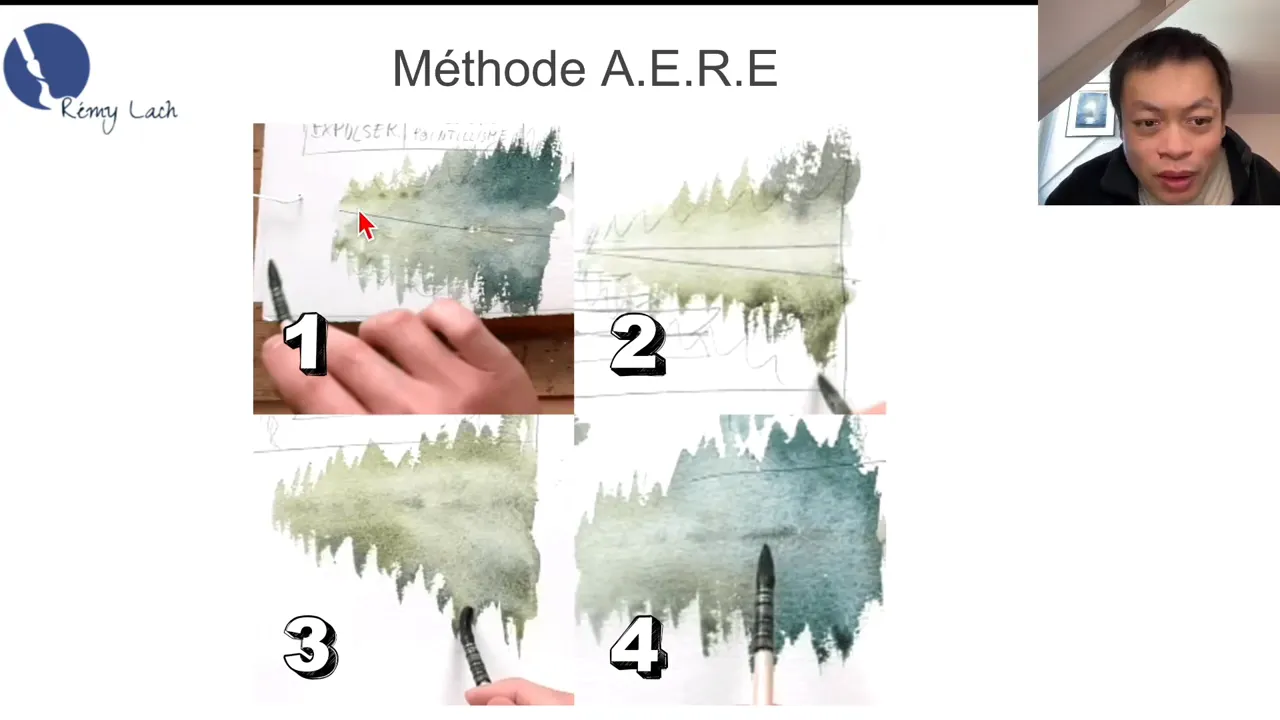
Each of these techniques takes a few seconds, or a few dozen seconds, to do.
- Adding pigment. By adding pigment into the mist, I create nuance and depth. It's close to a graded wash: a light area that gradually gets darker. It's easy to pick up, but your pigment dosage has to be spot on.
- Avoiding pigment. I paint the tops of my trees, fill the fog area with clean water, then pick up pigment again to finish the trees. A big area of light appears. It's fairly easy, with no precise dosage, and perfect for opaque fog. The downsides: you only get opaque, somewhat uniform fog, and you have to plan for it.
- Lifting pigment. This is the principle of lifting out: I dry my brush and pick up pigment from the wash to create lighter areas. No need to plan ahead. The risk is drying out your wash very quickly and damaging the paper surface. You need a gentle, subtle touch to keep the paper damp.
- Pushing out pigment. On a fairly dark area, I add water. It pushes the pigments aside: the center gets lighter and the edges darker. It's fairly easy, and since you're adding water, you keep the paper damp. The downsides: a risk of blooms between areas that are too dry and too wet, and pigments that clump at the edges, creating an ugly outline.
Which technique should you choose for each type of fog?
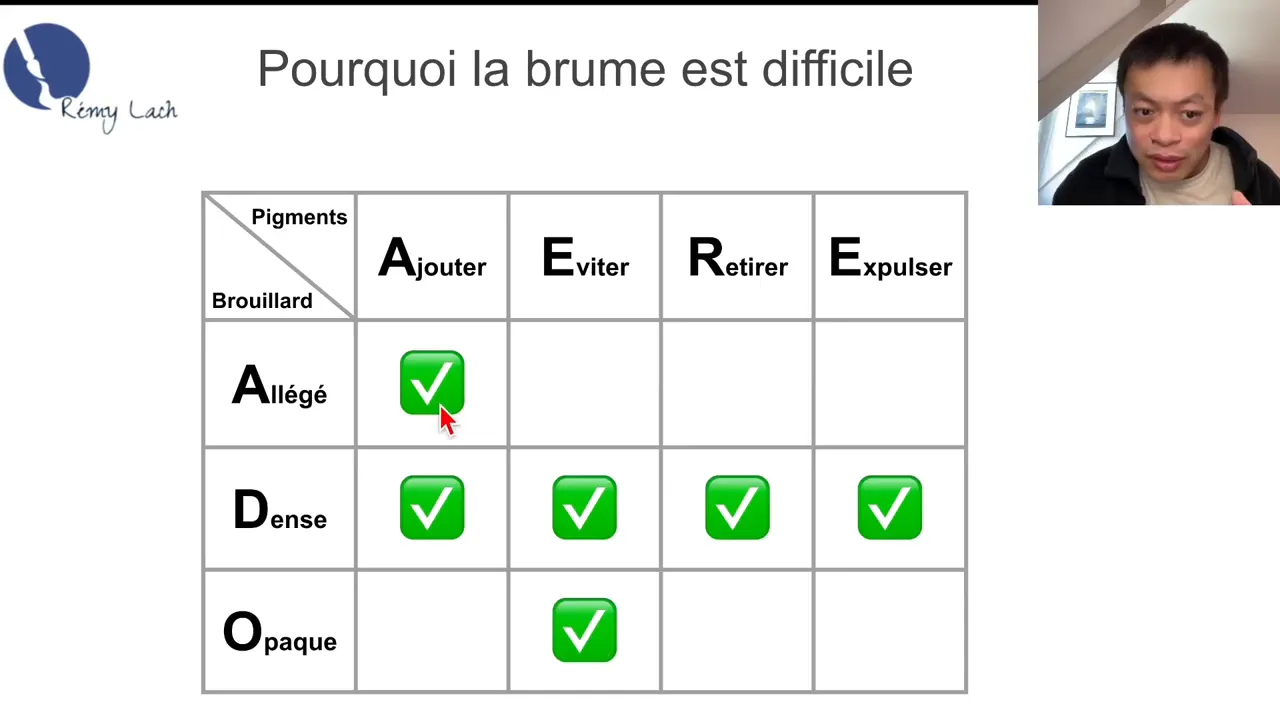
For light fog, I tend to only add pigment. In my "Mystic Mist", all I did was add pigment as I worked my way down. For opaque fog, the go-to technique is avoiding: my "Misty Countryside" is almost entirely avoiding.
This chart isn't exhaustive. And that's exactly where I struggled at first: I picked fog photos at random, and 80% were dense mist. With dense mist, you have to mix all 4 techniques depending on how damp the paper is and the effect you want: "I need a bit more light here, I'll push the pigment out." "This fog is opaque but not completely, I'll avoid, then add." "I got it wrong, there should be more light here, I'll lift." I no longer have just one hammer, I have 4 tools, and every misty watercolor I'm showing you was painted with them.
Why is mist a good subject, even for beginners?
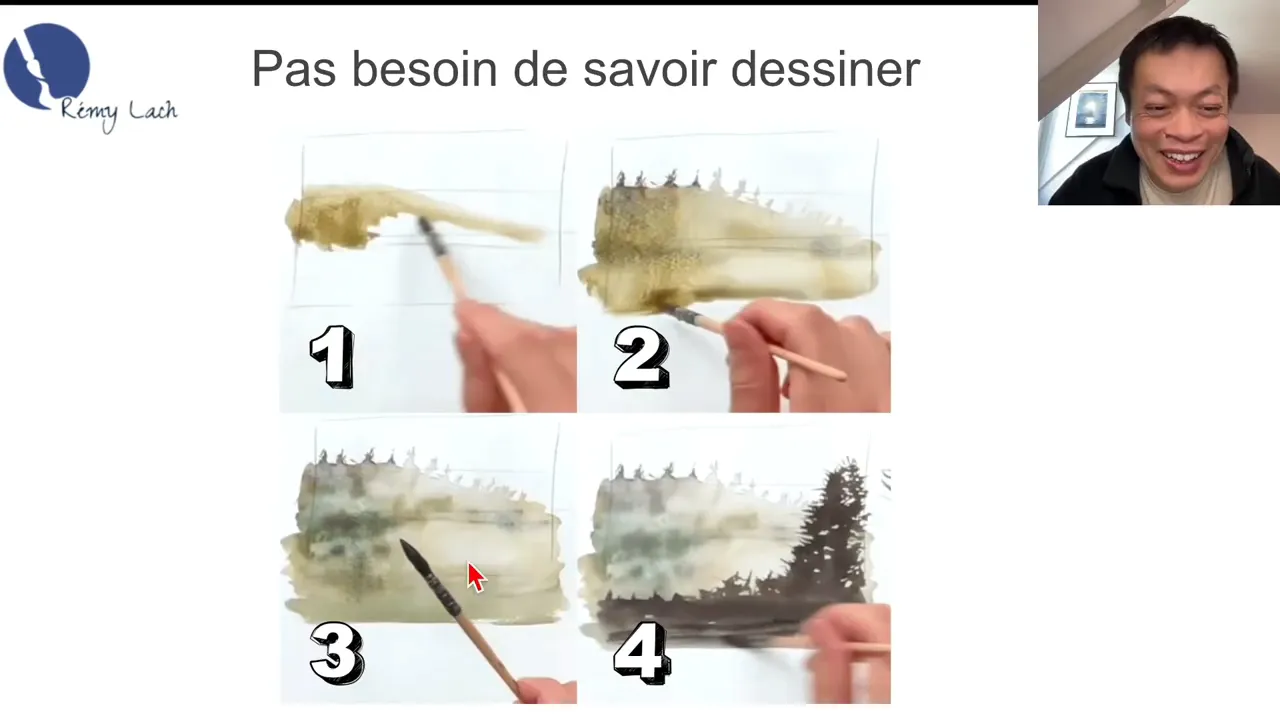
- It's fascinating. Mist hides and suggests things, it has a mysterious side that stirs emotion.
- You don't need to know how to draw. In a live session with my students, I started with 2 pencil lines to mark out a dune, and the foreground was just an L with a few spikes to suggest vegetation. The technique asks a little more of you, but the drawing asks much less.
- A few minutes are enough once you learn to dance with the watercolor.
- It's ideal for letting go. On one watercolor, an unplanned bloom formed and suggested another mountain in the distance. When you let the watercolor do its thing, it creates things you would never have done yourself.
- It's a tool for simplifying. On a photo of farms, the mist let me lighten farm buildings that were too dark, remove trees and skip the shadows.
In what order should you practice painting mist?
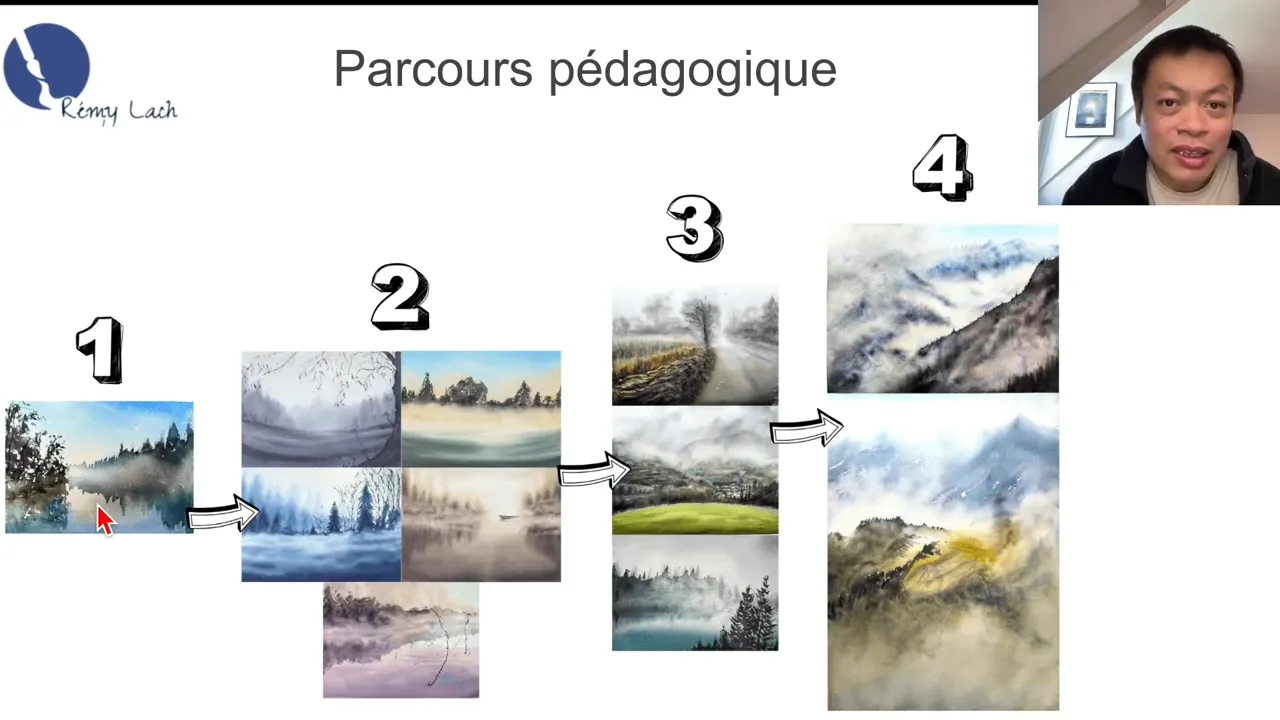
- Master the 4 techniques with mini exercises repeated 5 or 6 times. You fine-tune your dosage and your observations: lifting pigment works better when the paper is fairly damp but not soaking wet, and pushing pigment out works better when the paper starts to dry, without adding too much water.
- Paint your first light and opaque fogs, not dense ones, so you can focus on specific techniques.
- Move on to dense fog, to juggle all 4 techniques and let go. You'll be working on several fronts at once, you'll forget things, and that's perfectly fine: the mindset is that if it fails, that's OK.
- Create your own misty landscapes. With these technical skills under your belt, you can focus on the creative side: which landscapes to simplify with mist, how to play with more shimmering colors, how to reinterpret the subject your own way.
FAQ
Can you paint mist using only the wet-in-wet technique?
No. A landscape I painted in pouring rain, on a trip to Italy, showed me that techniques other than wet-in-wet also give striking misty effects.
Which type of fog should you start with?
Light and opaque fog. When I picked my photos at random at first, I mostly ended up with dense mist, the hardest kind, and I struggled.
Can you rescue a failed mist wash?
Yes, in most cases. During a live session on a misty river, my first wash went completely sideways, and I showed live how to rescue it.
If you want to finally create on your own, with a proven system instead of copying tutorials, this is exactly what you'll find here 👇
Discover The Loose Watercolor System