December 9, 2024
How to paint a winter landscape in watercolor
To paint a simple winter landscape in watercolor, start with a yellow sky, adding more pigment as you move away from the source of light, then gray it so it gets darker. Next, create a graded wash of blue at the bottom and dry it with a heater. Finish with pine trees painted with the point of a synthetic brush, using little pigment for the trees close to the light and a darker mix for the bigger ones closer to us.
Why can a winter landscape be so simple?
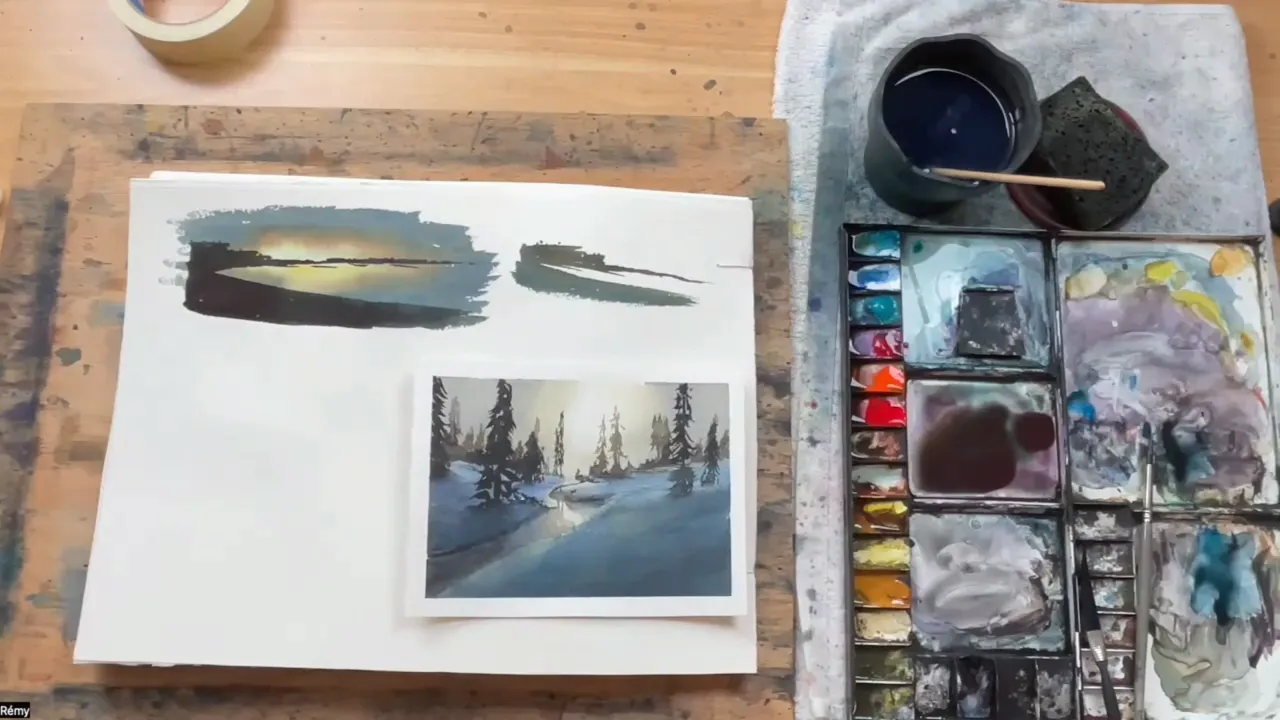
This painting is both very efficient and very simple. I have found that this combination generally leads to the best watercolor paintings. It doesn't have to be complicated.
This one comes down to 2 things:
- The mood: the blue at the bottom plus the sky, which is quite bright.
- The narrative: the pine trees and the river in a winter landscape.
Here, I'm not going to paint the river because it's more complicated. I only paint the sky, the blue wash and the pine trees.
How do you paint the sky?
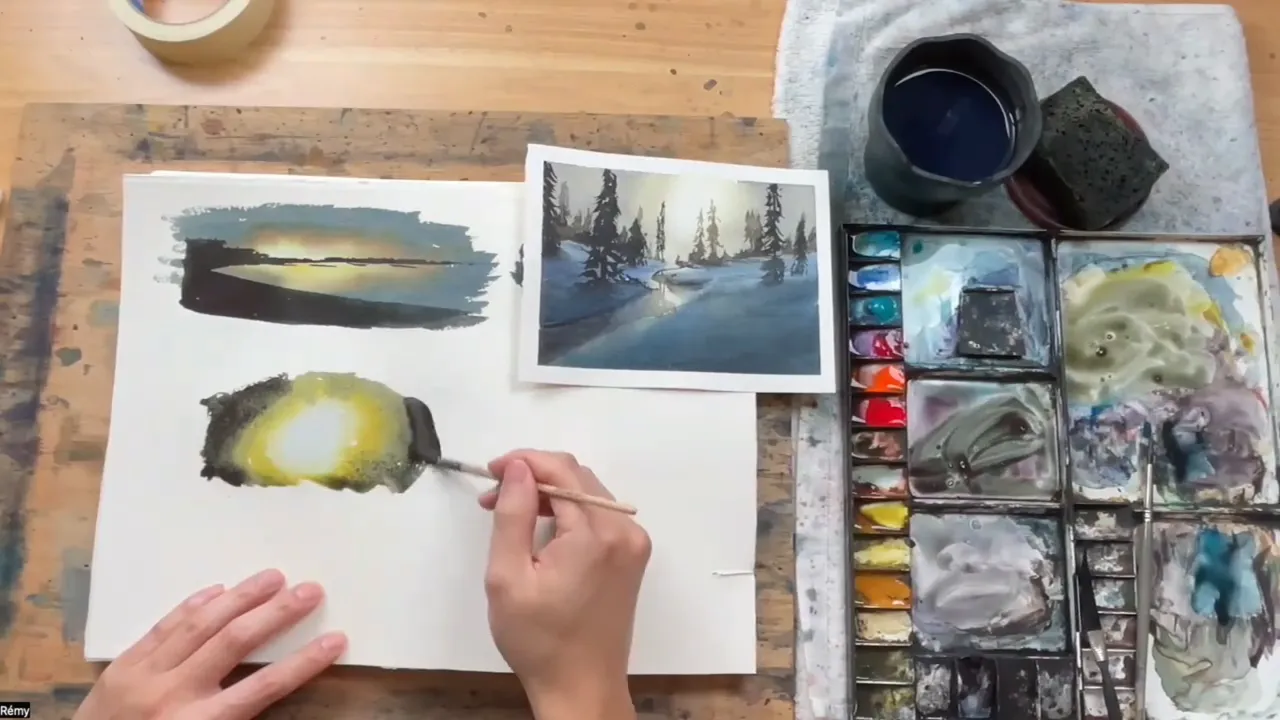
Start with the sky, using yellow. You can use new gamboge, which works fine, or lemon yellow, which is fine as well.
- Begin with some yellow and very, very little pigment.
- Add more pigment as you go further away from the source of light.
- Gray it. I have some grays on my palette, so I use those.
- Add more pigment so the sky keeps getting darker and darker.
It's not only about adding gray. The sky also has to become darker as you move away from the light.
How do you create the blue graded wash?
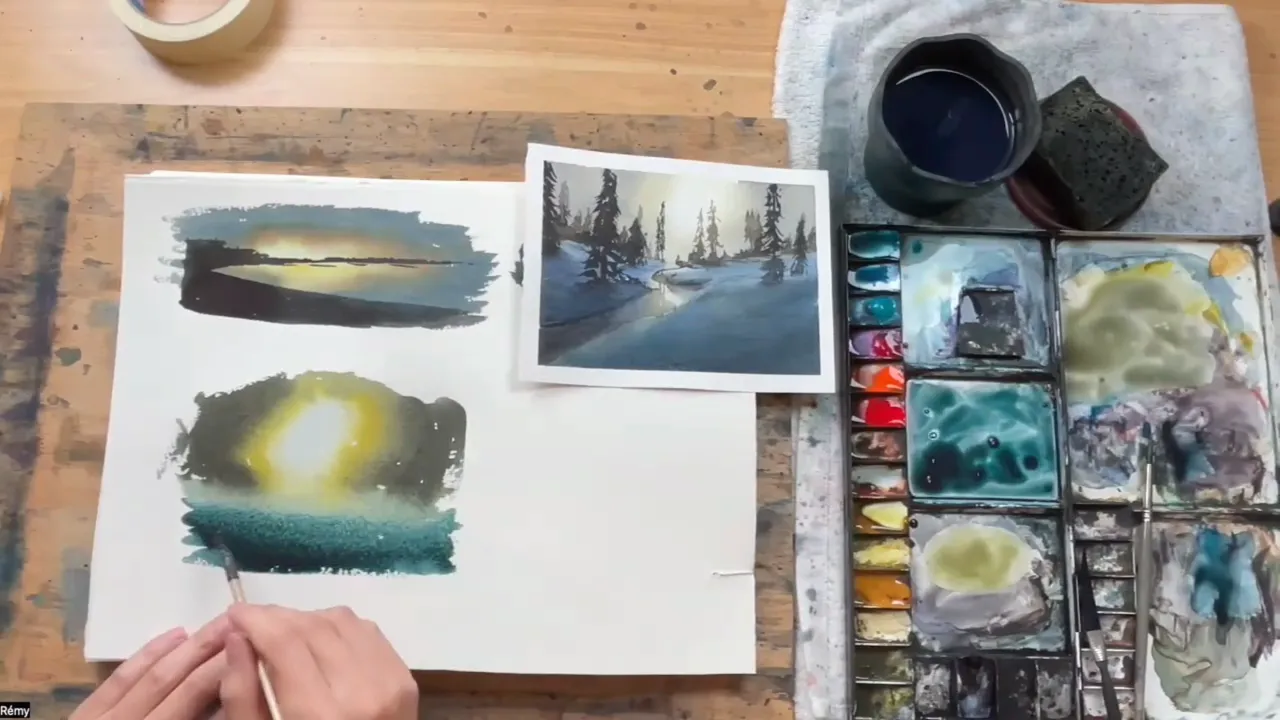
For the bottom of the painting, I use some ultramarine blue plus some primary blue. A graded wash means that you gradually increase the amount of pigment.
- Put down some water first.
- Add a little bit more pigment.
- Add a little bit more in the next area.
- Add even more as you continue.
Once the wash is done, you can dry it with a heater. Then you can paint the pine trees.
How do you paint pine trees in watercolor?
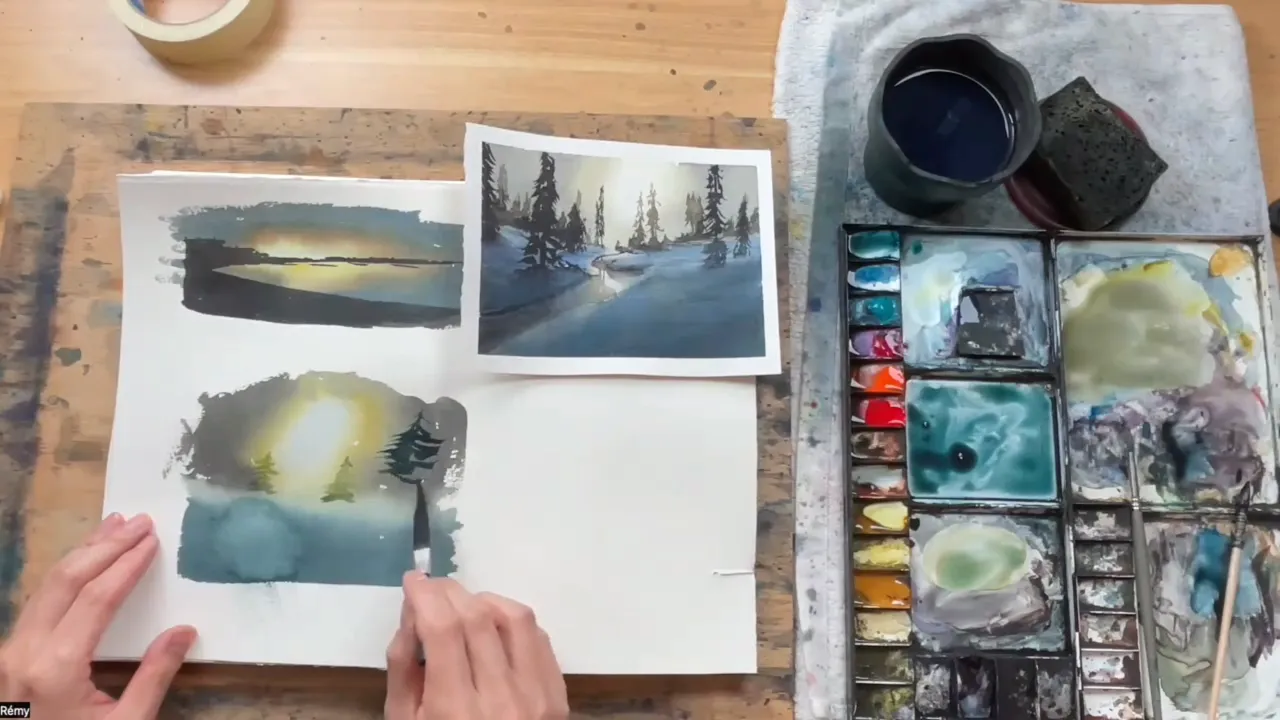
You can paint the pine trees in 2 different ways: with a synthetic brush or with a dagger brush.
With a synthetic brush: use not a lot of pigment at first. For the pine trees that are very close to the source of light, use some water with little pigment. You can rinse your brush, and as the water is a little bit dirty, it will be fine. Then use the point of the brush to create the shape of the pine tree.
With a dagger brush: use the point of the brush and move it to the left and to the right to create the shape of the tree.
You can then add a much bigger tree, because it will be much closer to us. It also has to be much darker, so I use a little bit of red and a little bit of blue. You can add as many pine trees as you want.
Which brush is better for pine trees?
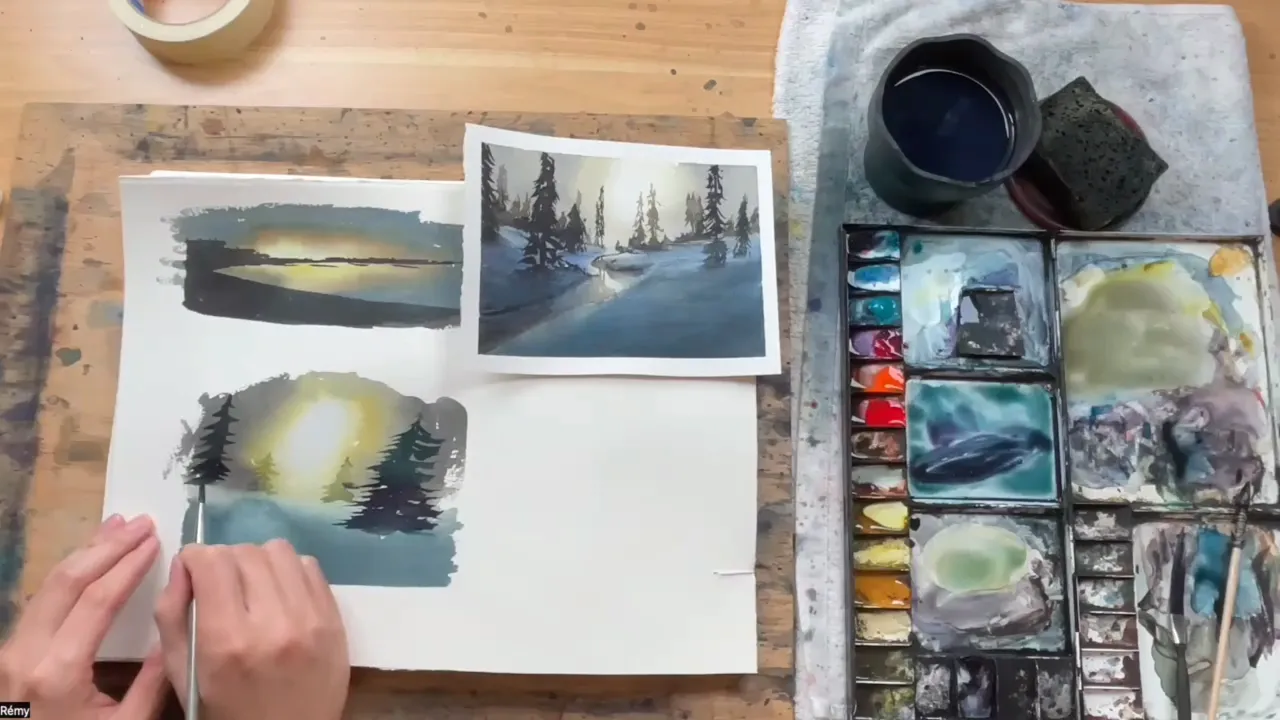
Both brushes work. I find that the synthetic brush allows me to create the pine trees much faster, so I'd rather use it than the dagger brush.
FAQ
What yellow should I use for a winter sky in watercolor?
Either new gamboge or lemon yellow will do. What matters at the start is to keep the pigment very light.
Why should some pine trees be bigger and darker?
Those trees are nearer to the viewer, so they are painted larger and with a much darker mix. Trees near the light stay pale.
How do mood and narrative help in a watercolor painting?
They allow you to tell stories in watercolor. In this winter landscape, the blue and the bright sky set the mood, while the pine trees and the river carry the narrative.
If you want to finally create on your own, with a proven system instead of copying tutorials, this is exactly what you'll find here 👇
Discover The Loose Watercolor System