August 12, 2026
How to learn from a failed watercolor painting
When you mess up a watercolor painting, don't start the whole painting again from scratch. Ask yourself: "How can I paint just this part of the painting?" Then pick something smaller, easier and that you really want to paint, and try it right away, while the first painting is still fresh. This simple trick means I never consider a failure as a failure anymore.
What went wrong with my first painting?
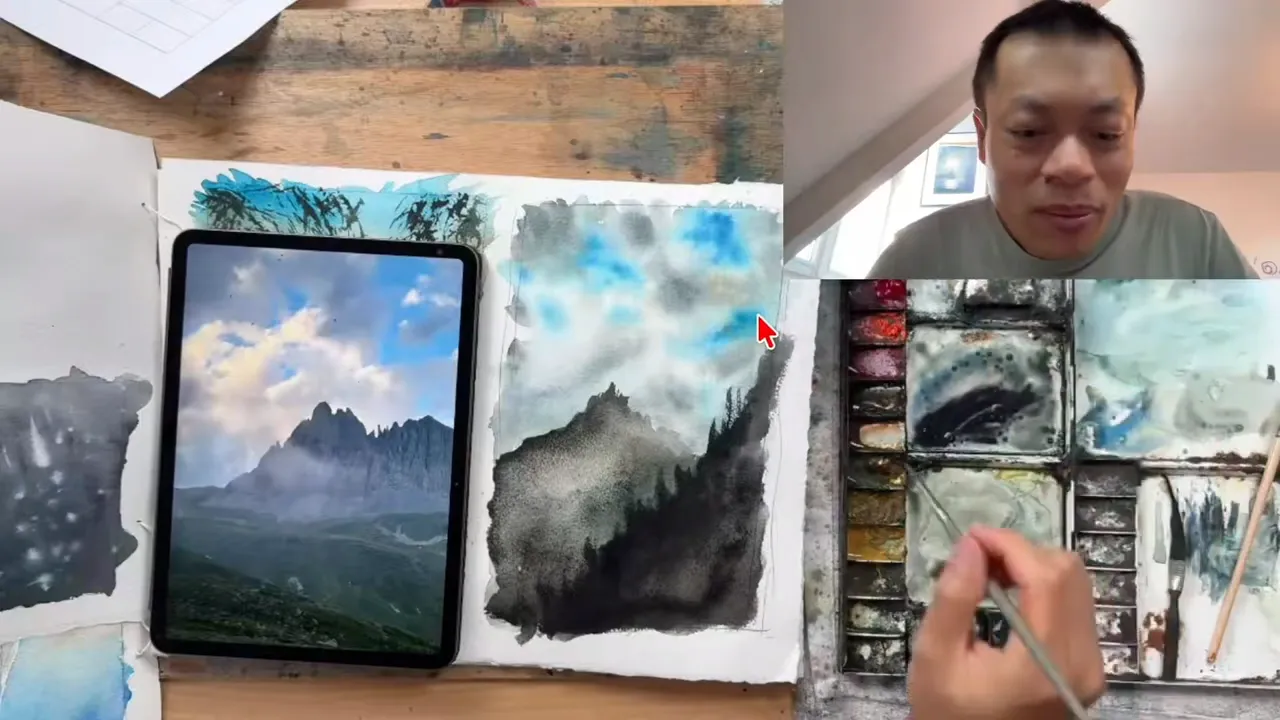
If you keep messing up your watercolor paintings, welcome to the club. Same for me. It all started with a photo from one of my students: mountains with fog, and a sky full of light.
When I looked at this photo, there were 2 possible intentions. The first one was the fog in the mountains. The second one was the sky and the light in the sky. After discussing it with my students, we decided to go with the sky, because the sky had the most light.
The issue is that I didn't prepare as seriously as I could have. I used a technique I call the basketball technique:
- Put some pure water on the paper.
- Add some blue.
- Add some gray in the sky.
I thought that would be enough. In the end, I got a first wash that was not ugly. However, it didn't convey the same light and the same atmosphere as the photo.
I kept going anyway. In the second wash, I created the mountain. There was a big stain on the paper from a misstep months ago, a big drop of pigment I had tried to clean without success. So I inverted the mountain: in the photo it was more on the right, and I created it on the left to make a slightly darker foreground.
The painting was all right, but something was missing, and I couldn't tell exactly what.
What did I do instead of starting the whole painting again?
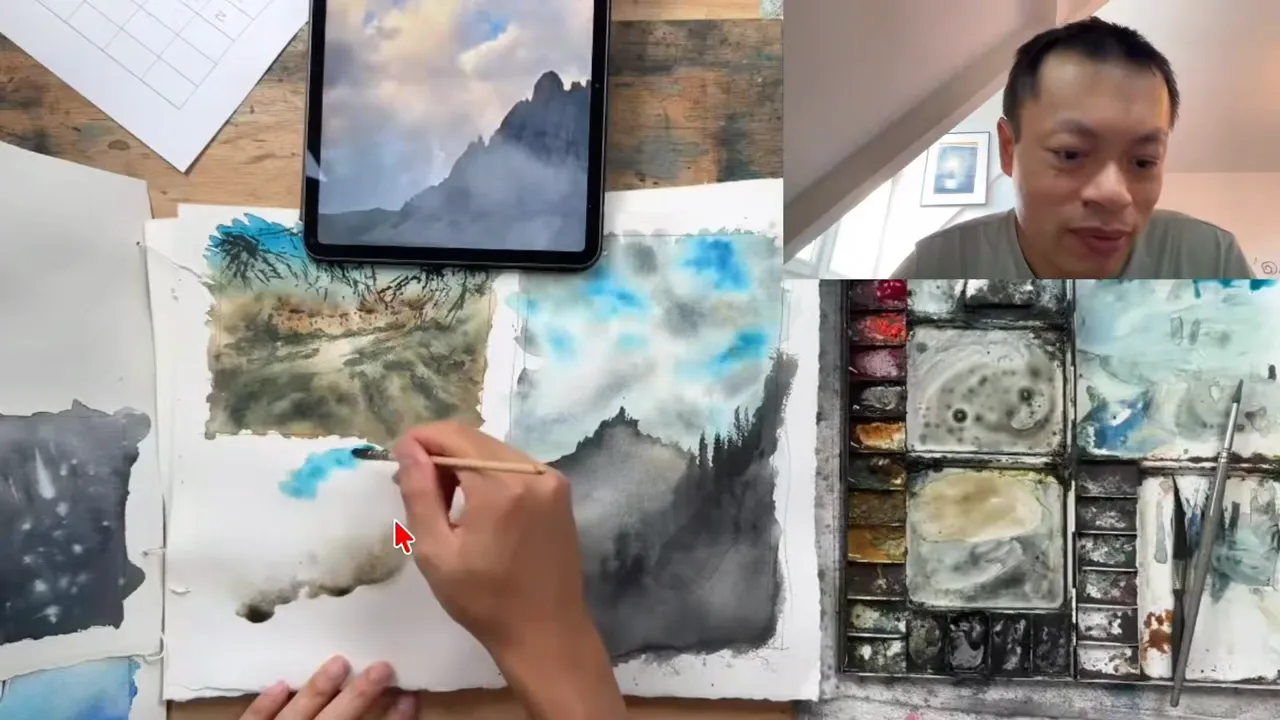
At the end of the painting, one of my students said the sky was fine, but what she would like to do is convey the light in the clouds, in this cloud especially.
I told her: "You know what? We can give it a try." Since this painting was kind of a failure for me, it was nice to try something else. So we zoomed in on that cloud only.
Here is what I did:
- Pure water first. I put some pure water on that area.
- Warm colors in the light. If you look closer at the photo, there is a huge light on the cloud, then a transition to warmer colors. The rest of the scene is cool, but the clouds that are in the light have warmer colors. That's why I added some warm colors there.
- Blue in negative painting. Just after the warm colors, I took a blue and created the cloud in negative painting, so the cloud pops from the paper.
When she saw the final result, the student told me: "Wow, this is beautiful. It's much more beautiful than the first watercolor." The first one, in my eyes, was a complete failure.
What are the 3 criteria to turn a failed watercolor into progress?
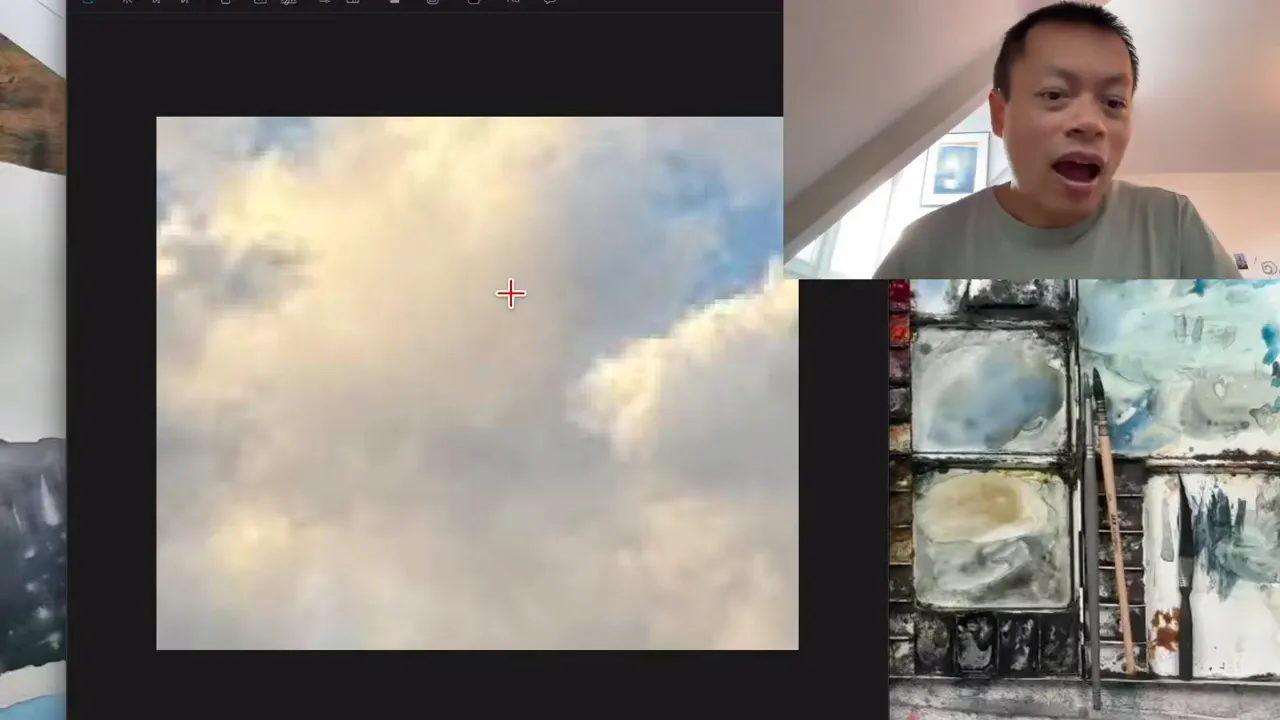
As soon as you feel you messed up a watercolor painting, ask yourself, just like this student asked me: "How can I paint this part of the painting?" You don't need to create the whole painting again. Take a tiny part of the subject and try to master that one.
Your next attempt has to meet 3 criteria:
- Smaller. If you have a big subject and you need to do every little detail, don't take that on. Take a small part of the painting and just do this tiny part.
- Desire. Once you have made things much smaller, ask yourself: do I want to paint this one? If you don't want it, you won't do it. When my student asked me her question, I immediately thought, "Okay, we can try this technique," and I wanted to see what I would come up with.
- Easier. It has to be easier than what you already did. In my case, making this transition with the light in the cloud was so much easier for me to do.
So next time you mess up a watercolor painting, ask yourself: "What can I try that is smaller, that is easier, and that I would like to do, in order to try again?"
Why should I try again right away?
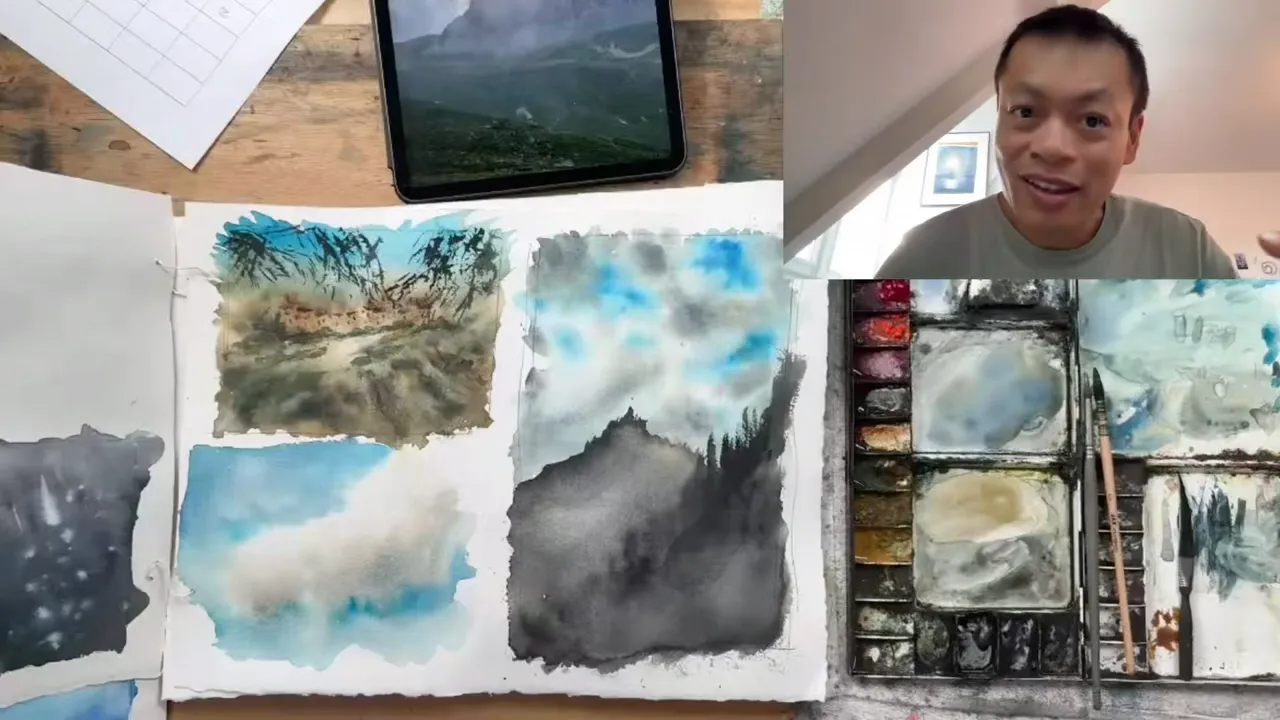
By doing this, you completely forget the first painting that is not that good, and you focus on something else: "I want to know the result of this experience."
It works marvelously well for me when I try this new experience just after I messed up the first painting. If you wait 1 day or 2 days, you have enough time to overthink it. You have enough time to procrastinate, and you stay stuck on the bad experience. This is not what you want.
So try something so reachable that you think, "Okay, I just want to try that." Now, every time I'm disappointed with a watercolor painting, I use this simple trick, and it changed everything for me.
FAQ
Should I repaint the whole watercolor when it fails?
No. Starting from scratch means facing every detail again. Isolate a single element instead, like the light in a cloud, and work on that alone.
How do I choose what to paint after a failed watercolor?
Look for something smaller than the original subject, easier than what you just did, and that you genuinely want to paint. If you don't want to paint it, you won't do it.
Is it better to wait before trying again?
No, waiting works against you. Every day you wait gives you more time to overthink and procrastinate, so try your smaller exercise just after the failed painting.
If you want to finally create on your own, with a proven system instead of copying tutorials, this is exactly what you'll find here 👇
Discover The Loose Watercolor System