July 15, 2026
How to get unstuck when you feel blocked in watercolor
If you're struggling to get started with watercolor, or you feel stuck in your practice, don't reach for your brush, your pigments or your palette right away: first figure out what's blocking you. Very often, the problem isn't your watercolor results. It's the pressure you put on yourself, or too many things to juggle at once. Once you lighten that one point, watercolor becomes a game again rather than a test, and the breakthroughs start coming.
Why do you get stuck in watercolor?
You put an insane amount of pressure on yourself, whether it's about the result, about doing things a certain way, or about following certain tutorials. After a while, it freezes you.
I'm speaking from experience: I stopped painting watercolor for 4 years because of this, because I was putting huge pressure on myself. Then I understood that I just had to enjoy my practice, whatever the outcome. Yes, there are techniques to learn. But this is the most important point. It's what allowed me to paint more than 1,000 watercolors without a single tutorial.
What is cognitive overload in watercolor?
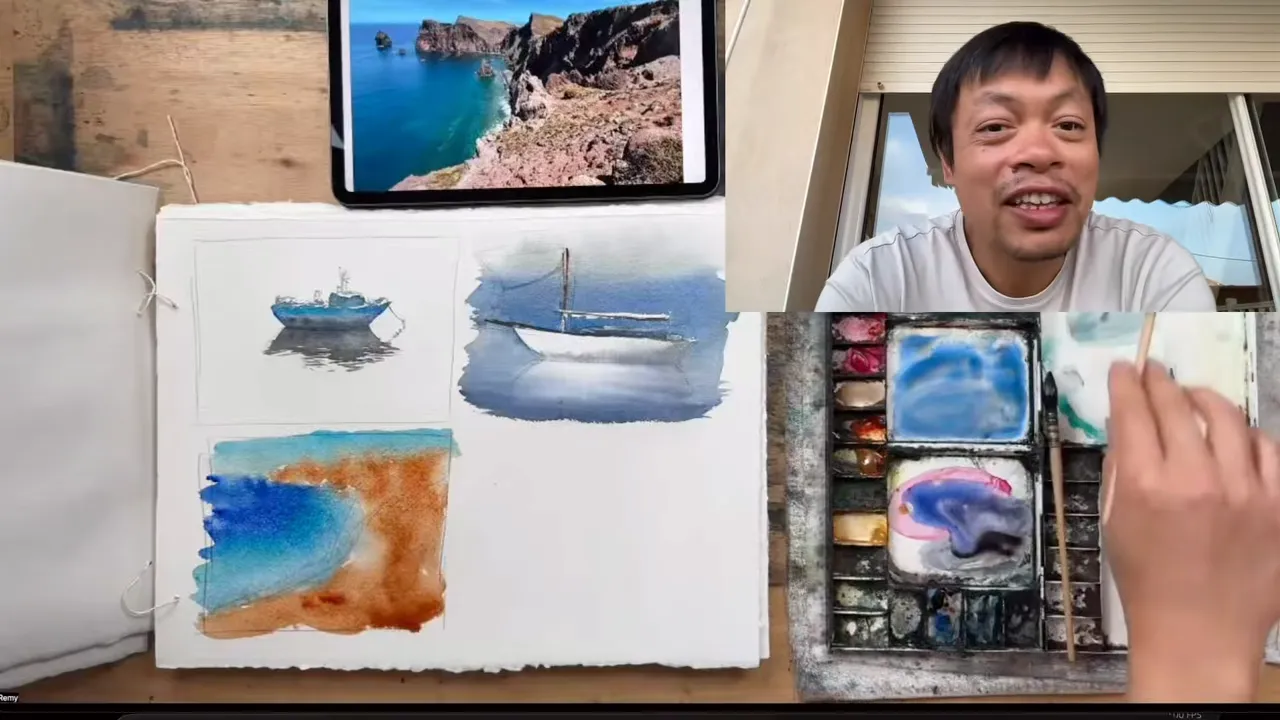
It's learning too many techniques at once. After a while, it works against you, because you have too many things to handle in watercolor. I often say I don't want my teaching to turn into "the watercolor encyclopedia." And yet, I fell right into that trap.
I had prepared a live workshop for my French students, all about painting the sea, with 11 techniques organized into several parts:
- seascape skies;
- beaches;
- waves, before, during and after they break;
- boats.
The workshop lasted more than 3 hours. I had put huge pressure on myself to prepare it, getting up very early for almost 2 whole weekends. I felt like I was dumping "the sea encyclopedia" on my students.
During the workshop, I could see people starting to tire. The feedback was kind: "It's really dense, it's great, but I'll need to watch the replay again." It's like when someone looks at your watercolors and says "that's really pretty, it's lovely": you can feel something is off, without knowing exactly what. In the end, the students would probably retain only 10 to 20% of it, 1 or 2 techniques. The real problem was cognitive overload: too many subjects and too many techniques covered at the same time.
How to lighten things: my forest workshop
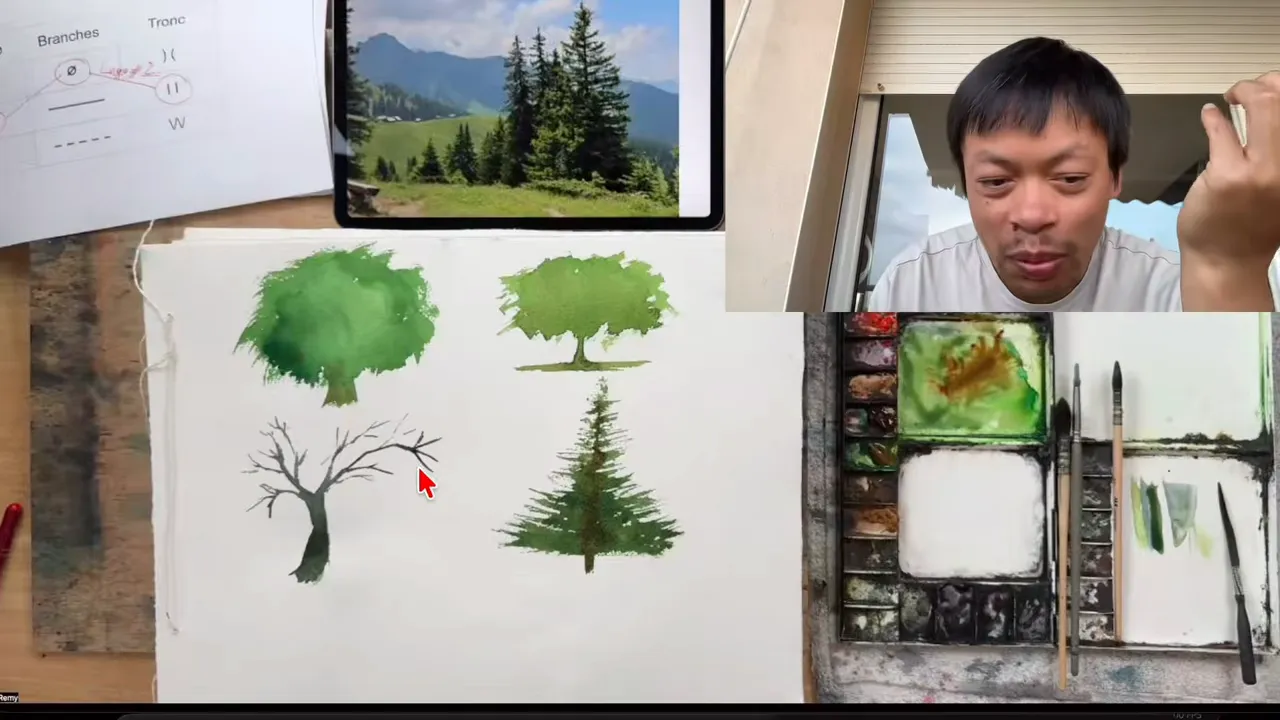
A few weeks later, I prepared another workshop. At first, I wanted it to cover nature in general. But nature includes the countryside, mountains, forests, rivers, fields, absolutely everything. I could already see myself falling into the same trap: delivering the encyclopedia of nature in watercolor, for 3 hours once again.
So I told my students: "We're going to keep it simple." The workshop focused on a single subtopic: the forest. If it works, we'll do the other topics, and it will be much lighter.
Back to basics: a single tree
With the sea, I had gone for the wow effect. The first painting used what I call the mirror sea technique, where the sea is a mirror of the sky. It's very luminous, and it looks great when you show it. But as teaching, it doesn't help people that much.
For the forest, I went back to basics: a forest is made of trees. So, just one tree. It may not have the wow effect, but it let me explain how branches work and the mistake to avoid:
- making the branches all converge at the same point, which you rarely see in nature;
- what you often see is branches splitting off, but only 2 at a time;
- if 3 or 4 split off at once, it turns into a hand, and it's no longer the structure of a tree.
Build up gradually, without painting everything
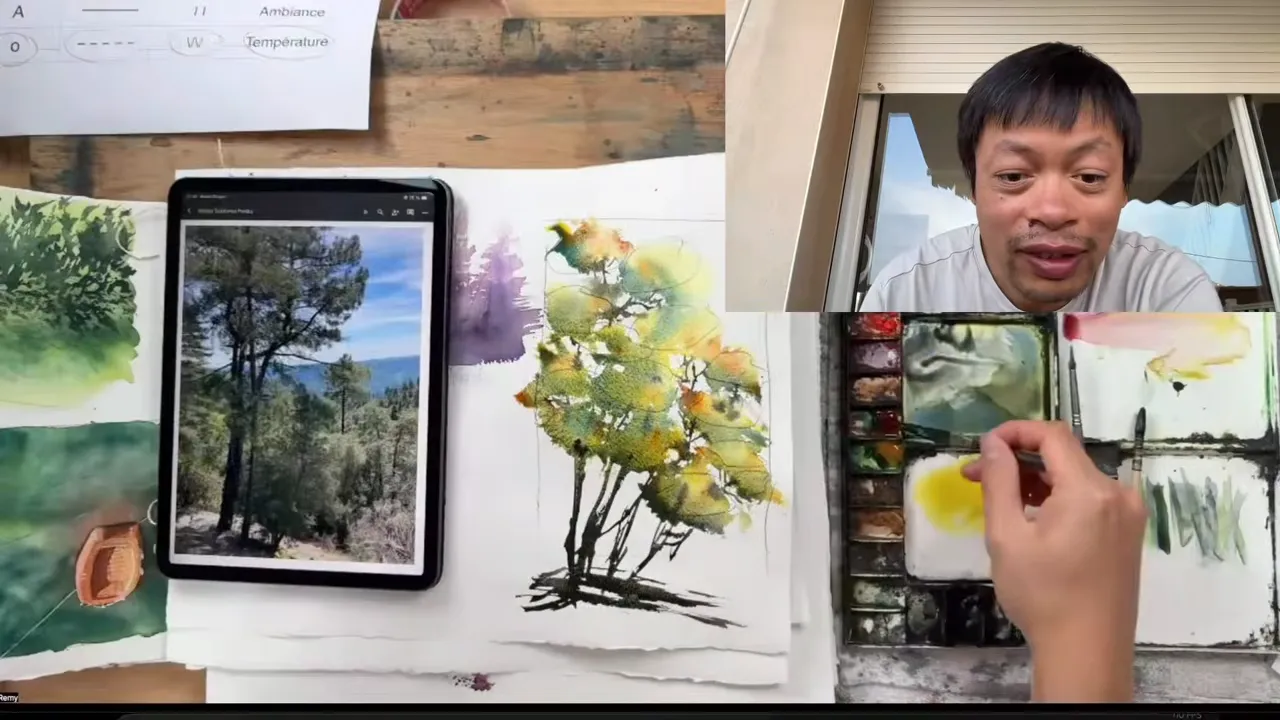
Since I didn't have 10,000 techniques to show, I had time to lay these foundations. Then we could go further: a small forest, then a glowing forest, then glowing fir trees. And we don't paint everything. We don't bother with the sky or the background: we just paint the focal point of the watercolor, the forest.
The live session was much shorter, a bit over 2 hours. Nobody told me "I'll need to watch the replay again." On the contrary, my students said: "This workshop was amazing, do it again." Some even said: "It's mind-blowing, I didn't think you could paint something this nice in so little time." And I loved teaching that session.
Why the same method on different subjects creates breakthroughs
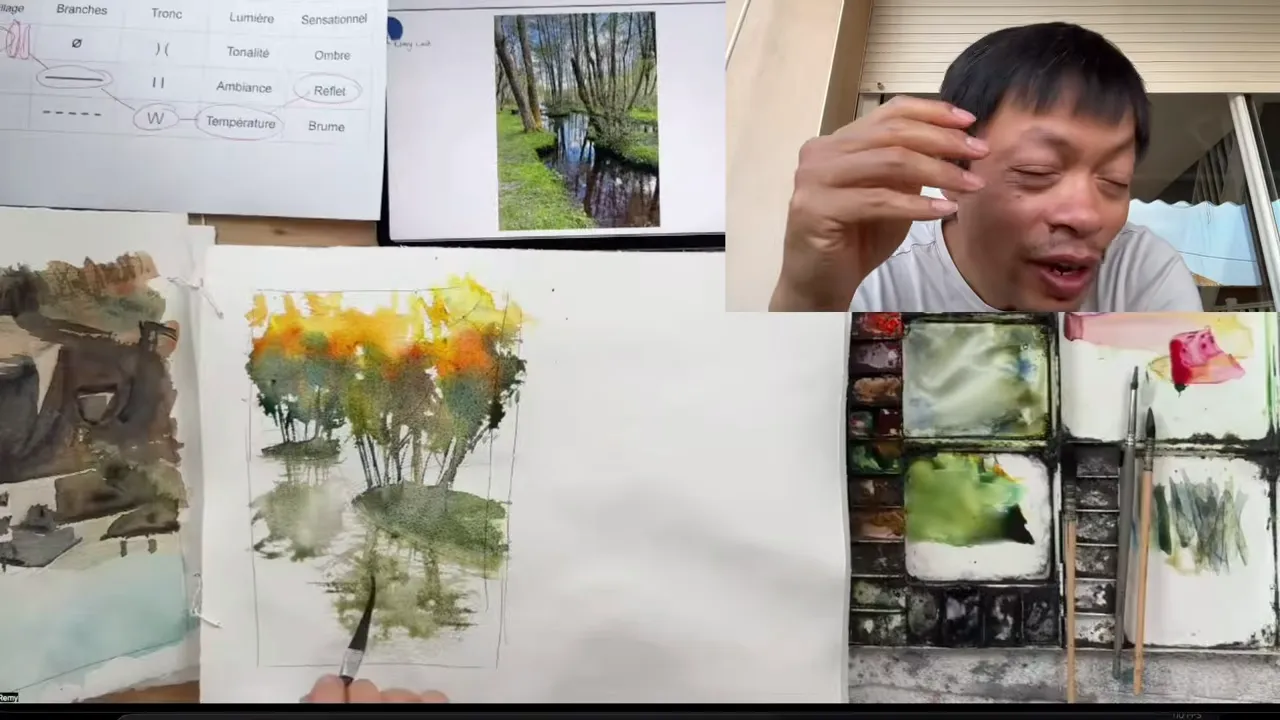
In this workshop, I use exactly the same method from one watercolor to the next: the forest with shadow, then the forest with reflections. It's the same thing every time. But applying the same things to different cases each time hits like an atomic bomb in watercolor. That's what creates the biggest breakthroughs.
To prepare, I didn't ask myself which techniques to add. I asked myself:
- What would make me have fun during the workshop?
- What would make my students have fun?
- What would make them truly independent, without 10,000 techniques to manage?
How to identify what's wrong in your practice
It all starts with a feeling. Deep down, you sense that something isn't right: you're putting pressure on yourself that doesn't suit you, or you're making watercolors that don't satisfy you. It means you're attached to the wrong things, or you're doing something the wrong way.
Then:
- Identify that thing before you pick up your brush again. Don't just look at the finished painting: we often get too attached to the result, when what's wrong may simply be too much pressure.
- Adjust it so it becomes much lighter, a game rather than a test. For my workshop, that meant less pressure on my side, less cognitive load for my students, more fun and more lightness.
- Keep adjusting it as you go: it will change over time.
The idea isn't to throw everything away. The sea workshop contains plenty of good things, and I'm thinking of doing it again in small, much more fun sessions, even if it means reusing parts of it. But there's probably one point in there that's blocking things. If you find yours, you'll be able to paint watercolor for the rest of your life with pleasure, without putting pressure on yourself.
FAQ
Do you need to learn lots of techniques to improve at watercolor?
No. Too many techniques at once end up working against you. You're better off with a few well-laid basics that you then reuse on a variety of subjects.
Can a simple watercolor still have a wow effect?
Yes. You can have fun, get a wow effect and make deep progress all at the same time, without trying to paint everything.
Does feeling blocked always come from technique?
No. What's wrong is often not in how your watercolor turns out, but in the pressure you put on yourself. That's the point to lighten first.
If you want to finally create on your own, with a proven system instead of copying tutorials, this is exactly what you'll find here 👇
Discover The Loose Watercolor System