November 1, 2025
How to break away from the reference photo in watercolor: 3 circles and 3 techniques
To break away from the reference photo in watercolor, I break the subject down into elements and sort each one into one of my 3 circles: strangers, acquaintances and close friends. Then I apply one of my 3 techniques, which I use in about 90% of my watercolors. I delete or simplify a stranger (the perfect stranger technique). I bring it closer to something I already master (the easy way technique). Or I try it out before committing (the first drink technique).
Why do we tend to copy the reference photo?
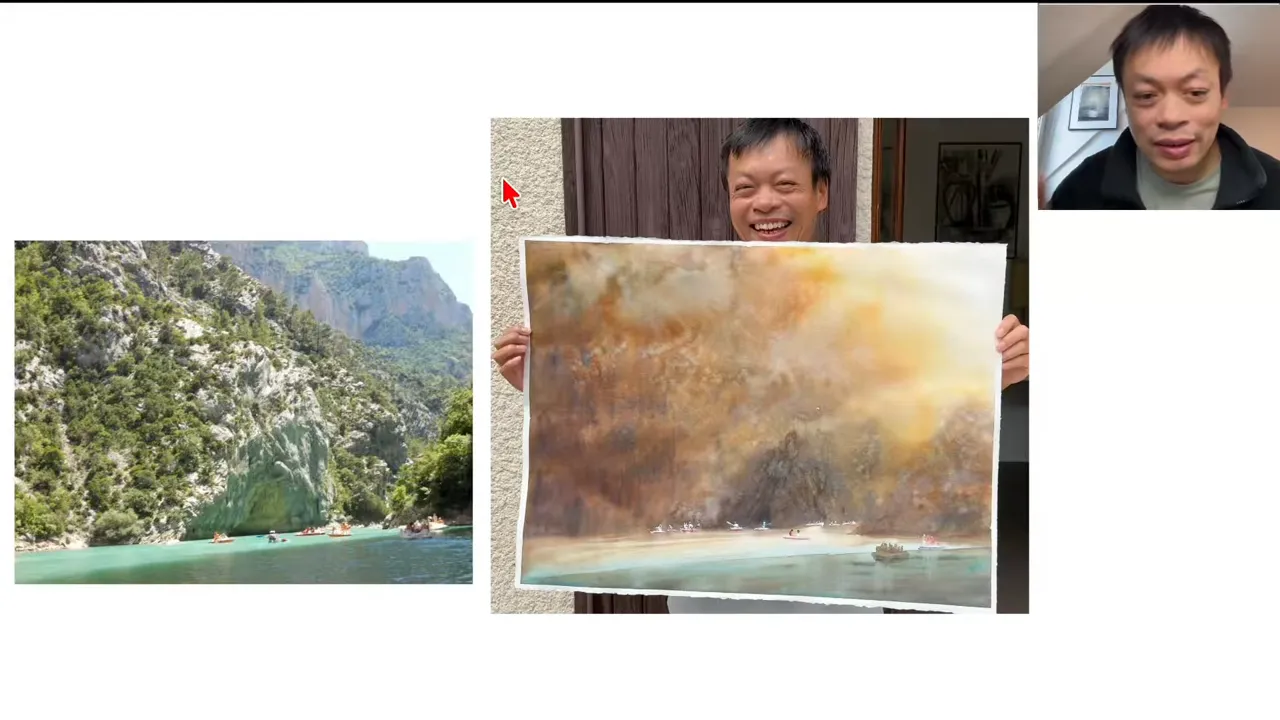
When you tackle a photo you find hard to approach, you want to paint everything and give it all the same importance. You end up sticking to the reference like a photocopier, because you have no other way, no alternative to break away from the photo.
I went through this with a photo of a cliff that I had given my students to interpret. My watercolor moved clearly away from the subject, in color, in effects and in texture. The students liked the way I had handled the cliff. Some of them also asked me: "How come you changed the colors? How come you didn't paint the cave?" The answers come down to one concept: the 3 circles of familiarity.
What are the 3 circles of familiarity in watercolor?
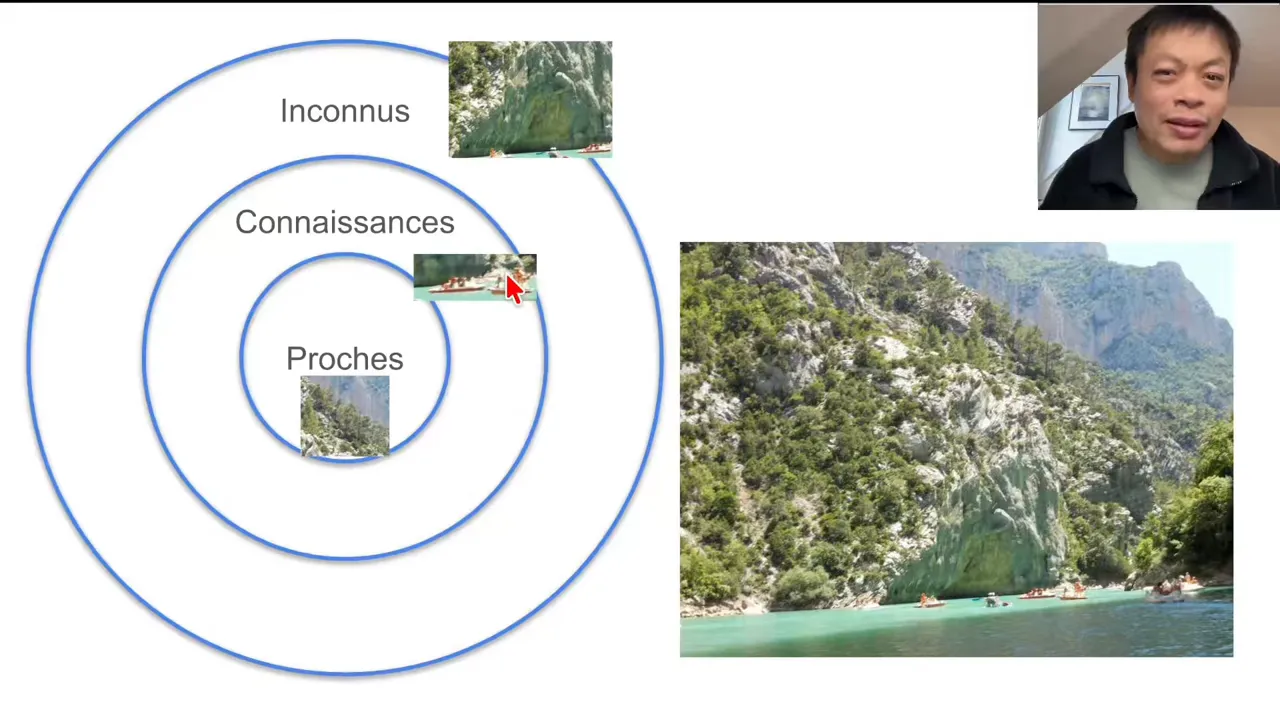
This concept comes from everyday life:
- Strangers: people you don't know, people you aren't even aware of.
- Acquaintances: a bit like coworkers, or people you've met at a club or an association. You feel you have something in common with them, but they aren't part of your inner circle.
- Close friends: your family, your friends, the people you feel a connection with and want to spend time with.
Watercolor works the same way. When you face a stranger, you think "how do I do that? What is this thing?" In the cliff photo, the kayaks were acquaintances for me. I don't usually paint them, but they remind me of boats, which I'm a bit more familiar with. The trees, on the other hand, are close friends: I've painted more of them than I can count.
The mistake to avoid is treating a whole subject as a stranger. When I started out, I would scroll through photos thinking "that's too hard, that's too hard." Of course it's too hard if you reduce an entire subject to the stranger category. Look at it more closely: it breaks down into lots of elements, some familiar, some unknown.
You also don't treat your close friends and strangers the same way. With strangers, you're wary and careful. With close friends, you take shortcuts. My close friends in watercolor are what I call watercolor LEGO: elements I make quickly and easily, because I can take shortcuts with them.
Your circles aren't the same as mine. If you have a special connection with portraits or animals, they are among your close friends.
Technique 1: the perfect stranger, delete or simplify
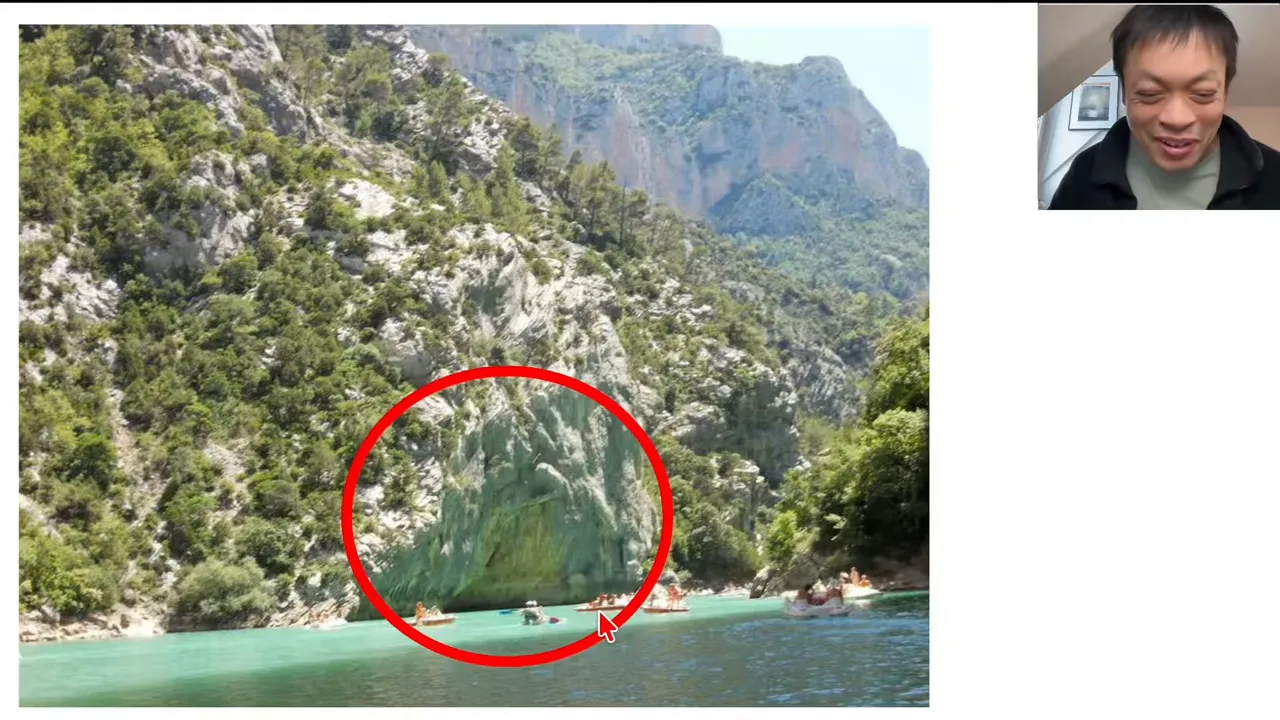
What do you do when you pass strangers in the street? I ignore them, and that's true for more than 99% of the people I pass. In watercolor, I do the same thing. I delete an element when it seems too difficult, when it isn't the subject for me or when it isn't what I want to paint.
In the cliff photo, the perfect stranger was the cave. I didn't delete it completely, I simplified it: that's the default replacement technique. I blended it into the cliff without detailing the turquoise reflection of the water on its walls. It no longer even looks like a cave, you could take it for a small mountain overlapping the cliff. The effect can be radically different, and yet the feedback on this watercolor was very positive. You don't need to stick to the photo to create emotion. And a watercolor can work even if your simplification moves away from the reference.
Technique 2: the easy way, bring the stranger closer to your close friends
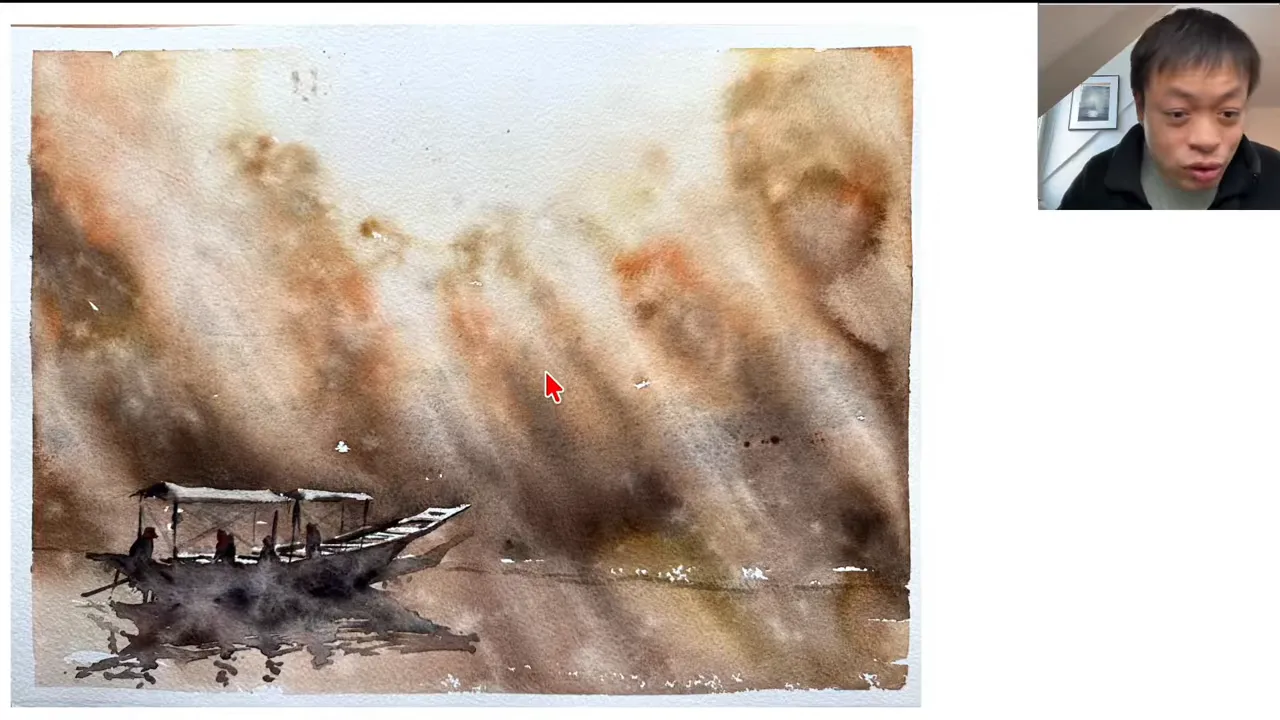
The rocky texture of the cliff, with the trees on top of it, was also a stranger to me. But it took up 80 to 90% of the subject, and deleting it seemed difficult.
How do you choose between deleting and making it familiar? One criterion is how much space the element takes up in the subject. If it's too big to delete, ask yourself: "Which watercolor does this texture remind me of? Which texture do I master?" You dig into your artistic memory, into the watercolors you've already painted. I remembered a watercolor I had painted from a photo taken in Thailand, with a forest in the distance that I had simplified. That background is one of my close friends. I recycled it, transposed it and transformed it to bring the cliff into my circle of close friends.
The same goes for color. Someone asked me why I had used warm colors, yellows and browns, when the subject was mostly green. I did it because it's much easier for me. I already have yellow, orange and brown in my palette. I don't have a green, I have to mix it from yellow and blue. My green belongs to my circle of acquaintances, my yellow and orange to my circle of close friends.
The criterion here: do I need to mix to get this color? It's not impossible, but even a single mix makes the painting harder. It takes more time, the paper dries, and then everything gets more complicated. It's a snowball effect: the more you simplify the task, the better. It looks like a blazing forest in the distance, it still works, and I've broken away from the subject completely.
Technique 3: the first drink, test before you commit
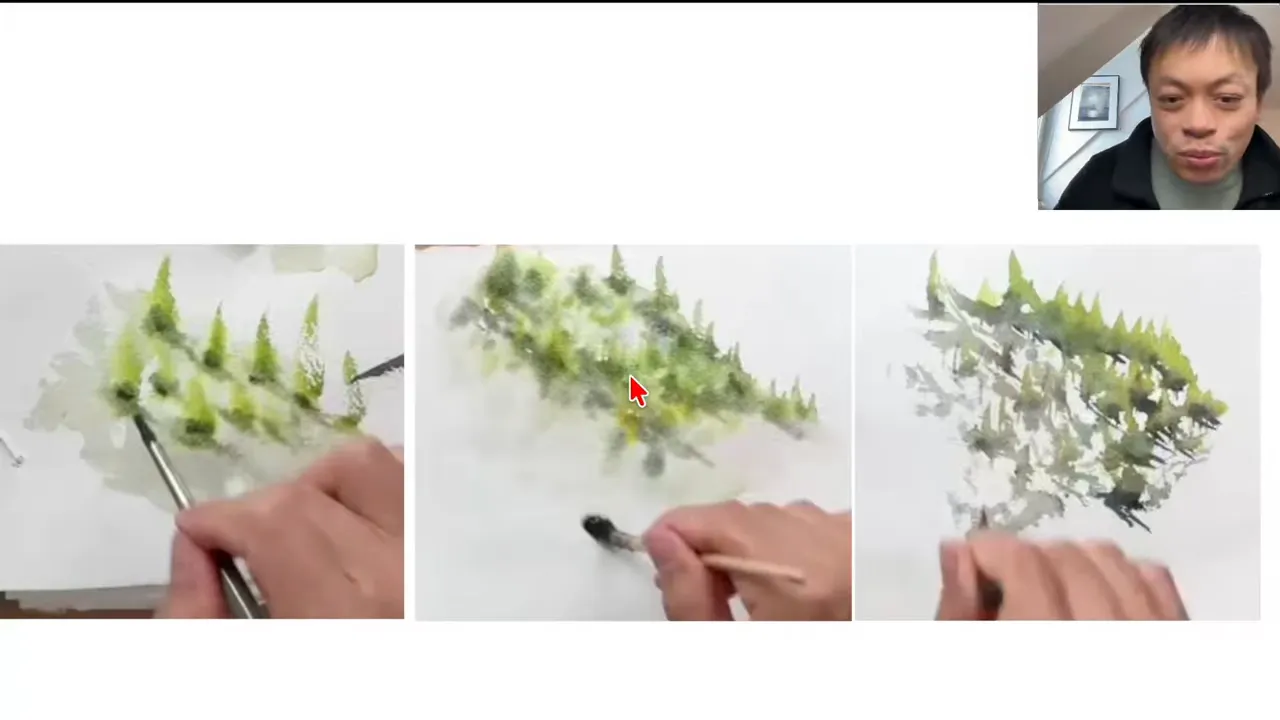
My students pointed out: "So you paint all your watercolors in yellow and orange? If you had to paint the cliff in green, how would you do it?" That's where the first drink comes in.
With a perfect stranger, you don't get married, have kids and buy a house right away. You first grab a drink to get to know each other. The mistake, when facing an unknown subject, is to marry the whole subject: the rock, the shadows, the kayak, every detail. Instead, pick one unknown element and ask yourself how to have a first drink with it.
During a live session, I stepped away from my plan and told my students: "I have no idea how we're going to paint this cliff, but let's explore." In practice:
- Don't paint the whole watercolor, only one part.
- Make several attempts. I had 3 drinks with this stranger. One used soft edges, mistier and more suggested: I created the texture of the trees while leaving them blurry inside. Another had rougher, harsher textures.
- Pick the one you feel the strongest connection with. You like this color, that one doesn't work for you, this effect is nice.
- Go further with that one. You go to dinner with this person and you don't follow up with the others.
Then we invited the cave to that dinner. I started with the cliff, recycling our tests, faster and more in my own way. It had moved from the circle of strangers to the circle of acquaintances, and was starting to become a close friend, a watercolor LEGO brick. Then I brought in the cave. I spent a long time on it, but that was necessary to get familiar with it. The students felt you could really sense yourself going deep into the cave. After the water, the shadow and the rocks in the distance, we had a sketch. It wasn't a finished watercolor, but it had broken away from the photo because we had gotten there step by step.
FAQ
If I take a teacher's classes, will I end up painting like them?
No. Some people are afraid of turning into a copy of me by taking my classes, but your strangers, acquaintances and close friends in watercolor are different from mine. You don't simplify or recycle the same elements I do.
How do I know whether to delete an element or transform it?
Look at how much space it takes up in the subject. A small element can disappear or blend into another one. An element too big to delete can be brought closer to a texture or a color you already master.
What if I get it wrong during my tests?
That's OK. When you explore without a tutorial, you will get some things wrong. You become a child again, you experiment, you tell your own stories.
If you want to finally create on your own, with a proven system instead of copying tutorials, this is exactly what you'll find here 👇
Discover The Loose Watercolor System